APA Style
SK Wasim Ahmed, Espita Palwan, Soumya Samal, Shaon Ray Chaudhuri. (2026). Microbial Utilization of Ramie Gum: A Potential Avenue for Biotechnological Applications. Sustainable Processes Connect, 2 (Article ID: 0022). https://doi.org/10.69709/SusProc.2026.142535MLA Style
SK Wasim Ahmed, Espita Palwan, Soumya Samal, Shaon Ray Chaudhuri. "Microbial Utilization of Ramie Gum: A Potential Avenue for Biotechnological Applications". Sustainable Processes Connect, vol. 2, 2026, Article ID: 0022, https://doi.org/10.69709/SusProc.2026.142535.Chicago Style
SK Wasim Ahmed, Espita Palwan, Soumya Samal, Shaon Ray Chaudhuri. 2026. "Microbial Utilization of Ramie Gum: A Potential Avenue for Biotechnological Applications." Sustainable Processes Connect 2 (2026): 0022. https://doi.org/10.69709/SusProc.2026.142535.
ACCESS
Research Article
Volume 2, Article ID: 2026.0022

SK Wasim Ahmed
wasim.microbiology@tripurauniv.ac.in
Espita Palwan
espita.microbiology@tripurauniv.ac.in

Soumya Samal
soumya.microbiology@tripurauniv.ac.in
Shaon Ray Chaudhuri
shaonraychaudhuri@tripurauniv.ac.in
Microbial Technology Laboratory, Department of Microbiology, Tripura University, Suryamaninagar, Tripura West, Tripura 799022, India
* Author to whom correspondence should be addressed
† These authors contributed equally.
Received: 15 Jul 2025 Accepted: 02 Jan 2026 Available Online: 05 Jan 2026 Published: 29 Jan 2026
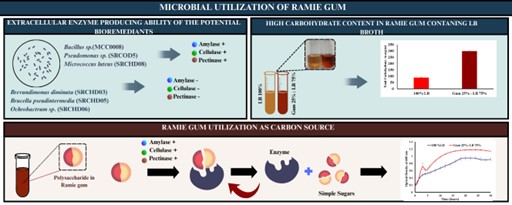
Ramie (Boehmeria nivea) contains approximately 30–35% gum, composed of cellulose, hemicellulose, lignin, pectin, and waxes. This gum is a rich source of carbon and can be utilized as a medium component for microbial growth. The current study was conducted to investigate the mechanism by which Ramie gum stimulates the growth of various bioremediating bacterial strains. The high concentration of total carbohydrate in the Ramie gum substituted Luria–Bertani (LB) broth enhanced the log phase of growth substantially for Bacillus sp. (MCC0008), Micrococcus luteus (SRCHD08), and Pseudomonas sp. (SRCOD5), being cellulase, amylase, and pectinase producing strains. Bacterial strains Brevundimonas diminuta (SRCHD03), Brucella pseudintermedia (SRCHD05), and Ochrobactrum sp. (SRCHD06), which do not produce cellulase, amylase, or pectinase, showed no growth enhancement when Ramie gum was substituted in LB broth. These enzymes (cellulase, amylase, and pectinase) degrade cellulose, hemicellulose, and pectin into sugar compounds that can be utilized by bacteria. The stimulation of biofilm formation may be attributed to the presence of pectin and xylan in the gum, potentially mediated through the Spo0A gene. The strains showing higher growth and biofilm stimulation demonstrated higher bioremediation ability. Thus, the gum discarded during fiber spinning can be effectively valorized as a substrate for bacterial growth.
Microorganisms are a major reservoir of biodiversity, exhibiting diverse metabolic capabilities. They play essential roles in biogeochemical cycles, such as the carbon, sulfur, phosphorus, and nitrogen cycles, facilitating the circulation of chemical elements between biotic and abiotic components of the ecosystem [1-3]. Microorganisms also play a critical role in bioremediation through bioaugmentation, biostimulation, and natural attenuation. Beneficial microbes are involved in plant growth promotion and increasing productivity, either by supplying minerals and nutrients [4], secreting plant growth-promoting phytohormones [5] for plant growth, or by inhibiting the plant pathogens. Six macronutrients—carbon, hydrogen, oxygen, nitrogen, sulfur, and phosphorus—serve as the primary building blocks of life [6]. Microbial growth strongly depends on cellular metabolic activity and the synthesis of biomolecules, including nucleosides, nucleotides, essential sugars, amino acids, lipids, and organic phosphates. These biomolecules serve as the building blocks for DNA, RNA, proteins, cell membranes, and bioenergetic compounds such as ATP (adenosine triphosphate). Microorganisms are highly adaptive to changes in their surroundings, which allows them to thrive in diverse environments across the Earth’s ecosystems [4,7]. Microbes can thrive under extreme environmental conditions, including nutritional and water scarcity [8]. The survival of microbes in extreme environments is supported by the functional or native conformation of proteins or enzymes, genetic plasticity, and the ability to form biofilms [8,9]. Microbes can be cultivated in culture media containing nutrients such as carbon, nitrogen, sulfur, inorganic phosphate, minerals, water, and vitamins [10]. Different enrichment media provide essential nutrients and growth factors for the microbial cells and play a regulatory role in microbial trade-off mechanisms and resource investment. Depending on the surrounding extracellular nutrient profiles, microbes adopt different strategies (resource acquisition, growth strategies, and maintenance) for adaptation to the environment [11]. Plant-origin compounds have been continuously used in microbiological and biotechnological applications. Agar is one of the most important plant-derived compounds in the life sciences, known for its clarity, stability, and minimal interference with microbial metabolism [12]. A study by Jain et al. (2005) on the potential application of guar gum as a gelling agent, in addition to agar, for 33 microbial cultures (11 bacteria and 12 fungal cultures) revealed normal differentiation and growth in guar gum, similar to agar [12,13]. Lignocellulosic biomass is the cheapest source of carbon containing glucose, xylose, and arabinose monomers [14]. Use of the plant-origin Ramie (Boehmeria nivea) gum as an additive to diluted LB broth enhances microbial growth compared to the recommended concentration of LB broth alone [15]. It was reported that Ramie gum is composed of cellulose, hemicellulose, lignin, and pectin [15]. Microbes producing cellulase and xylanase can degrade the most abundant components of Ramie gum cellulose and hemicellulose, respectively [16]. Lignin in Ramie gum can be broken down by enzymes such as laccases, peroxidases [17], and oxidases [18]. Pectin can be degraded by pectinase-producing bacteria [16]. Microbes having this enzyme-producing ability can degrade lignocellulosic materials into smaller units, which further helps to stimulate their growth [19]. Microbial utilization of lignocellulosic waste is a widely studied topic nowadays. It has been reported that agro-waste can be valorized through bioethanol production using microbial consortia (fungal and bacterial), followed by yeast-mediated fermentation [20]. Ray Chaudhuri et al. (2025) reported that lignocellulosic biomass of oil-extracted lemongrass can be valorised through mushroom cultivation [21]. Pre-composed Ramie decorticated waste was reported to be used for handmade paper making [22]. The literature indicates that complex polysaccharides, such as cellulose and xylan, when used as carbon sources for bacterial growth, exhibit less microbial antagonism than growth on simple sugars like glucose [19]. Moreover, enriched medium, often used for growing parent cultures in case of biofilm reactor setup at pilot/industrial scale for bioremediation and biotechnology purposes, often discharging waste medium with high chemical oxygen demand (COD). This high COD is due to unutilized growth nutrients and the end products of microbial metabolism. The other alternative to minimizing this pollution would be to optimize the growth medium composition to stimulate bacterial growth and attachment while minimizing the discharge of unused growth nutrients. Hence, this study was conducted: (a) to determine how, and at which growth phase, Ramie gum-supplemented LB medium stimulates the growth of different bioremedially important bacterial strains; (b) to assess whether supplementation with 25% Ramie gum and 75% LB can enhance the biofilm-forming ability of the microbes; (c) to elucidate the possible mechanism of biofilm enhancement by the strains in response to gum polysaccharides; and (d) to evaluate the elevated performance of the strains in terms of bioremediation ability when supplemented with 25% Ramie gum and 75% LB.
2.1. Ramie Gum Extraction Five millilitres (5 mL) of 1% Na2CO3 solution was added to 1 g of Ramie fiber and boiled at 100 °C for 20 min. After 20 min of boiling, the liquid was collected from the fibers. The total volume of the collected liquid was determined, and an equivalent volume of chilled acetone was added. The gum in the solution precipitated upon the addition of chilled acetone. Finally, the acetone was decanted, leaving the precipitate behind. The precipitated gum slurry was dried in a hot air oven. 2.2. Enzyme Production by the Isolates The microbes selected for the study were potent bioremediants. While Bacillus sp. (MCC0008) removes nitrate [23], Pseudomonas sp. (SRCOD5) removes ammonia, and Micrococcus luteus (SRCHD08), Brevundimonas diminuta (SRCHD03), Brucella pseudintermedia (SRCHD05), as well as Ochrobactrum sp. (SRCHD06), remove hexamine [24]. The capacity of bacteria to produce extracellular enzymes is an essential criterion for their identification. These profiles help identify the functional characteristics of bacteria, including their ability to utilize or degrade specific substrates. The extracellular enzyme-producing ability of the isolates (MCC0008, SRCHD03, SRCHD05, SRCHD06, SRCOD5, and SRCHD08) were checked using standard protocols and reported (Gogoi et al., 2024; extracellular protease, amylase, catalase, oxidase, DNase, and lipase as per Nandy et al., 2007; cellulase according to Kasana et al., 2008; pectinase according to Yao et al., 2017; and gelatinase following Cruz et al., 2012) [25-29]. 2.3. Microbial Growth on Different Concentrations of Media Solution Media solutions were made in different concentrations: 25% Ramie gum (0.25 gm in 100 mL distilled water), 100% LB [1 gm LB {1% Tryptone, 0.5% Yeast Extract and 0.5% sodium chloride (NaCl)} mix in 100 mL distilled water at pH 7.0], and Ramie gum: LB (25%:75%, 25%:50%, 25%:25%) were prepared and sterilized at 121 °C for 15 min. Each concentration of media (200 microliters) was separately inoculated with 1% (v/v) of the culture {which could be Bacillus sp. (MCC0008), Brevundimonas diminuta (SRCHD3), Brucella pseudintermedia (SRCHD05), Ochrobactrum sp. (SRCHD06), Pseudomonas sp. (SRCOD5), and Micrococcus luteus (SRCHD08)} in biological replicates of three within 96-well plates. Then the plate was placed inside the microplate reader (BioTek, EPOCH2TS) for 28 h at 37 °C, and the growth in terms of optical density (OD) was measured during the entire growth period at 600 nm. 2.4. Biochemical Assay The chemical oxygen demand (COD) and total carbohydrate content of various media, including 25% Ramie gum in water, 100% LB, 75% LB, and 25% Ramie gum with 75% LB, were quantified to investigate the mechanism by which the gum influences microbial growth. Raw Ramie gum is not totally soluble in water; however, 25% Ramie gum was completely soluble in LB broth. The total carbohydrate content was determined using the phenol-sulphuric acid method [30]. COD was assessed using the dichromate method [25]. All estimations were done in triplicate, followed by statistical validation of the findings. 2.5. Biofilm-Forming Ability In a sterile 24-well tissue culture plate (Tarsons, Cat. No. 980030), 2 mL sterile media (100% LB and 25% gum with 75% LB) were added, and 1% of actively growing cultures of isolates MCC0008, SRCOD5, and SRCHD08 were inoculated individually. Uninoculated media were considered as negative controls for the experiment. The plate was incubated for 24 h at 37 °C under static conditions. After 24 h, biofilm-forming ability was quantified using Martin’s method [31], which involves crystal violet staining. All estimations were done in biological triplicate with statistical validation of the data. 2.6. Bioremedial Study Bioremediation ability under immobilized conditions was tested for the isolates MCC0008, SRCOD5, and SRCHD08. Actively grown cultures were inoculated in 50 mL Falcon tubes containing a sterile Raschig ring with 15 mL 100% LB and 25% gum in 75% LB broth, respectively. The tubes were incubated at 37 °C for 24 h to establish a biofilm on the surface of the Raschig ring. After incubation, the cultures were decanted from the respective 50 mL Falcon tubes. Tubes with MCC0008 and SRCOD5 biofilm were recharged with 25% Ramie gum in 75% LB broth. On the other hand, the tube with the SRCHD08 biofilm was recharged with 25% Ramie gum in 75% LB broth with 100 mg/L hexamine. Nitrate (after 5 h), ammonia (after 10 h), and hexamine (after 24 h) were quantified using the Salicylic acid method [32], Nessler’s reagent method [33], and the Hantzsch reaction method [34], respectively. All estimations were done in biological triplicate with statistical validation of the data. 2.7. In Silico Analysis The contigs of the MCC0008 genome sequence were submitted to the Rapid Annotation using Subsystem Technology (RAST) server. The number of contigs was 331. The system (SEED viewer) was searched for the presence of genes involved in biofilm formation. 2.8. Statistical Analysis Each experiment reported above was carried out in triplicate, with three biological replicates in each case. Hence, the data presented have a sample size of 9 (n = 9). The statistical analysis included an F-test followed by a one-tailed t-test. The F-test was performed to determine whether equal or unequal variances should be used for the one-tailed t-test. Microsoft Excel 365 was used to conduct the analyses. The statistical analysis was performed at a 95% confidence level.
3.1. Ramie Gum Extraction Ramie fiber grown at Tripura University contains 30–35% Ramie gum, of which only 2.52 ± 0.78% Ramie gum can be easily extracted. 3.2. Enzyme Assay of the Isolates The enzyme-producing abilities of the six isolates are shown in Table 1. The enzyme production of isolate MCC0008 is reported in Banerjee 2018 [35], while that of isolates SRCHD03, SRCHD05, SRCHD06, and SRCHD08 is reported in Samal et al., 2024 [24]. Extracellular enzyme-producing ability of the bacterial isolates. 3.3. Microbial Growth Enhancement by Ramie Gum Based on the previous report by Banerjee et al. (2018) [35], the initial experiments were conducted using the following media compositions: 100% LB and a combination of 25% gum with 75% LB (Figure 1). The result showed a significant growth enhancement (Table 2) in 25% Ramie gum with 75% LB broth as compared to 100% LB broth for Bacillus sp. (MCC0008), Micrococcus luteus (SRCHD08), and Pseudomonas sp. (SRCOD5), as shown in Figure 1 and Table 3. However, the Brucella pseudintermedia (SRCHD05), Brevundimonas diminuta (SRCHD03), and Ochrobactrum sp. (SRCHD06) showed no significant growth difference (Table 2) among 100% LB and gum to LB ratio of 25%:75%. Statistical analysis of the growth difference of bacterial isolates in the presence of 25% gum with 75% LB and 100% LB alone. Analysis of fold change in bacterial growth enhancement in 25% gum with 75% LB compared to 100% LB alone. Based on the above data, three isolates (MCC0008, SRCOD5, and SRCHD08), which showed visible growth differences, were selected for the growth curve assessment in the varying concentrations of the media (Figure 2): (1) only 25% Ramie gum, (2) Ramie gum: LB (25%:50%), (3) Ramie gum: LB (25%:25%), (4) Ramie gum: LB (25%:75%), (5) only 100% LB. At 8 h, SRCOD5 showed an OD of 0.411 in 100% LB and 0.874 in gum: LB (25:75 %) media at 600 nm. For SRCHD08, the OD was 0.437 in 100% LB and 0.889 in 25% gum:75% LB media. For MCC0008, growth in 100% LB and 25% gum:75% LB media was 0.732 and 1.057, respectively, at 12 hours of incubation. Bacillus sp., Pseudomonas sp., and Micrococcus luteus exhibited higher growth in 25% gum and 75% LB broth compared to other concentrations. For Micrococcus luteus, the highest growth was observed in 25% gum and 25% LB, though it was not significantly different (p-value 0.241) from the growth in 25% gum and 75% LB. Hence, the latter was considered for subsequent studies. The lowest growth of Bacillus sp. and Pseudomonas sp. was observed in 25% gum while that for Micrococcus luteus was observed in 25% gum, while that of Micrococcus luteus was observed in 100% LB. Further investigation was carried out to determine the mechanism of growth enhancement in the isolates using biochemical methods. The total carbohydrate estimation revealed that the addition of 25% gum in 75% LB media enhanced the carbohydrate content by 3.34-fold compared to 100% LB (Figure 3). Before implementing this modified medium (25% gum with 75%) to enhance the growth of the isolates for pilot/industrial-scale application, it was necessary to understand its impact on the environment. Therefore, COD of the medium before and after growth of the isolates was assessed. There was 22.28% lower COD in 25% gum with 75% LB as compared to 100% LB (Figure 4). So, it was an enhanced carbohydrate with reduced COD, which would stimulate bacterial growth with reduced impact on the environment due to lower COD of the discharged media. Based on their COD-reduction abilities, MCC0008, SRCOD5, and SRCHD08 were selected for further experimental validation. The biofilm-forming ability of the isolates MCC0008, SRCOD5and SRCHD08 showed 1.46 (p-value 1.3 × 10⁻¹⁰), 1.97 (p-value 1.9 × 10⁻¹⁷), and 1.13 (p-value 6 × 10⁻⁵) fold higher enhancement in biofilm-forming ability (Figure 5). The isolates MCC0008, SRCOD5, and SRCHD08 were tested for their biofilm-based bioremediation ability to remove organic pollutants (nitrate, ammonia, and hexamine), where it was found that the developed biofilm bioreactor in 25% Ramie gum in 75% LB showed a significant increase of 12.1% (p value 6.4 × 10⁻⁶) of ammonia and 4.8% (p value 8.9 × 10⁻⁶) of hexamine removal compared to the biofilm system in 100% LB. On the other hand, MCC0008 could completely remove nitrate from an initial concentration of 4.3 mg/L in both systems. 3.4. In Silico Analysis RAST data of the draft genome sequence of Bacillus sp. MCC0008 [23] revealed the presence of genes for Spo0A (matrix-producing and sporulation gene), SinI, SinR, Eps C and Eps D (for exopolysaccharide biosynthesis), as well as Tas A protein (matrix protein component), pointing towards the possible pathway of biofilm induction. From the RAST analysis, the closest neighbors of strain MCC0008 were Bacillus anthracis, Bacillus cereus, and Bacillus thuringiensis. All the species were reported to contain the Spo0A gene for biofilm stimulation. In Bacillus thuringiensis, Spo0A is very important for biofilm formation [36]. Another study reported that the Spo0A mutant of Bacillus thuringiensis is incapable of forming biofilms at an air-liquid interface, and that Spo0A-P directly induces biofilm formation. Spo0A controls expression of sinI, which represses the biofilm repressor SinR [37]. Spo0A, SinI, and SinR are reported to be present in Bacillus cereus and involved in biofilm formation [38]. It was also reported that Bacillus anthracis contains the Spo0A gene [39]. The literature reports biofilm formation by both Pseudomonas sp. and Micrococcus luteus. P. aeruginosa develops biofilms in various environments. The biofilm structure consists of exopolysaccharides, alginate, Pel, and Psl. Alginate is an essential polymer for biofilm protection and stability, while Psl is crucial for biofilm formation and stability. Pel, a glucose-rich polysaccharide, is also present in the biofilm. Surface proteins like the PpgL protein and the PA4204 gene play crucial roles in biofilm formation [40]. Genes involved in biofilm formation in the case of Micrococcus luteus were phnA, phnB, cyaB, vfr, vps, glgC, wecB, wecC, and cysE [41].
Isolates
LB 100% vs. 25% Gum:75% LB
p Value
MCC0008
Growth enhanced
7 × 10⁻³
SRCHD03
No growth enhancement
2.13 × 10⁻¹
SRCHD05
No growth enhancement
5.7 × 10⁻²
SRCHD06
No growth enhancement
4.7 × 10⁻¹
SRCOD5
Growth enhanced
6 × 10⁻⁶
SRCHD08
Growth enhanced
8.82 × 10⁻⁷
Isolates
25% Gum:75% LB
Fold Increase
MCC0008
Enhanced log phase
1.44
SRCOD5
Enhanced log phase
2.16
SRCHD08
Enhanced log phase
1.88
It has been reported that tryptone in LB media provides amino acids, yeast extract provides nitrogen sources and a low concentration of organic carbon, and NaCl maintains osmotic balance [42], supporting the growth of many culturable bacteria in the laboratory. On the other hand, Ramie gum contains cellulose (68.6–76.2%), hemicellulose (13.1–16.7%), lignin (0.6–0.7%), and pectin (1.9%), which are rich in carbon sources [16]. In this study, the total carbohydrate content data revealed that the medium containing 25% gum and 75% LB exhibited a 3.34-fold higher carbohydrate content compared to 100% LB (Figure 3). The addition of a natural carbon source, 25% Ramie gum in 75% LB (with protein and limited carbohydrates), enables extracellular enzyme-producing bacterial isolates (cellulase, amylase, and pectinase) to thrive better, reaching higher cell densities and forming structured biofilms (except for SRCH08). The isolates MCC0008, SRCOD5, and SRCHD08 in 25% Ramie gum with 75% LB could utilize 150.6, 140, and 140.2 mg/L of total carbohydrate, respectively, after 10 h of incubation at 37 °C, boosting their cell growth in the log phase. The carbohydrate utilization in 100% LB was 50.94, 44.19, and 41.29 mg/L for isolates MCC0008, SRCOD5, and SRCHD08, respectively. On the other hand, isolates that lacked the ability to produce these extracellular enzymes were unable to utilize the additional polysaccharides present in 25% Ramie gum and showed insignificant growth differences between 100% LB and 25% gum with 75% LB. COD data showed that 25% gum with 75% LB had a lower COD load than 100% LB. The total carbohydrate utilization, COD load, and growth enhancement emphasized the potential application of the Ramie gum as a microbiological growth enhancer. These selected isolates (MCC0008, SRCOD5, and SRCHD08) are potential bioremediants; therefore, further investigation was carried out towards their bioremediation ability. The presence of 25% Ramie gum in 75% LB not only enhanced the cell growth but ensured strong biofilm formation except in the case of SRCHD08 (showing structured biofilm formation). Literature reported an increase in the biofilm-forming ability in the presence of plant phytochemicals in many bacterial species. Ghosh et al. (2016) reported that the presence of phytochemicals in the leaf extract of Nyctanthes arbour-tristis stimulates the biofilm-forming ability of the epiphytic bacteria significantly, showing 1.4 to 8.38 times enhancement; for the Azadirachta indica extracts, it was 1.2 to 3.6 times, and for Ocimum sanctum and Mentha spicata, it was 1 to 7.5 times and 2 to 6 times higher biofilm stimulation [43]. Complex carbohydrates of plant origin have been shown to support bacterial growth and often reduce the antagonistic effects exhibited by simple carbon sources, such as glucose, during microbial community interactions [19]. Bacillus subtilis also uses these plant polysaccharides by converting them to UDP-galactose, which gets incorporated into the Extracellular Polymeric Substances of the matrix. This response of Bacillus sp. to plant polysaccharides was observed among different strains of the genus [44]. Biofilm quantification data from this study revealed that the presence of 25% Ramie gum with 75% LB significantly enhanced the biofilm-forming ability of MCC0008, SRCOD5, and SRCHD08 compared with 100% LB. The literature suggests that the extracellular matrix is composed of two major components: EPS and the TasA protein [44]. The expression of enzymes involved in EPS production and the TasA protein is regulated by the Spo0A gene, which serves as the principal regulatory gene for biofilm formation in Bacillus sp. [44]. Activation of Spo0A occurs when it is phosphorylated through the kinases (kinase A to kinase E). The kinases phosphorylate the Spo0A after receiving the environmental signal. Though the low level of Spo0A stimulates the matrix formation, higher levels of Spo0A induce sporulation. The Spo0A-activated cells secrete toxins during food scarcity, which kill their sensitive neighbouring cells and delay sporulation [45]. RAST data for the draft genome sequence of MCC0008 [23] revealed that it contains Spo0A (matrix-producing and sporulation gene), SinI, SinR, Eps C and Eps D (for exopolysaccharide biosynthesis), and the Tas A protein (matrix protein component). SinI is the repressor of SinR (transcriptional repressor of matrix genes). Activated Spo0A accumulation results in SinI synthesis. It was reported that a mutation in the SinI or Spo0A gene leads to inhibition of plant polysaccharides-induced biofilm stimulation [44]. Ramie gum contains polysaccharides such as pectin and xylan, which can act as environmental cues for biofilm stimulation when used at 25% and 75% in LB (Figure 6). It was reported that cellulose is composed of glucose molecules and can be readily degraded by cellulase [46]. Cellulolytic bacteria use cellulose as a substrate to produce glucose molecules [47]. Hemicellulose can be degraded by many enzymes, yielding hexose sugars such as mannose, glucose, and galactose, and pentose sugars such as arabinose and xylose [46]. Lignin can be degraded by ligninolytic enzymes like oxidases and peroxidases and produce coniferyl alcohol, sinapyl alcohol, and p-coumaryl alcohol [18,46]. Pectin can be degraded into galacturonic acid, rhamnose, arabinose, glucuronic acid, galactose, xylose, and fucose [48]. The literature suggests that bacterial growth in LB broth is limited due to a shortage of utilizable carbon sources, and that the addition of glucose can support growth [49] after utilizable carbon is exhausted in LB. Hence, cultivation of six bacterial strains was checked with 75% LB medium along with 25% Ramie gum (as a carbon source). The extracellular enzyme-producing isolates degraded the Ramie gum and led to higher cell growth, feeding on the degraded materials. Bacillus sp. was reported for its wax-utilizing ability [50]. The degraded wax is used as the carbon source. Rapid Annotation using Subsystem Technology (RAST)- based data analysis of strain MCC0008 has shown that it harbors a gene cluster for glucose, fructose, and mannose utilization. The enzyme assay showed that this strain has cellulase, amylase, and pectinase-producing ability, which can degrade cellulose, hemicellulose, and pectin present in Ramie gum into glucose, fructose, and mannose. It was reported that Bacillus subtilis and other Bacillus prefer glucose as a carbon and energy source [51]. The most probable reason for the sudden drop in growth in 25% gum and 75% LB at the 4th hour was due to preferential utilization of glucose first and then switching to other carbon sources. This isolate, MCC0008, also showed higher growth on 25% gum and 75% LB than in other growth conditions. Brevundimonas sp., Ochrobactrum sp., and Brucella pseudintermedia were known to produce oxidase [52-54]. SRCHD03 (Brevundimonas diminuta), SRCHD06 (Ochrobactrum sp.), and SRCHD05 (Brucella pseudintermedia) used in this study have the ability to produce oxidase, as shown in Table 1, and thereby could degrade lignin and feed on it. However, the pathway for lignin metabolism in bacterial systems is highly intricate. Bacteria can degrade lignin to produce small aromatics, which they then consume [55]. According to the literature, Pseudomonas species are known to produce cellulase enzymes [56]. The cellulose present in Ramie gum can be degraded into glucose by cellulase-producing bacteria, which can further sustain their growth. The Pseudomonas sp. (SRCOD5) used in this study has the ability to produce cellulase and pectinase, as shown in Table 1. When grown on 25% gum with 75% LB broth, they utilized the additional carbon source from the gum, along with the amino acids and organic compounds present in the 75% LB broth, resulting in much higher growth than in 100% LB media. When 50% LB was combined with 25% gum, bacterial growth decreased compared to 75% LB with 25% gum, but remained higher than in 100% LB broth. However, when 25% gum was provided with 25% LB broth, the growth of the isolate SRCOD5 decreased compared to 100% LB broth, indicating that the additional carbon source was not solely responsible for the enhanced growth and a higher amount of catabolizable amino acids was also required for the growth of the isolate. The carbon source used by the bacteria from Ramie gum can be cellulose-derived glucose or pectin-derived galacturonic acid/rhamnose/arabinose/glucuronic acid/galactose/xylose/fucose. It was reported that bacteria can utilize carbon sources sequentially (one carbon source after another) or simultaneously (co-utilization) [57]. Co-utilization of a carbon source is required for good bacterial growth. As LB broth contains catabolizable amino acids as a carbon source, the isolate SRCOD5 may co-utilize the LB carbon source along with other carbon sources present in Ramie gum, resulting in higher cell growth than in 100% LB broth. It has been reported that certain bacteria, including Bacillus subtilis and Escherichia coli, preferentially utilize glucose over other sugars [58]. They use a carbon catabolite repression (CCR) mechanism for inhibiting other secondary carbon sources, as shown in Figure 7 [59]. Bacteria tend to utilize other carbon sources when glucose is exhausted [60]. However, strategies for microbial carbon utilization remain complex. It was also reported that, at low glucose concentrations, co-utilization of glucose and other pentoses can occur [59]. The isolate may utilize glucose as a carbon source or co-utilize glucose and other sugars by reducing the CCR mechanism. The other isolate, SRCHD08, has pectinase-producing ability and thereby degrades pectin into galacturonic acid, rhamnose, arabinose, glucuronic acid, galactose, xylose, and fucose. The isolate utilized carbon sources from 25% Ramie gum, along with amino acids and other organic compounds from 75% LB broth, to achieve higher cell numbers. Literature suggests that in the absence of glucose, bacteria preferentially utilize arabinose first, followed by xylose [59]. This approach can enhance bacterial growth and promote stable biofilm formation, enabling the development of biofilm systems with improved performance in bioremediation or enzyme production. Additionally, it can reduce the COD of the spent medium, supporting the economical and eco-friendly pilot-scale implementation of bacterial processes.
This approach allows waste from the Ramie fiber extraction process to be converted into a value-added substrate that sustains the growth of microorganisms with extracellular enzyme activity. These enzymes can degrade Ramie gum into simple carbohydrates, which can then be utilized for cell growth. Such bacterial species (having polysaccharides-degrading extracellular enzymes producing ability) can utilize the amino acids and organic compounds from LB broth (75%) and additional sugars from Ramie gum for achieving higher growth and biofilm stimulation. This supplementation reduces the requirement for commercial growth medium. On one hand, the cost for microbial cultivation goes down due to less commercial medium requirement; on the other hand, the extent of microbial growth increases, enhancing the microbial activity (be it enzyme production or bioremediation). In addition, environmental concerns associated with the discharge of spent medium are largely mitigated due to the reduction in its COD. Hence, a waste from plant origin is being valorized as a microbial growth medium supplement, supporting environmental protection. After extraction, the Ramie gum was converted into Ramie flakes to enable longer-term storage (Figure 8). Hence, sustainable utilisation of Ramie gum is possible by using it as a bacterial feed.
AraE
Arabinose-Proton Symporter
AraFGH
Arabinose ABC Transporter
ATP
Adenosine Triphosphate
CCR
Carbon Catabolite Repression
COD
Chemical Oxygen Demand
DNA
Deoxyribonucleic Acid
LB
Luria Bertani
OD
Optical Density
PTS
Phosphotransferase System
RAST
Rapid Annotation Using Subsystem Technology
RNA
Ribonucleic Acid
XylE
Xylose-Proton Symporter
XylFGH
Xylose ABC Transporters
Formal analysis, data curation, original draft preparation, validation, visualization/figures, software: E.P. and S.K.W.A.; formal analysis: S.S.; Supervision, Investigation, resources, writing—review and editing, Conceptualization, methodology, funding acquisition, project administration: S.R.C. All authors have read and agreed to the published version of the manuscript.
The data supporting the findings of this study are included within the manuscript.
The Ramie (Boehmeria nivea) fiber used in this study was obtained from our experimental field (cultivated source) at Tripura University. No permissions or special approvals were required for the use of this plant material.
The authors declare no conflicts of interest.
The authors sincerely acknowledge the financial support received from the following organizations, which made this research possible: i. Department of Science & Technology, SEED Scheme (SEED/WS/2023/1033), Government of India, for the fellowship of EP and SS (fellowship); ii. Inter University Accelerator Centre (IUAC/XIII.7/UFR-74308) for the fellowship of SWA. (fellowship); iii. Director of Information Technology, Government of Tripura, under the scheme New Generation Innovation Network 2852-07-796-29-41-31 dt 27.03.2024 (chemical and consumable).
The authors thank Prof. Paramita Bhattacharjee, Jadavpur University, West Bengal, India, for her support during this study. The authors thank Tripura University for the computational facility, laboratory, and experimental field.
The authors confirm that no AI tools were used to generate any content of this manuscript.
[1] Bertrand, J.C.; Bonin, P.; Caumette, P.; Gattuso, J.P.; Grégori, G.; Guyoneaud, R.; Roux, X.L.; Matheron, R.; Poly, F. Biogeochemical Cycles. In Environmental Microbiology: Fundamentals and Applications: Microbial Ecology; Springer: Dordrecht, The Netherlands, 2014; pp. 511–617. [CrossRef]
[2] Tecon, R.; Or, D. Biophysical Processes Supporting the Diversity of Microbial Life in Soil. Fems Microbiol. Rev. 2017, 41, 599–623. [CrossRef]
[3] Khorsheed, S.A. The Impact of Microorganisms on Our Environment and Our Life. GSC Biol. Pharm. Sci. 2024, 28, 248–252. [CrossRef]
[4] Basu, S.; Kumar, G.; Chhabra, S.; Prasad, R. Role of Soil Microbes in Biogeochemical Cycle for Enhancing Soil Fertility. In New and Future Developments in Microbial Biotechnology and Bioengineering; Elsevier: Amsterdam, The Netherlands, 2021; pp. 149–157. [CrossRef]
[5] Gupta, A.; Gupta, R.; Singh, R.L. Microbes and Environment. In Principles and Applications of Environmental Biotechnology for a Sustainable Future; Springer Nature: Singapore, 2016; pp. 43–84. [CrossRef]
[6] Remick, K.A.; Helmann, J.D. The Elements of Life: A Biocentric Tour of the Periodic Table. Adv. Microb. Physiol. 2023, 82, 1–127. [CrossRef]
[7] Gonzalez, J.M.; Aranda, B. Microbial Growth under Limiting Conditions-Future Perspectives. Microorganisms 2023, 11, 1641. [CrossRef]
[8] Thakur, N.; Singh, S.P.; Zhang, C. Microorganisms under Extreme Environments and Their Applications. Curr. Res. Microb. Sci. 2022, 3, 100141. [CrossRef] [PubMed]
[9] Mitchell, E. Exploring Microbial Diversity in Extreme Environments: Survival Strategies and Ecological Implications. Sci. J. 2025, 3, 1–5. [CrossRef]
[10] Atmanto, Y.K.A.A.; Paramita, K.; Handayani, I. Culture Media. Int. Res. J. Mod. Eng. Technol. Sci. 2022, 4, 2213–2225. Available online: https://www.researchgate.net/publication/362979207_CULTURE_MEDIA.
[11] Ramin, K.I.; Allison, S.D. Bacterial Tradeoffs in Growth Rate and Extracellular Enzymes. Front. Microbiol. 2019, 10, 2956. [CrossRef]
[12] Jain, R.; Anjaiah, V.; Babbar, S.B. Guar Gum: A Cheap Substitute for Agar in Microbial Culture Media. Lett. Appl. Microbiol. 2005, 41, 345–349. [CrossRef]
[13] Das, N.; Tripathi, N.; Basu, S.; Bose, C.; Maitra, S.; Khurana, S. Progress in the Development of Gelling Agents for Improved Culturability of Microorganisms. Front. Microbiol. 2015, 6, 698. [CrossRef]
[14] Kaplan, N.A.; Islam, K.N.; Kanis, F.C.; Verderber, J.R.; Wang, X.; Jones, J.A.; Koffas, M.A.G. Simultaneous Glucose and Xylose Utilization by an Escherichia coli Catabolite Repression Mutant. Appl. Environ. Microbiol. 2024, 90, e0216923. [CrossRef]
[15] Banerjee, S.; Gupta, M.; Roy, A.; Chakraborty, A.; Chaudhuri, S.R. Ramie (Boehmeria nivea) Gum: A Natural Feed to Sustain and Stimulate the Growth of Bacteria. J. Bacteriol. Mycol. 2018, 5, 1–3. Available online: https://austinpublishinggroup.com/bacteriology/fulltext/bacteriology-v5-id1067.php.
[16] Chaudhuri, S.R.; Gogoi, M.; Biswas, T.; Chatterjee, S.; Chanda, C.; Jamatia, R.; Modak, A.; Sett, S.K.; Mukherjee, I. Optimization of Bio-Chemical Degumming of Ramie Fiber for Improved Strength & Luster. Biotechnol. Rep. 2020, 28, e00532. [CrossRef]
[17] De Gonzalo, G.; Colpa, D.I.; Habib, M.H.M.; Fraaije, M.W. Bacterial Enzymes Involved in Lignin Degradation. J. Biotechnol. 2016, 236, 110–119. [CrossRef] [PubMed]
[18] Benatti, A.L.T.; Polizeli, M.D.L.T.D.M. Lignocellulolytic Biocatalysts: The Main Players Involved in Multiple Biotechnological Processes for Biomass Valorization. Microorganisms 2023, 11, 162. [CrossRef]
[19] Deng, Y.J.; Wang, S.Y. Complex Carbohydrates Reduce the Frequency of Antagonistic Interactions Among Bacteria Degrading Cellulose and Xylan. FEMS Microbiol. Lett. 2017, 364, fnx019. [CrossRef] [PubMed]
[20] Vishwas, P.A.; Kumar, A.; Meena, K.R. Valorization of Agri-Wastes Through Microbial Consortia and Its Conversion into Bio-Ethanol by Co-Fermentation Method Using Saccharomyces cerevisiae NCIM 3594 and Pichia stipitis NCIM 3497 Strains. Bioresour. Technol. Rep. 2024, 28, 101991. [CrossRef]
[21] Chaudhuri, S.R.; Palwan, E.; Das, N.; Das, A.; Biswas, P.R.; Dutta, A.K.; Bhadury, P. Bacterial Biofertilizer Based Sustainable Farming: A Step Toward Green, Low Carbon Economy. J. Plant Nutr. 2025, 48, 1–16. [CrossRef]
[22] Palwan, E.; Debbarma, S.; Chaudhuri, S.R. Agrowaste Valorization Through Handmade Papermaking: A Sustainable Alternative Livelihood Approach. Trends Agric. Sci. 2025, 4, 163–169. [CrossRef]
[23] DebRoy, S.; Bhattacharjee, A.; Thakur, A.R.; Raychaudhuri, S. Draft Genome Sequence of the Nitrate-and Phosphate-Accumulating Bacillus sp. Strain MCC0008. Genome Announc. 2013, 1, 10–1128. [CrossRef]
[24] Samal, S.; Ghosh, T.; Debbarma, D.; Modak, A.; Monin, G.; Ahmed, S.W.; Debbarma, A.; Chaudhuri, S.R. Hexamine a Major Wastewater Pollutant: The Complete Story. In Application of Microbial Technology in Wastewater Treatment and Bioenergy Recovery; Springer Nature Singapore: Singapore, 2024; pp. 157–189. [CrossRef]
[25] Gogoi, M.; Debbarma, D.; Chaudhuri, S.R. Characterization of Target Organisms from Environmental Origin for Rapid Bioremediation of Hexamine. Geomicrobiol. J. 2023, 41, 440–450. [CrossRef]
[26] Nandy, P.; Thakur, A.R.; Chaudhuri, S.R. Characterization of Bacterial Strains Isolated Through Microbial Profiling of Urine Samples. Online J. Biol. Sci. 2007, 7, 44–51. [CrossRef]
[27] Kasana, R.C.; Salwan, R.; Dhar, H.; Dutt, S.; Gulati, A. A Rapid and Easy Method for the Detection of Microbial Cellulases on Agar Plates Using Grams Iodine. Curr. Microbiol. 2008, 57, 503–507. [CrossRef]
[28] Yao, W.; Doué, G.G.; Ouattara, H.G.; Goualié, B.; Koua, G.; Niamké, S. Selection of Potential Bacillus Starters for Cocoa Beans Fermentation Improvement. Ann. Univ. Dunarea De Jos Galati. Fascicle Vi - Food Technol. 2017, 41, 131–146. Available online: https://www.gup.ugal.ro/ugaljournals/index.php/food/article/view/1331.
[29] Cruz, T.E.E.D.; Torres, J.M.O. Gelatin Hydrolysis Test Protocol. Am. Soc. Microbiol. 2012, 1, 1–10. Available online: https://asm.org/asm/media/protocol-images/gelatin-hydrolysis-test-protocol.pdf.
[30] Jiao, Y.; Cody, G.D.; Harding, A.K.; Wilmes, P.; Schrenk, M.; Wheeler, K.E.; Banfield, J.F.; Thelen, M.P. Characterization of Extracellular Polymeric Substances from Acidophilic Microbial Biofilms. Appl. Environ. Microbiol. 2010, 76, 2916–2922. [CrossRef] [PubMed]
[31] Martin, R.; Soberon, N.; Vaneechoutte, M.; Florez, A.B.; Vazquez, F.; Suarez, J.E. Characterization of Indigenous Vaginal Lactobacilli from Healthy Women as Probiotic Candidates. Int. Microbiol. 2009, 11, 261–266. [CrossRef]
[32] Cataldo, D.A.; Maroon, M.; Schrader, L.E.; Youngs, V.L. Rapid Colorimetric Determination of Nitrate in Plant Tissue by Nitration of Salicylic Acid. Commun. Soil Sci. Plant Anal. 1975, 6, 71–80. [CrossRef]
[33] Gautam, S.P. Guide Manual: Water and Waste Water Analysis; Central Pollution Control Board, Government of India: New Delhi, India, 2011 Available online:; Available online: https://cpcb.nic.in/openpdffile.php?id=UmVwb3J0RmlsZXMvMjA0XzE1MjQ2NTA4OTNfbWVkaWFwaG90bzEyODI3LnBkZg%3D%3D.
[34] Balasubramanian, M.; Thennarasu, S.; Sudhakaran, T.; Perumal, P.T. Spectrophotometric and Fluorimetric Determination of Hexamine in Pure Form and Its Pharmaceutical Formulation. Biol. Pharm. Bull. 2003, 26, 1211–1214. [CrossRef] [PubMed]
[35] Banerjee, S. Understanding the Effect of Plant Growth Promoting Bacteria (PGPB) Formulation on Nutritional Quality of Mung Bean Seeds. Ph.D. Thesis, Maulana Abul Kalam Azad University of Technology West Bengal, India, 2018. Available online: https://shodhganga.inflibnet.ac.in/handle/10603/688581.
[36] Fagerlund, A.; Dubois, T.; Økstad, O.A.; Verplaetse, E.; Gilois, N.; Bennaceur, I.; Perchat, S.; Gominet, M.; Aymerich, S.; Kolstø, A.B.; et al. SinR Controls Enterotoxin Expression in Bacillus thuringiensis Biofilms. PLoS ONE 2014, 9, e87532. [CrossRef] [PubMed]
[37] Verplaetse, E.; Slamti, L.; Gohar, M.; Lereclus, D. Two Distinct Pathways Lead Bacillus thuringiensis to Commit to Sporulation in Biofilm. Res. Microbiol. 2017, 168, 388–393. [CrossRef]
[38] Park, E.J.; Hussain, M.S.; Wei, S.; Kwon, M.; Oh, D.H. Genotypic and Phenotypic Characteristics of Biofilm Formation of Emetic Toxin Producing Bacillus cereus Strains. Food Control 2019, 96, 527–534. [CrossRef]
[39] Zhao, H.; Msadek, T.; Zapf, J.; Madhusudan; Hoch, J.A.; Varughese, K.I. DNA Complexed Structure of the Key Transcription Factor Initiating Development in Sporulating Bacteria. Structure 2002, 10, 1041–1050. [CrossRef] [PubMed]
[40] Rajabi, H.; Salimizand, H.; Khodabandehloo, M.; Fayyazi, A.; Ramazanzadeh, R. Prevalence of algD, pslD, pelF, Ppgl, and PAPI-1 Genes Involved in Biofilm Formation in Clinical Pseudomonas aeruginosa Strains. BioMed Res. Int. 2022, 2022, 1716087. [CrossRef]
[41] Adhikary, R.; Sarkar, I.; Patel, D.; Gang, S.; Nath, U.K.; Hazra, S. Deciphering Antibiotic Resistance, Quorum Sensing, and Biofilm Forming Genes of Micrococcus luteus from Hemodialysis Tunneled Cuffed Catheter Tips of Renal Failure Patients. Arch. Microbiol. 2025, 207, 1–13. [CrossRef]
[42] Sagen, A. Lysogeny Broth (LB) Medium v2. protocols.io 2023. [CrossRef]
[43] Ghosh, S.; Alex, L.E.; Khan, F.; Das, J.; Biswas, T.; Basu, S.; Basak, P.; Nag, A.; Thakur, A.R.; Sudarshan, M.; et al. Understanding Plant Microbe Interaction on the Leaf Surface; Recent Innovation and Research (LS). Life Sci. 2016, 987, 93–84443. [View Online]
[44] Beauregard, P.B.; Chai, Y.; Vlamakis, H.; Losick, R.; Kolter, R. Bacillus subtilis Biofilm Induction by Plant Polysaccharides. Proc. Natl. Acad. Sci. USA 2013, 110, E1621–E1630. [CrossRef] [PubMed]
[45] Mielich-Suss, B.; Lopez, D. Molecular Mechanisms Involved in Bacillus subtilis Biofilm Formation. Environ. Microbiol. 2015, 17, 555–565. [CrossRef]
[46] Kumar, A.; Chandra, R. Ligninolytic Enzymes and Its Mechanisms for Degradation of Lignocellulosic Waste in Environment. Heliyon 2020, 6, e03170. [CrossRef]
[47] Bautista-Cruz, A.; Aquino-Bolaños, T.; Hernández-Canseco, J.; Quiñones-Aguilar, E.E. Cellulolytic Aerobic Bacteria Isolated from Agricultural and Forest Soils: An Overview. Biology 2024, 13, 102. [CrossRef]
[48] Roman-Benn, A.; Contador, C.A.; Li, M.W.; Lam, H.M.; Ah-Hen, K.; Ulloa, P.E.; Ravanal, M.C. Pectin: An Overview of Sources, Extraction and Applications in Food Products, Biomedical, Pharmaceutical and Environmental Issues. Food Chem. Adv. 2023, 2, 100192. [CrossRef]
[49] Sezonov, G.; Joseleau-Petit, D.; D’ARi, R. Escherichia coli Physiology in Luria-Bertani Broth. J. Bacteriol. 2007, 189, 8746–8749. [CrossRef]
[50] Arunkumar, N.; Banu, J.G.; Gopalakrishnan, N.; Prakash, A.H. Wax Degrading Bacteria: Scope and Applications in Agriculture. Int. J. Curr. Microbiol. Appl. Sci. 2017, 6, 649–664. [CrossRef]
[51] Stülke, J.; Hillen, W. Regulation of Carbon Catabolism in Bacillus Species. Annu. Rev. Microbiol. 2000, 54, 849–880. [CrossRef]
[52] Marimuthu, R.; Sagarnaik, S.; Karthiga, R.D.; Vajravelu, L.K.; Manonmoney, J. Brevundimonas diminuta Infection in a Congenital Atrial Septal Defect Patient: A Case Report. J. Clin. Diagn. Res. 2024, 18, DD1–DD3. [CrossRef]
[53] Ryan, M.P.; Pembroke, J.T. The Genus Ochrobactrum as Major Opportunistic Pathogens. Microorganisms 2020, 8, 1797. [CrossRef] [PubMed]
[54] Adem, A.; Duguma, A. Characteristics and Intracellular Life of Brucella Organism: A Review. Zenodo (CERN Eur. Organ. Nucl. Res. 2023, 12, 431. [View Online]
[55] Brown, M.E.; Chang, M.C. Exploring Bacterial Lignin Degradation. Curr. Opin. Chem. Biol. 2014, 19, 1–7. [CrossRef]
[56] Sethi, S.; Datta, A.; Gupta, B.L.; Gupta, S. Optimization of Cellulase Production from Bacteria Isolated from Soil. ISRN Biotechnol. 2013, 2013, 1–7. [CrossRef]
[57] Perrin, E.; Ghini, V.; Giovannini, M.; Di Patti, F.; Cardazzo, B.; Carraro, L.; Fagorzi, C.; Turano, P.; Fani, R.; Fondi, M. Diauxie and Co-Utilization of Carbon Sources Can Coexist During Bacterial Growth in Nutritionally Complex Environments. Nat. Commun. 2020, 11, 1–16. [PubMed]
[58] Carreón-Rodríguez, O.E.; Gosset, G.; Escalante, A.; Bolívar, F. Glucose Transport in Escherichia coli: From Basics to Transport Engineering. Microorganisms 2023, 11, 1588. [CrossRef] [PubMed]
[59] Wu, Y.; Shen, X.; Yuan, Q.; Yan, Y. Metabolic Engineering Strategies for Co-Utilization of Carbon Sources in Microbes. Bioengineering 2016, 3, 10. [CrossRef] [PubMed]
[60] Luo, G.; Zhang, L.; Chen, T.; Yuan, W.; Geng, Y. Butyric Acid Fermentation in Xylose and Glucose by Clostridium tyrobutyricum. Bioresources 2017, 12, 2930–2940. [CrossRef]
Disclaimer/Publisher’s Note: The views expressed in this article are those of the author(s) and do not necessarily reflect the views of the publisher or editors. The publisher and editors assume no responsibility for any injury or damage resulting from the use of information contained herein.
©2026 Copyright by the Authors.
Licensed as an open access article using a CC BY 4.0 license.
We use cookies to improve your experience on our site. By continuing to use our site, you accept our use of cookies. Learn more