

 ACCESS
Review Article
ACCESS
Review Article
Volume 3, Article ID: 2026.0028

Kamaljeet
2116957@isfcp.org


Yavnika Minhas
yavnika@isfcp.org

Sourabh Kosey
sourabh@isfcp.org

Department of Pharmacy Practice, ISF College of Pharmacy, Moga, Punjab, 142001, India
* Author to whom correspondence should be addressed
Received: 16 Jan 2026 Accepted: 11 Jun 2026 Available Online: 11 Jun 2026
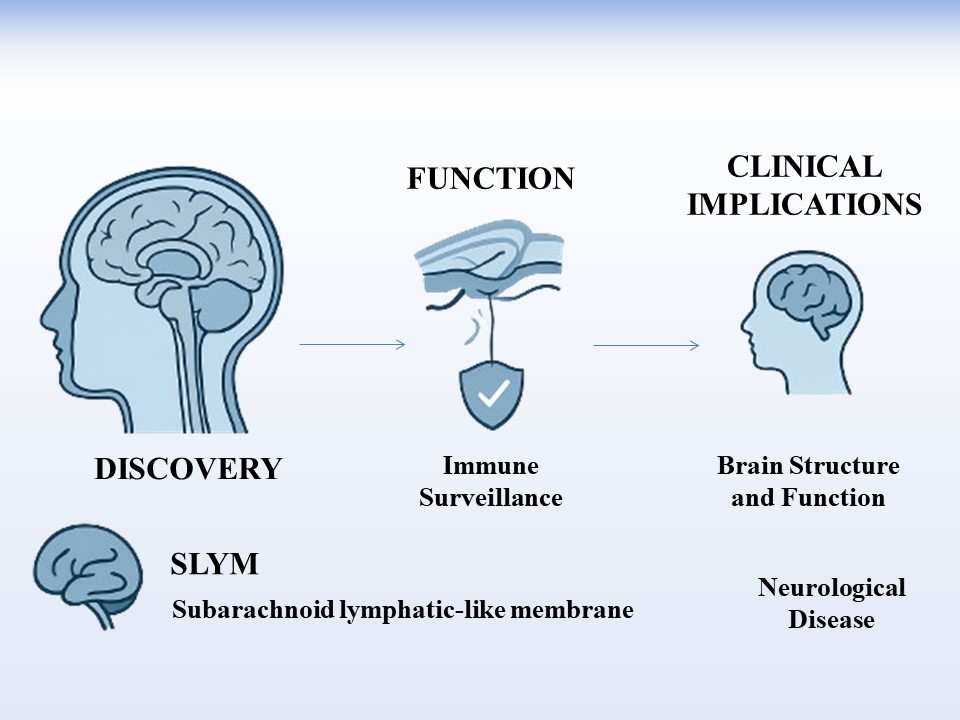
The central nervous system (CNS), which consists of the brain and spinal cord, is protected by specialized connective tissue layers known as the meninges. These were traditionally regarded as passive barriers that offer mechanical protection and maintain the circulation of cerebrospinal fluid (CSF). Nonetheless, recent studies have found a fourth meningeal layer, a subarachnoid lymphatic-like membrane (SLYM) located in the subarachnoid space. The SLYM is a physical and immunological barrier that isolates CSF and mediates the local immunological surveillance. Increasing age of this membrane has been linked to neurodegenerative diseases like Alzheimer disease; and its mechanical and inflammatory characteristics indicate it has a role in traumatic brain injury. This finding opposes classical neuroanatomical beliefs and points out to the active participation of meninges in the homeostasis and pathology of the brain. In case in vivo imaging methods have the ability to visualize the SLYM, it may become a new diagnostic biomarker and therapeutic target of CNS disorders. This review summarizes the architecture and role of the SLYM, its role in neurological disease, and has the potential to revolutionize how we understand the barriers in the brain and the immune system.
Disclaimer: This is not the final version of the article. Changes may occur when the manuscript is published in its final format.