
 ACCESS
Editorial
ACCESS
Editorial
Volume 1, Article ID: 2025.0007
Received: 09 Jul 2025 Published: 21 Jul 2025
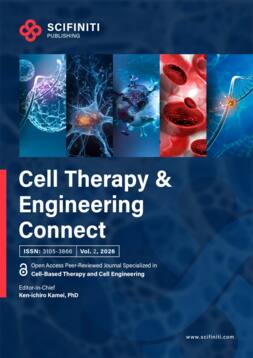
As Editor-in-Chief of Cell Therapy & Engineering (CTE) Connect, it is my great pleasure to welcome you to the inaugural issue of CTE Connect - a peer-reviewed, open-access journal envisioned as a global stage for breakthroughs that merge fundamental cell engineering with transformative clinical and industrial applications. CTE Connect will appear twice a year in print and online, ensuring that high-quality science is freely accessible to practitioners, scholars, and innovators across disciplines. Our mission is to advance the development of next-generation cell-based technologies by publishing rigorous research, insightful reviews, and forward-looking perspectives across a broad range of fields, including genetic engineering, stem cell science, tissue and organ engineering, immunoengineering, neuroengineering, and the enabling micro- and nanotechnologies that support them. This first issue gathers four invited review articles that exemplify the breadth and depth of the field: Microfluidic Bioprinting for Complex Tissues: Rashik Chand, Ken-ichiro Kamei, and Sanjairaj Vijayavenkataraman dissect the emerging “printhead-on-a-chip” paradigm. The authors demonstrate how integrating microfluidics with extrusion, coaxial, droplet-, light-, and voxel-based printing enables on-demand material switching, gradient generation, and sub-hundred-micron precision-advancing engineered tissues ever closer to native complexity and functionality. Upcycled MSCs for Regenerative Therapy: Dia Advani et al. argue compellingly for harvesting mesenchymal stem cells from medical-waste tissues. Their “upcycled” MSC concept promises to reduce costs, minimize donor-site morbidity, and narrow the supply-demand gap that still hampers translation of adult stem-cell therapies. ER-Stress & Insulin Synergy in Cancer: Nosayba Al-Damook et al. explore how targeted manipulation of the unfolded-protein response can amplify the efficacy of insulin-potentiated chemotherapy. The review synthesizes metabolic, molecular, and clinical evidence to chart a path toward more selective, less toxic oncologic regimens. Cell-Penetrating Peptides: Neelabh Datta surveys the structural classes, translocation mechanisms, and therapeutic applications of CPPs while candidly assessing the hurdles-stability, specificity, and safety-that must be overcome before these versatile shuttles can reach full clinical potential. High-Purity Production of Endothelial Cells from Human Pluripotent Stem Cells: Koki Yoshimoto et al, present a streamlined, cell-sorting-free protocol that yields over 90% pure endothelial cells from human embryonic stem cells. Controlled extension of Wnt signaling combined with transient Notch inhibition suppresses smooth muscle differentiation and promotes an arterial-like endothelial identity. The resulting cells exhibit canonical endothelial morphology, function, and a developmentally enriched transcriptomic profile, providing a scalable autologous endothelial source for vascularized organoids, organ-on-chip platforms, and cell-based vascular therapies. Together, these articles illustrate how methodological innovation, resource stewardship, and mechanistic insight can converge to reshape regenerative medicine, drug delivery, and cancer therapy. Collectively, these contributions showcase how methodological innovation, resource stewardship, and mechanistic insight are reshaping regenerative medicine, drug delivery, and oncology. I extend my heartfelt gratitude to the authors, reviewers, and editorial team whose dedication and commitment have brought this inaugural issue to fruition. I invite you to read, cite, and contribute to CTE Connect as we collectively advance the frontiers of cell therapy and engineering. Ken-ichiro Kamei Editor-in-Chief, Cell Therapy & Engineering Connect Programs of Biology and Bioengineering Divisions of Science and Engineering New York University Abu Dhabi Abu Dhabi, UAE & Institute for Integrated Cell-Material Sciences (WPI-iCeMS) Institute for Advanced Study, Kyoto University, Kyoto 606-8501, Japan & Department of Pharmaceutics, Wuya College of Innovation Shenyang Pharmaceutical University; Shenyang 110016, China