
APA Style
Rania Emil Ghanem, Dua'a Hussein Al-Hamed, Maher Khdour. (2026). Medication Non-Adherence Behaviors and Potential Barriers Among Chronically Ill Patients. Clinical Pharmacy Connect, 2 (Article ID: 0008). https://doi.org/10.69709/CPC.2025.173840MLA Style
Rania Emil Ghanem, Dua'a Hussein Al-Hamed, Maher Khdour. "Medication Non-Adherence Behaviors and Potential Barriers Among Chronically Ill Patients". Clinical Pharmacy Connect, vol. 2, 2026, Article ID: 0008, https://doi.org/10.69709/CPC.2025.173840.Chicago Style
Rania Emil Ghanem, Dua'a Hussein Al-Hamed, Maher Khdour. 2026. "Medication Non-Adherence Behaviors and Potential Barriers Among Chronically Ill Patients." Clinical Pharmacy Connect 2 (2026): 0008. https://doi.org/10.69709/CPC.2025.173840.
ACCESS
Research Article
Volume 2, Article ID: 2026.0008

Rania Emil Ghanem
rghanem@staff.alquds.edu
Dua'a Hussein Al-Hamed
doaa.al.hamed.90@gmail.com
Maher Khdour
mkhdour@staff.alquds.edu
1 College of Pharmacy, Al-Quds University, Abu Dis, Jerusalem, Palestine
2 Pharmacy Department, Ramallah & Al-bireh Health Directorate, West Bank, Palestine
* Author to whom correspondence should be addressed
Received: 10 Jul 2025 Accepted: 24 Dec 2025 Available Online: 25 Dec 2025 Published: 16 Jan 2026
Background: Poor adherence to medications represents a significant barrier to achieving the desired health outcomes in patients with chronic diseases. Objective: This study aimed to evaluate medication non-adherence and its associated factors among chronically ill patients. Methodology: In this cross-sectional study, the 4-item medication adherence scale was used to assess adherence among chronically ill patients attending the outpatient clinic of a government primary healthcare center from June to November 2024. The logistic regression statistical model was used to determine the factors associated with medication non-adherence. Results: In total, 160 patients were included in the study with a non-adherence rate of 43.1%. Not receiving information about medication (OR = 2.87; CI: 1.4–3.9), number of daily pills (OR = 1.61; CI: 1.1–2.3), polypharmacy (OR = 2.30; CI: 1.3–3.3), changes in treatment (OR = 3.10; CI: 2.2–4.6), and lack of appropriate knowledge (OR = 2.88; CI: 1.2–4.1) were associated with medication non-adherence. On the other hand, incorporating treatment plans into daily activities (OR = 0.17; CI: 0.05–0.6) was inversely associated with medication non-adherence. Conclusion: Low medication adherence highlights the need for interventions that improve patients’ medication-related knowledge, minimize the number of prescribed medications and pills per day, and encourage integrating medication-taking into daily routines.
Pharmacological therapies are the primary interventions for managing chronic illnesses, aiming to reduce complications and improve patients’ quality of life [1,2,3]. Non-adherence to medication can negatively affect patient outcomes and may lead to further worsening of symptoms and increased morbidity and mortality [4]. The negative impact of non-adherence has been reported in many studies worldwide [5,6,7]. A European study reported that approximately 9% of emergency department admissions among cardiovascular patients were attributable to medication non-adherence. In their systematic review, Cutler et al. assessed the cost of non-adherence across 14 chronic conditions; the estimated disease-specific cost per person ranged from $949 to $44,190 [8]. The burden of non-adherence includes direct and indirect costs, such as medication expenses, emergency department visits, and hospital admissions. The non-adherence is complex and multifactorial, as classified by the World Health Organization (WHO), including: patients’ related factors, systemic aspects, pharmacological elements, and condition-specific elements [9]. The WHO considers factors such as beliefs about medication, pill burden, comorbidities, and treatment cost. Non-adherence was reported more frequently in low-income populations with limited resources, particularly in developing countries [10,11,12,13]. Individuals in low-to middle-income families that cannot afford medications and health costs are more likely to skip doses and prone to non-adherence. The WHO estimates that adherence to prescribed medications among patients with chronic diseases in developed countries is approximately 50%. In developing countries, the rates are even lower [9,13]. In the West Bank, Palestine, few studies have examined non-adherence and its risk factors, and those available have focused on specific diseases, treatments, or patient groups [14]. The variety of reasons linked to pharmaceutical non-adherence, particularly among chronically ill patients, requires further investigation to ascertain the precise factors contributing to medication non-adherence among this group of patients. In the West Bank, medication non-adherence among patients with chronic diseases has been insufficiently investigated. The objective of this study is to evaluate medication adherence and examine the factors linked to medication non-adherence among the chronically ill patients in the West Bank, Palestine. The study findings should provide healthcare providers with insight into the factors that should be addressed, particularly when developing interventions to improve adherence in patients with chronic diseases [15,16,17,18].
2.1. Study Design and Subjects This was a cross-sectional, questionnaire-based study in which patients visiting the outpatient clinic of a governmental primary healthcare center in Ramallah, West Bank, were randomly selected to participate between June and November 2024. The distribution of population rate per Ramallah center was 5114, and the average number of visits per patient per year was 0.9 [18]. As no local estimates were available, we assumed a 50% non-adherence prevalence. Using a 95% confidence level and a 0.05 margin of error, the minimum required sample size was 142. Assuming a 30% dropout rate from the study, the target sample size was 195 patients. Following screening, research assistants randomly selected participants to follow up with at the center, verified their eligibility, and invited them to participate in the study. Participants in the study had to be 18 years of age or older, have one or more chronic condition(s), and have been taking medication for more than a year as part of their treatment regimen to be eligible. The study excluded individuals unable to provide informed consent or complete the questionnaire due to cognitive impairment or severe illness. In the study, 23 health issues were classified as chronic diseases (Additional file S1: Table S1). These conditions were selected because their standard treatment requires a prescription. Every participant in the study was given a thorough explanation of the aims, methodology, and purpose of the research before they voluntarily agreed to participate. 2.2. Study Instrument The validated Arabic version of the 4-item Medication Adherence Scale (MMAS-4), a tool widely used in adherence research, was used to assess medication adherence. The scale includes four yes/no items assessing forgetting doses, being careless about timing, stopping medication when feeling better, and stopping when feeling worse. Each item is responded to with “yes” or “no.” Patients who answered “yes” to any item were categorized as non-adherent, whereas “no” replies to all items signified adherence. Alongside adherence, we collected data on factors associated with non-adherence. The following items were included: Socio-demographic variables: age, gender, educational attainment, and income level. Clinical characteristics included the type of chronic disease, number of comorbidities, and number of medications (polypharmacy). Treatment-related factors included therapy modifications, medication burden, and the integration of medicines into the daily regimen. Healthcare system variables: perceived quality of healthcare provision and information regarding pharmaceuticals, assessed using a 5-point Likert scale (1 = extremely poor to 5 = very good) [10,11]. The items and scoring method were adapted from previously published work [19]. The four items were: Do you forget to take your medications? Are you careless about the time of taking your medications? Do you stop taking your medications when you feel better? Do you stop taking your medications when you feel worse? According to their responses, patients were divided into two groups: those who reported one or more “yes” responses were considered non-adherent, while those who reported “no” to all four questions were considered adherent. Furthermore, the quality of healthcare delivery as perceived by patients, along with the level of treatment information provided, was assessed using a 5-point Likert scale, where “1” indicates very poor and “5” indicates very good. Scores exceeding “3” were used to classify respondents as perceiving high-quality healthcare delivery and receiving comprehensive treatment information for each item. 2.3. Statistical Analysis The Statistical Package for the Social Sciences (SPSS) version 21 (SPSS, Chicago, IL, USA) was used for analysis. Descriptive, univariate, and bivariate analyses were performed. The Chi-square test was used to examine the association between various categorical variables and medication adherence. Variables that were significantly associated with medication adherence in the univariate analysis were included in a stepwise ordinal regression model. Statistical significance was set at p < 0.05.
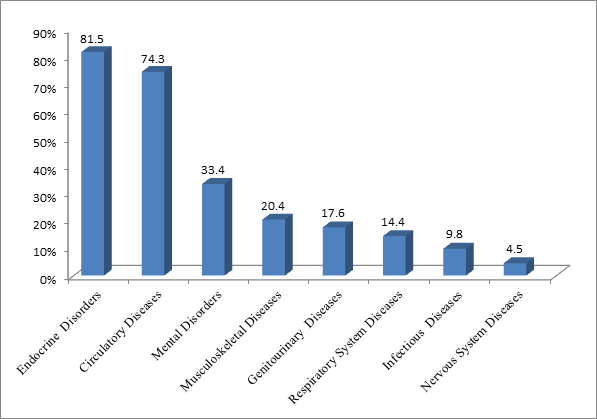
3.1. Patient Characteristics During the study period, 210 patients attending the outpatient clinic were assessed for eligibility. Figure 1 provides a summary of the recruitment and enrollment process. Of these, 195 patients met the inclusion criteria. The principal reasons for exclusion at the screening phase (n = 15) included being under 18 years of age, having a cognitive impairment that prevented the provision of reliable responses, or having been on the current pharmaceutical regimen for less than 1 year. Of the 195 eligible patients, 160 provided written informed consent and completed the study questionnaire, resulting in response rates of 82.1% among eligible patients and 76.2% among those first approached. The 35 eligible patients who chose not to participate did so owing to time constraints or disinterest. Of the 210 patients approached, 160 agreed to participate in the study, yielding a response rate of 76.2%. Patients’ ages ranged from 18 to 56+ years, with the majority between 36–55 years (48.8%) and more than 56 years (40.0%). The majority of the participants were females (61.2%), and 63.1% had attained basic education. Most patients were diagnosed with endocrine disorders (81.5%), followed by circulatory system disorders (74.3%), as classified by ICD-9-CM (Figure 2). Demographic and clinical data of adherent and non-adherent groups are presented in Table 1. Patient characteristics and the results of the univariate analysis of factors with potential impact on medication adherence. * Pearson’s χ2 test. † Student’s t-test. 3.2. Non-Adherence Among Chronic Ill Patients Results showed 43.1% prevalence rate of non-adherence, with patients living with endocrine system disorders and those with mental illness being the most non-adherent (Table 2). Forgetting to take medications (36.2%) and being careless about taking medications (29%) over the last four weeks were the most common forms of non-adherence. Adherence and non-adherence rates, likely causes of non-adherence among study participants (n = 160). 3.3. Factors Associated with Medication Non-Adherence Univariate analysis revealed that having difficulty affording medications, not receiving information about prescribed medications, the number of daily medications, changes in treatment, and not incorporating the medication into daily routine activities were significantly associated with medication non-adherence. The multivariate regression analysis revealed that not receiving information about medication (OR = 2.87; CI: 1.4–3.9), number of daily medications (OR = 1.61; CI: 1.1–2.3), polypharmacy (OR = 2.30; CI: 1.3–3.3) changes in treatment (OR = 3.10; CI: 2.2–4.6), lack of knowledge (OR = 2.88; CI: 1.2–4.1), and not incorporating medications into daily activities (OR = 0.17; CI: 0.05–0.6) were significantly and independently associated with, medication non-adherence Table 3. Multiple regression analysis for variables predicting non-adherence. β is the Regression coefficient, SE: Standard error, OR: Odds Ratio, CI: Confidence interval.
Variable n (%)
All Patient
(160)Adherent
(91)Nonadherent
(69)p-Value *
Gender
Male
62 (38.8)
35 (38.5)
27 (39.1)
0.88
Female
98 (61.2)
56 (61.5)
42 (60.1)
0.79
Age (year)
18–35 years
18 (11.3)
8 (8.8)
10 (14.5)
0.39
36–55 years
78 (48.8)
46 (50.5)
32 (46.3)
≥56 years
64 (40.0)
37 (40.7)
27 (39.1)
Education Level
Illiterate
11 (6.9)
9 (9.9)
2 (2.8)
0.09
School level
101 (63.1)
59 (64.8)
42 (60.8)
College/University Level
48 (30.0)
23 (25.3)
25 (36.2)
Living Status
Living Alone
15 (9.3)
6 (6.6)
9 (13.0)
0.06
Living with Someone
145 (90.6)
85 (93.4)
60 (86.9)
Number of Chronic Conditions (mean ± SD)
2–3 Chronic Conditions
82 (51.3)
65 (71.4)
17 (24.6)
<0.001
4–5 Chronic Conditions
48 (30.0)
16 (17.6)
32 (46.4)
≥6 Chronic Conditions
30 (18.8)
10 (11.0)
20 (29.0)
Social and Economic Factors
Having difficulty affording medications
98 (61.3)
51 (56.0)
47 (68.1)
0.04
Having difficulty with transport
82 (51.3)
48 (52.7)
34 (49.2)
0.66
Healthcare Team and System-Related Factors
Receive information about medication (no)
107 (66.9)
52 (54.9)
57 (82.6)
<0.001
≤1visit every three months
88 (55.0)
50 (55.0)
33 (47.8)
0.04
Quality of care (mean ± SD)
4.11 ± 0.76
4.29 ± 0.62
3.9 ± 0.81
0.04 †
Condition-Related Factors
≥1 Hospital Admission(s)
30 (18.8)
11(12.1)
19 (27.5)
0.06
No Hospital Admissions
130 (81.2)
80 (87.9)
50 (72.4)
Therapy-Related Factors
Polypharmacy (yes, >5 medications)
97 (60.6)
40 (44.4)
57 (82.6)
<0.001
Number of Daily Pills (mean ± SD)
3.9 ± 1.3
3.2 ± 1.1
4.8 ± 1.6
<0.001 †
Did experience changes in treatment
96 (60.0)
44 (48.3)
52 (75.3)
<0.001
Patient-Related Factors
Did not have appropriate knowledge
64 (40.0)
30 (32.9)
34 (49.2)
0.02
Incorporation into daily routines (no)
100 (62.5)
42 (46.1)
58 (84.0)
<0.001
Prevalence of Adherence/Non-Adherence
Total 160 (%)
Adherent Patients
91 (56.9)
Non-Adherent Patients
69 (43.1)
Likely cause of non-adherence
Total 69 (%)
Forgetting to take medication
56 (36.2)
Careless at times about taking medications
22 (29.0)
Feeling better
13 (20.3)
Feeling worse
11 (15.9)
ꞵ
SE
OR
CI
p-Value
Did not receive information about medication
1.054
0.56
2.87
1.4–3.9
0.01
Number of Daily Pills
0.470
0.13
1.61
1.1–2.3
0.02
Polypharmacy
0.830
0.33
2.30
1.3–3.3
0.01
Did experience changes in treatment
1.410
0.78
3.10
2.2–4.6
0.005
Did not have the appropriate knowledge
1.060
0.59
2.88
1.2–4.1
0.03
Incorporation into daily routines (yes)
−1.714
0.91
0.18
0.05–0.6
0.007
The assessment of medication non-adherence and its related factors serve as a crucial initial step in formulating future intervention programs aimed at improving medication adherence and health outcomes among chronically ill patients. Results showed that a high proportion of patients (43.1%) were non-adherent; that is, more than half of the participants continued adherence to long-term therapies for chronic conditions, indicating significant opportunities for enhancement within the primary care setting. The adherence rate observed in this study was slightly higher than the 39% reported among Italian outpatient adults [20] but comparable to the 53% reported in Chinese primary-care centers [21]. Our results were in line with earlier studies conducted in Spain on chronic patients [22], although they contrast markedly with the reported adherence rate of 18% in tertiary care settings [23]. Forgetfulness and being careless about medication time were the most frequently reported forms of non-adherence [20,21]. A reasonable explanation for these results may be attributed to multiple factors, including working, travel, financial condition, and the ineffectiveness or Side effects of medicines [24,25]. The best indicator of adherence was the patient’s understanding of their prescribed medications. A significant percentage of participants had difficulty explaining the dosage, number, and frequency of their prescribed medications, which negatively affected their adherence. It can be difficult for individuals with chronic illnesses to comprehend their own symptoms and the intricate regimens they must follow. Friis et al. (2020), for example, found that those with chronic illnesses had greater difficulty understanding the health information provided by providers [26]. Similarly, chronically unwell people frequently have misconceptions and don’t grasp the purpose of their medications, according to Fredericksen et al. and Kvarnström et al. [27,28]. Additionally, Al-Qazaz et al. found that adequate knowledge about medications is associated with better adherence to prescribed drugs and better glycemic control among patients with type 2 diabetes [29]. Polypharmacy and the number of daily pills were shown to be independent risk factors of non-adherence; this was in line with other studies [25,26,30]. An earlier cohort study on medication adherence in older adults (CoSMO) found that the number of pills taken by older adults with hypertension was a strong predictor of poor adherence, consistent with findings from other studies [24,25]. Polypharmacy, along with problems related to a lack of knowledge of the prescribed medications, makes it difficult for older adults to adhere to treatment [22]. Another study conducted found that patients with chronic diseases who were taking ≥5 drugs had 2.4 times higher non-adherence to their medications than those who used only one drug [26]. Moreover, changes in treatment regimens were associated with medication non-adherence in this study, which was consistent with Mansur et al. [27,28]who revealed that the number of pills, chronic conditions, changes in the therapy regimens, and increased medication dosing will negatively affect adherence. Other patient-related factors associated with low adherence in this study included participants’ failure to incorporate their medication regimens into their daily routines. Healthcare providers should target those patients, especially those with unintentional non-adherence, and motivate them to integrate medication regimens into their daily activities, which may strengthen the habit and make patients remember to take their medication easily [26,28,29]. Sanders MJ et. al. interviewed 149 community-dwelling senior citizens and found that for 91% of the participants, taking medication was integrated into their sleep, wake-up, and meals routines. The participants choreographed specific, personalized medicine-taking behaviors within larger everyday routines. Mostly, pillboxes or homemade modifications were used as the equipment to encourage adherence [31]. 4.1. Strengths and Limitations of the Study Surveys and self-reported measures may have specific limitations, as they are susceptible to recall bias and the potential overestimation of adherence rates. A substantial proportion of participants reported difficulty understanding the dosage, quantity, and frequency of their prescriptions, which adversely affected their adherence. The study was conducted at a single medical center, which may have somewhat constrained the overall generalizability of the findings. Furthermore, comparing this study with others is challenging due to the varied methodologies used in the literature and the lack of consensus on the most effective approach to assess treatment adherence. Despite these drawbacks, the estimation of treatment adherence in this study contributed to the development of a body of evidence supporting patient-centered therapies.
CoSMO
Cohort Study of Medication Adherence in Older Adults
MOH
Ministry of Health
SE
Standard Error
OR
Odds Ratio
CI
Confidence Interval
SPSS
Statistical Package for Social Sciences
WHO
World Health Organization
Study concept and design: R.E.G. and M.R.K.; analysis and interpretation of data: D.H.A.-H., R.E.G., and M.R.K.; drafting of the manuscript: R.E.G. and M.R.K.; visualization: M.R.K.; critical revision of the manuscript for important intellectual content: M.R.K.; statistical analysis: M.R.K. and D.H.A.-H. Data collection: D.H.A.-H., and R.E.G. All authors have read and agreed to the published version of the manuscript.
The dataset presented in the study is available on request from the corresponding author after its publication.
The study protocol was reviewed and approved by the Faculty of Pharmacy Committee at Al-Quds University and the Palestinian Ministry of Health (MOH) (Ref. RECPH/2023-003). Permission was obtained from the Ministry of Health (MOH) to conduct the study at the Ramallah primary healthcare clinic. Written informed consent was obtained from all participants before participation. Patients were informed that their participation was voluntary, that they could withdraw from the study at any time without affecting their usual healthcare, and that their information would remain confidential.
The study was conducted in accordance with the principles of the Declaration of Helsinki.
No consent for publication is required, as the manuscript does not involve any individual personal data, images, videos, or other materials that would necessitate consent.
The authors declare no conflicts of interest.
This research did not receive any specific grant from funding agencies in the public, commercial, or not-for-profit sectors.
The authors would like to thank all the participants in this study, as well as the pharmacists in the primary care center, for their participation in this research. The authors confirm that no AI tools were used to generate any content of this manuscript.
Download Supplementary Materials Table S1 here.
[1] Feldman, R.; Bacher, M.; Campbell, N.; Drover, A.; Chockalingam, A. Adherence to pharmacologic management of hypertension. Can. J. Public Health 1998, 89, I16–I18. [CrossRef]
[2] Chantzaras, A.; Yfantopoulos, J. Association between medication adherence and health-related quality of life of patients with diabetes. Hormones 2022, 21, 691–705. [CrossRef]
[3] Religioni, U.; Barrios-Rodríguez, R.; Requena, P.; Borowska, M.; Ostrowski, J. Enhancing therapy adherence: Impact on clinical outcomes, healthcare costs, and patient quality of life. Medicina 2025, 61, 153. [CrossRef]
[4] Khdour, M.R.; Hawwa, A.F.; Kidney, J.C.; Smyth, B.M.; McElnay, J.C. Potential risk factors for medication non-adherence in patients with chronic obstructive pulmonary disease (COPD). Eur. J. Clin. Pharmacol. 2012, 68, 1365–1373. [CrossRef]
[5] Saleem, F.; Hassali, M.A.; Shafie, A.A.; Awad, G.A.; Atif, M.; ul Haq, N.; Aljadhey, H.; Farooqui, M. Does treatment adherence correlates with health related quality of life? Findings from a cross sectional study. BMC Public Health 2012, 12, 1–7. [CrossRef]
[6] Saja, M.F.; Younis, A.S.; Alzahrani, L.A.; Alkhlassi, I.N.; Aldakhil, L.S.; Albayyat, R.M.; Alnasser, N.A.; Alokla, K.S.; Alghamdi, L.A.; Rashed, A.N. The Association Between Medication Adherence and Health-Related Quality of Life in Patients with COPD: A Cross-Sectional Study. Int. J. Chronic Obstr. Pulm. Dis. 2025, 20, 1567–1583. [CrossRef]
[7] Stewart, S.J.F.; Moon, Z.; Horne, R. Medication nonadherence: Health impact, prevalence, correlates and interventions. Psychol. Health 2023, 38, 726–765. [CrossRef]
[8] Cutler, R.L.; Fernandez-Llimos, F.; Frommer, M.; Benrimoj, C.; Garcia-Cardenas, V. Economic impact of medication non-adherence by disease groups: A systematic review. BMJ Open 2018, 8, e016982. [CrossRef]
[9] Sabaté, E. Adherence to Long-Term Therapies: Evidence for Action; World Health Organization: Geneva, Switzerland, 2003; https://iris.who.int/handle/10665/42682.
[10] Law, M.R.; Cheng, L.; Dhalla, I.A.; Heard, D.; Morgan, S.G. The effect of cost on adherence to prescription medications in Canada. Cmaj 2012, 184, 297–302. [CrossRef]
[11] Glombiewski, J.A.; Nestoriuc, Y.; Rief, W.; Glaesmer, H.; Braehler, E. Medication adherence in the general population. PLoS ONE 2012, 7, e50537. [CrossRef]
[12] Wilder, M.E.; Kulie, P.; Jensen, C.; Levett, P.; Blanchard, J.; Dominguez, L.W.; Portela, M.; Srivastava, A.; Li, Y.; McCarthy, M.L. The impact of social determinants of health on medication adherence: A systematic review and meta-analysis. J. Gen. Intern. Med. 2021, 36, 1359–1370. [CrossRef]
[13] Chauke, G.D.; Nakwafila, O.; Chibi, B.; Sartorius, B.; Mashamba-Thompson, T. Factors influencing poor medication adherence amongst patients with chronic disease in low-and-middle-income countries: A systematic scoping review. Heliyon 2022, 8, e09716. [CrossRef]
[14] Sweileh, W.M.; Zyoud, S.E.H.; Abu Nab’a, R.J.; Deleq, M.I.; Enaia, M.I.; Nassar, S.A.M.; Al-Jabi, S.W. Influence of patients’ disease knowledge and beliefs about medicines on medication adherence: Findings from a cross-sectional survey among patients with type 2 diabetes mellitus in Palestine. BMC Public Health 2014, 14, 94. [CrossRef]
[15] Ni, Z.; Wu, B.; Yang, Q.; Yan, L.L.; Liu, C.; Shaw, R.J. An mHealth intervention to improve medication adherence and health outcomes among patients with coronary heart disease: Randomized controlled trial. J. Med. Internet Res. 2022, 24, e27202. [CrossRef]
[16] Anestina, O.N. Pharmacological Interventions in Underserved Populations: A Translational Study on Medication Adherence and Chronic Disease Outcomes in Rural Family Practice Settings. J. Appl. Pharm. Sci. Res. 2025, 8, 52–59. [CrossRef]
[17] Ministry of Health. The Annual Health Report for 2020; Palestinian Ministry of Health: Ramallah, Palestine, 2021.
[18] Ministry of Health. The Annual Health Report for 2020 Can Be Obtained from the Palestinian Ministry of Health; Palestinian Ministry of Health: Ramallah, Palestine, 2021.
[19] Alefishat, E.; Jarab, A.S.; Al-Qerem, W.; Abu-Zaytoun, L. Factors Associated with Medication Non-Adherence in Patients with Dyslipidemia. Healthcare 2021, 9, 813. [CrossRef]
[20] Li, Y.T.; Wang, H.H.; Liu, K.Q.; Lee, G.K.; Chan, W.M.; Griffiths, S.M.; Chen, R.L. Medication adherence and blood pressure control among hypertensive patients with coexisting long-term conditions in primary care settings: A cross-sectional analysis. Medicine 2016, 95, e3572. [CrossRef]
[21] Fernandez-Lazaro, C.I.; García-González, J.M.; Adams, D.P.; Fernandez-Lazaro, D.; Mielgo-Ayuso, J.; Caballero-Garcia, A.; Moreno Racionero, F.; Córdova, A.; Miron-Canelo, J.A. Adherence to treatment and related factors among patients with chronic conditions in primary care: A cross-sectional study. BMC Fam. Pract. 2019, 20, 132. [CrossRef]
[22] Jansà, M.; Hernández, C.; Vidal, M.; Nuñez, M.; Bertran, M.J.; Sanz, S.; Castell, C.; Sanz, G. Multidimensional analysis of treatment adherence in patients with multiple chronic conditions. A cross-sectional study in a tertiary hospital. Patient Educ. Couns. 2010, 81, 161–168. [CrossRef]
[23] Coe, A.B.; Moczygemba, L.R.; Gatewood, S.B.; Osborn, R.D.; Matzke, G.R.; Goode, J.V.R. Medication adherence challenges among patients experiencing homelessness in a behavioral health clinic. Res. Soc. Adm. Pharm. 2015, 11, e110–e120. [CrossRef]
[24] Osborn, C.Y.; Mayberry, L.S.; Wagner, J.A.; Welch, G.W. Stressors may compromise medication adherence among adults with diabetes and low socioeconomic status. West. J. Nurs. Res. 2014, 36, 1091–1110. [CrossRef]
[25] Li, H.; Wu, X.; Shen, J.; Lou, S. Perspective and experience of patients with aplastic anemia on medication adherence. Patient Prefer. Adherence 2023, 17, 2215–2225. [CrossRef]
[26] Fredericksen, R.; Gibbons, L.; Brown, S.; Edwards, T.; Yang, F.M.; Fitzsimmons, E.; Alperovitz-Bichell, K.; Godfrey, M.; Wang, A.; Church, A. Medication understanding among patients living with multiple chronic conditions: Implications for patient-reported measures of adherence. Res. Soc. Adm. Pharm. 2018, 14, 540–544. [CrossRef]
[27] Kvarnström, K.; Airaksinen, M.; Liira, H. Barriers and facilitators to medication adherence: A qualitative study with general practitioners. BMJ Open 2018, 8, e015332. [CrossRef]
[28] Al-Qazaz, H.K.; Sulaiman, S.A.; Hassali, M.A.; Shafie, A.A.; Sundram, S.; Al-Nuri, R.; Saleem, F. Diabetes knowledge, medication adherence and glycemic control among patients with type 2 diabetes. Int. J. Clin. Pharm. 2011, 33, 1028–1035. [CrossRef]
[29] Sarbach, M.C.; Rüegg, S.; Allemann, S.S.; Arnet, I. Personalized adherence interventions using medication adherence technologies in polypharmacy management in epilepsy: An interprofessional case report. Epilepsy Behav. Rep. 2025, 30, 100767. [CrossRef]
[30] Napolitano, F.; Napolitano, P.; Angelillo, I.F.; Group, C.W. Medication adherence among patients with chronic conditions in Italy. Eur. J. Public Health 2016, 26, 48–52. [CrossRef]
[31] Sanders, M.J.; Van Oss, T. Using daily routines to promote medication adherence in older adults. Am. J. Occup. Ther. 2013, 67, 91–99. [CrossRef]
Disclaimer/Publisher’s Note: The views expressed in this article are those of the author(s) and do not necessarily reflect the views of the publisher or editors. The publisher and editors assume no responsibility for any injury or damage resulting from the use of information contained herein.
© 2025 Copyright by the Authors
Licensed as an open access article using a CC BY 4.0 license.
We use cookies to improve your experience on our site. By continuing to use our site, you accept our use of cookies. Learn more