

 ACCESS
Review Article
ACCESS
Review Article
Volume 2, Article ID: 2026.0016

Dimitar Slavkov
d.slavkov@abv.bg


Svetoslava Troyanova Slavkova
sl_troya@hotmail.com

1 Department of Neurosurgery, “Tsaritsa Yoanna” University Hospital Sofia, Bulgaria
2 Department of Dermato-Oncology, University Specialized Hospital for Active Treatment in Oncology “Prof. Ivan Chernozemski”, Sofia, Bulgaria
3 Department of Dermatology and Allergology, Medical University Pleven, Bulgaria
* Author to whom correspondence should be addressed
Received: 05 Jun 2026 Accepted: 20 Aug 2026 Available Online: 20 Aug 2026
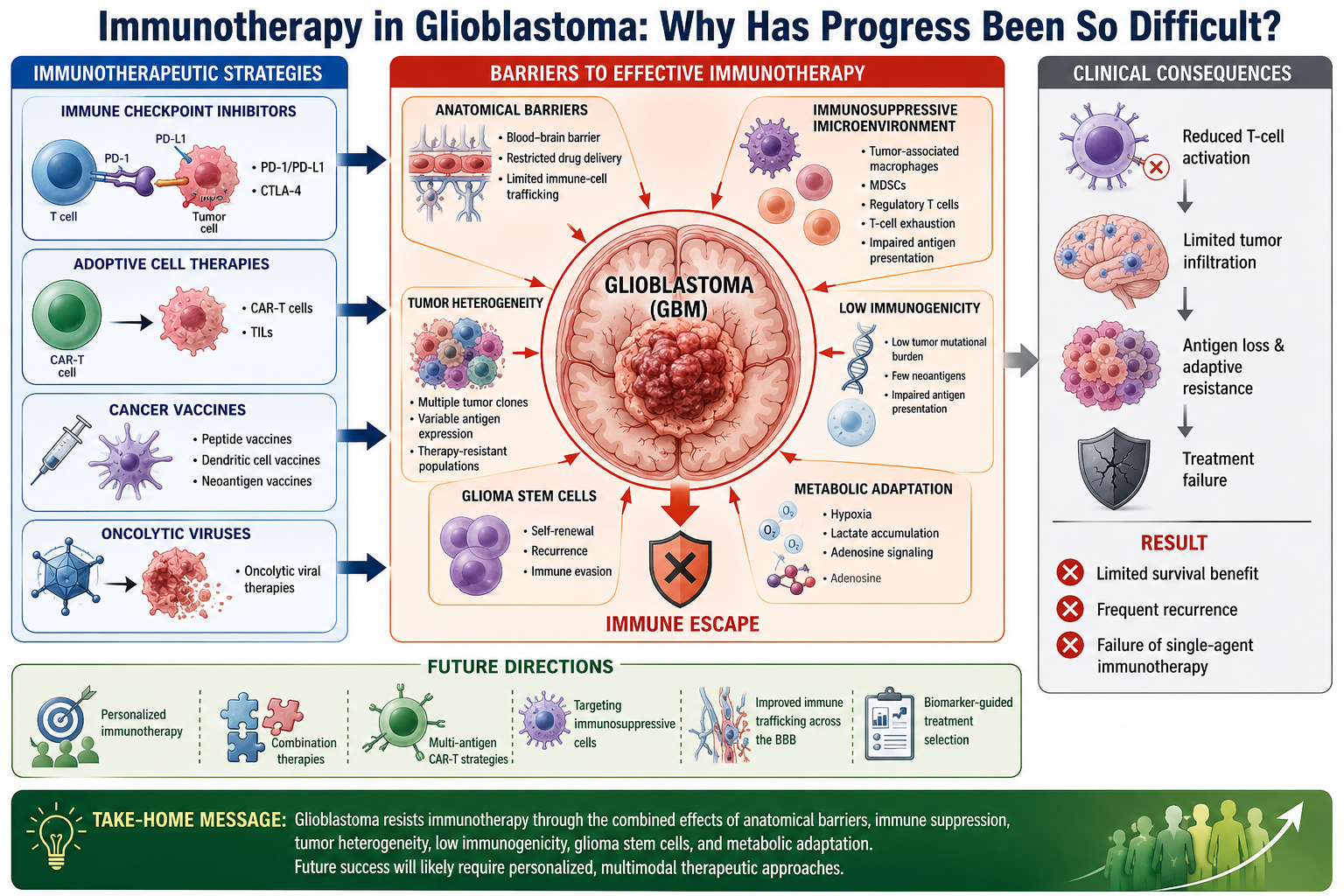
Glioblastoma remains one of the most aggressive and difficult-to-treat brain tumors. Although immunotherapy has transformed the management of several cancers, its clinical impact in glioblastoma has been limited. This review summarizes the main immunotherapeutic approaches currently investigated, including immune checkpoint inhibitors, CAR-T cell therapy, cancer vaccines, and oncolytic viruses. It also examines the key biological factors responsible for treatment resistance. Major challenges include the highly immunosuppressive tumor microenvironment, tumor heterogeneity, antigen escape, low immunogenicity, and the presence of the blood–brain barrier. These factors restrict effective antitumor immune responses and reduce the efficacy of current therapies. Emerging strategies focusing on the tumor microenvironment, cytokine-based treatments, personalized medicine, and rational combination approaches may improve future outcomes. A deeper understanding of glioblastoma biology will be essential for the development of effective and individualized immunotherapeutic strategies.