

 ACCESS
Research Article
ACCESS
Research Article
Volume 3, Article ID: 2026.0013
Juan Carlos Santiago-Jiménez
jucasaji@gmail.com

Agustín Gordillo-Yllán
gordillosugus@gmail.com

Krisselby Ivonne Jiménez-Santiago
krisselby3@gmail.com

Francisco Caballero
pchorras@hotmail.com

Gabriel Ramírez-Damaso
gramirezd@ipn.mx

Fray De Landa Castillo-Alvarado
flcastillo@ipn.mx

1 ESFM-Instituto Politécnico Nacional, Unidad Profesional Adolfo López Mateos, Col. Lindavista, Alc. GAM, Mexico City C.P. 07738, Mexico
2 Academy of Experimental Sciences-INGIA SC, RENIECYT-1801688, Esfir 303, Residencial San Pedro, Texcoco C.P. 56189, Mexico
3 ESIME-Instituto Politécnico Nacional, Unidad Profesional Adolfo López Mateos, Col. Lindavista, Alc. GAM, Mexico City C.P. 07738, Mexico
4 Electromechanical Academy-ITSS, Carretera Teapa-Tacotalpa, Km 4.5, Francisco Javier Mina, Teapa Tabasco C.P. 86801, Mexico
5 Chemical Engineering FES-Zaragoza UNAM, Batalla 5 de Mayo S/N, Ejército de Oriente, Iztapalapa, Mexico City C.P. 09230, Mexico
* Author to whom correspondence should be addressed
Received: 30 Oct 2025 Accepted: 03 Mar 2026 Available Online: 04 Mar 2026 Published: 31 Mar 2026
This study investigates the electronic and molecular structure of curcumin through computational analysis, employing density functional theory (DFT) to determine its global reactivity descriptors (GRDs). Furthermore, the energy gap was determined by characterizing the HOMO-LUMO frontier molecular orbitals. The resulting electronic fingerprint indicates a highly reactive molecule with a remarkable capacity to donate electrons, giving it an electrophilic character. Curcumin is used in traditional Eastern medicine as an anti-inflammatory, antioxidant, and anticancer agent; it is a natural polyphenol derived from Curcuma longa. Recent studies have reported that curcumin exhibits significant antitumor activity against non-small cell lung cancer in the A549 cell line model. The global reactivity descriptors (GRDs) obtained in this study were found to correlate with findings from previous in vitro and in vivo experiments, supporting curcumin’s capacity to induce programmed cell death through multiple signaling pathways, including oxidative stress-mediated apoptosis, ferroptosis, and the activation of autophagy. The study further demonstrates a correlation between the observed synergistic effects of curcumin and conventional chemotherapeutic agents. Finally, these results offer a theoretical framework for understanding the relationship between global reactivity descriptors (GRDs) and the biological mechanisms of curcumin at the quantum level, supporting its potential as a complementary therapeutic agent in the treatment of lung cancer.
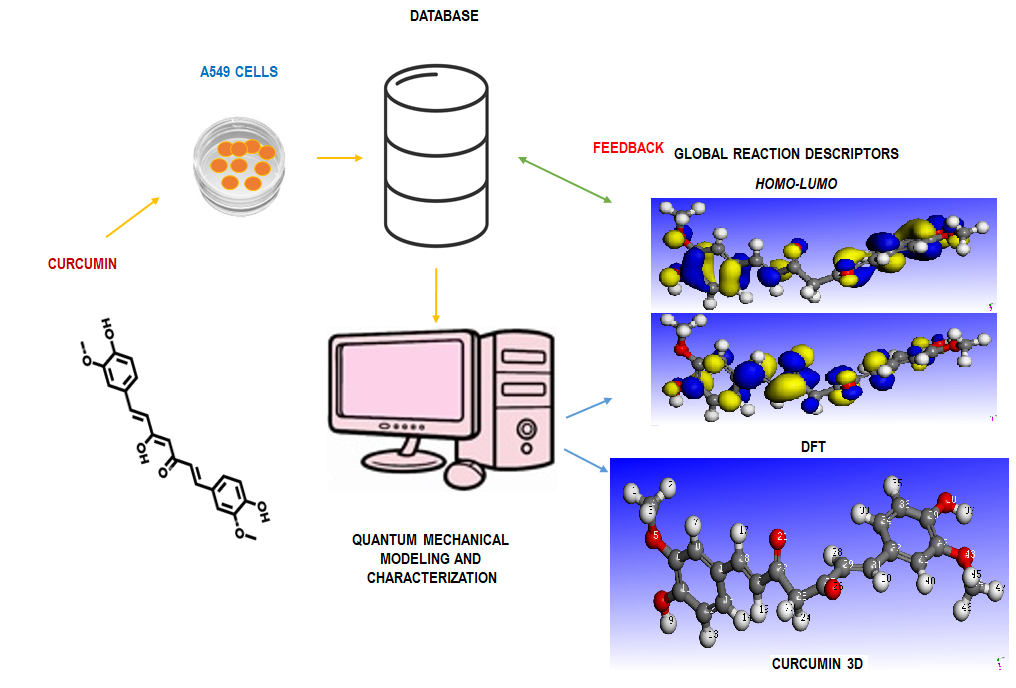
Lung cancer remains a leading cause of mortality worldwide, with non-small cell lung cancer (NSCLC) accounting for approximately 85% of cases and contributing to an estimated 1.7 million deaths annually [1]. This reality underscores the need to innovate and develop more effective and selective therapeutic agents, such as curcumin. Curcumin, a derivative of Curcuma longa, has been proposed in recent research as a candidate for cancer chemoprevention and treatment. Numerous in vitro and in vivo studies document and demonstrate its ability to inhibit cell proliferation and induce apoptosis in the A549 NSCLC cell line [1-5]. Curcumin exerts its biological effects through multiple mechanisms, including the induction of oxidative stress, inhibition of histone deacetylases (HDACs) [1, 6-8], negative regulation of long non-coding RNAs (lncRNAs) [2], and the activation of non-apoptotic cell death pathways, such as ferroptosis [6,8]. Recent studies on novel formulations, such as dendrosomal curcumin (DNC), have demonstrated enhanced therapeutic potential, exhibiting synergistic effects with conventional chemotherapeutic agents, including daunorubicin, through the modulation of key apoptotic markers and gene expression [9]. This multimodal mechanism of action directly influences current antitumor drug discovery, focusing on the rational design of synthetic hybrid compounds. Inspired by the polypharmacology of curcumin, these novel agents are designed to act simultaneously on multiple therapeutic targets, including key enzymes (COX-2, HDAC, topoisomerase II), tyrosine kinase receptors (EGFR, VEGFR-2), and cellular structures such as tubulin. This multi-target approach illustrates how the optimization of a ligand’s electronic and structural properties can enhance apoptotic efficacy, in accordance with the pharmacological principles exemplified by natural products such as curcumin [10-15]. Despite substantial experimental evidence, the quantum mechanical properties underlying the biological activity of curcumin remain poorly understood; in other words, its biochemical reactivity at the quantum level has yet to be fully elucidated. Accordingly, density functional theory (DFT) provides a powerful computational approach to elucidate the relationship between curcumin’s molecular and electronic structure and its biological activity, enabling the quantum-level characterization of molecules through global reactivity descriptors (GRDs). GRDs such as ionization potential (IP), electron affinity (EA), chemical potential (μ), hardness (η), electronegativity (χ), electrophilicity index (ω), and softness (S) provide valuable information about the molecule’s quantum behavior. Furthermore, the energies of the HOMO and LUMO frontier molecular orbitals, as well as the corresponding energy gap, are directly associated with a molecule’s propensity for electron donation or acceptance, which is critical for predicting its interactions with biological targets and its involvement in diverse signaling pathways [16-20]. The objective of this study is to corroborate and contextualize previously reported findings on the effects of curcumin in cancer, employing density functional theory (DFT) calculations to quantitatively characterize its electronic profile from a quantum mechanical perspective, thereby providing insight into its pro-apoptotic activity in the A549 cell line. The hypothesis underlying this study is that the electronic fingerprint of curcumin, as characterized by its global reactivity descriptors (GRDs), accounts for its biological activity. Specifically, a high electrophilicity index provides the quantum mechanical basis for its function as an electrophilic stressor, enabling interactions with nucleophilic biomolecules and thereby initiating the signaling cascades that culminate in programmed cell death.
2.1. Computational Details To characterize the structural and physicochemical properties of curcumin through computational simulations, the following research protocol was implemented. Initially, the molecular structure of curcumin ((1E,6E)-1,7-bis(4-hydroxy-3-methoxyphenyl)-1,6-heptadiene-3,5-dione) was constructed using data obtained from the PubChem database and pre-optimized with the DMol³ module in Material Studio. It was then optimized using density functional theory (DFT) to determine its lowest energy and associated physicochemical properties. Exchange-correlation effects were described using the generalized gradient approximation (GGA) with the Perdew–Wang 91 functional. A DFT-D3 dispersion correction employing the Tkatchenko–Scheffler (TS) scheme was applied to account for nonbonding interactions, particularly van der Waals forces. Finally, solvation effects in the aqueous biological environment were simulated using a conductor-like screening model (COSMO) with the dielectric constant of water (ε = 78.36) [16-20]. 2.2. Calculation of Global Reactivity Descriptors Following geometric optimization, the energies of the frontier molecular orbitals, the highest occupied molecular orbital (HOMO) and the lowest unoccupied molecular orbital (LUMO), were obtained from the converged calculation. We calculated the LUMO-HOMO energy gap (ΔE) as the difference between these two energies. Global reactivity descriptors were derived from the total energies of the system in its neutral (N), anionic (N+1), and cationic (N-1) states, denoted as E(N), E(N+1), and E(N-1), respectively. These energies were subsequently used to calculate key parameters within the conceptual DFT framework, employing the following equations with absolute energy values [16-20]:(1)(2)(3)(4)(5)(6)(7)
3.1. Optimised Molecular Structure and Electronic Distribution The ground-state geometry of curcumin (C21H20O6, molecular weight 368.4 g/mol), composed of 47 atoms and an electron density of 194 electrons, was optimized using Density Functional Theory (DFT) in an aqueous solvation model, yielding the most stable conformation shown in Figure 1. Subsequent in silico analysis of the optimized electronic structure of curcumin revealed the spatial distribution of the frontier molecular orbitals, providing critical insight into its chemical reactivity. The highest energy occupied frontier molecular orbital (HOMO) and the lowest energy unoccupied frontier molecular orbital (LUMO) are shown in Figure 2. The HOMO-LUMO orbitals define the regions of the curcumin molecule most susceptible to electronic interaction, particularly regulating its propensity to donate or accept electrons. Therefore, HOMO-LUMO analysis provides important information about electronic structure, polarizability, and chemical reactivity, which is fundamental for quantum-mechanical molecular characterization according to Fukui’s theory [20]. 3.2. Global Reactivity Descriptors (GRDs) The global reactivity descriptors (GRDs) for curcumin, derived from the optimized structure and electronic energies, are presented in Table 1. These include the chemical potential (μ), hardness (η), electronegativity (χ), softness (S), and electrophilicity index (ω), which together characterize the overall electronic fingerprint (electronic profile) of the curcumin molecule. Based on in silico analysis using DFT, these global reactivity descriptors (GRDs) offer a robust and quantitative theoretical framework for predicting the chemical behavior and reactivity trends of curcumin in a biological context, facilitating correlation with existing experimental findings [16-20]. Global descriptors of curcumin. * The abbreviations correspond to the energies of the molecular charge states−1, 0, 1 (E(N − 1), E(N), E(N + 1)); electron affinity (EA); ionization potential energy (IP); chemical potential (μ); chemical hardness (η); electronegativity (χ); softness (S eV−1); electrophilicity (ω); frontier molecular orbitals (HOMO, LUMO); and the LUMO-HOMO gap (ΔE≈).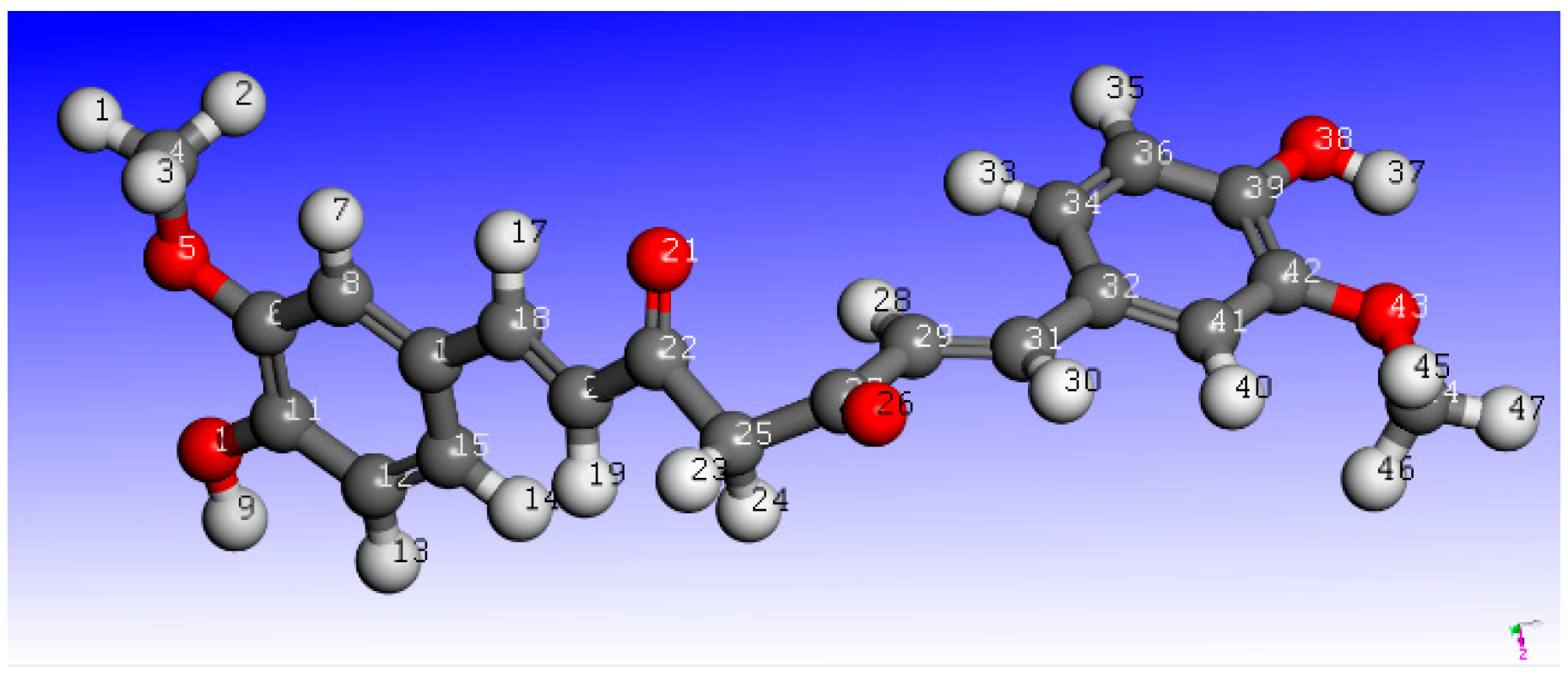
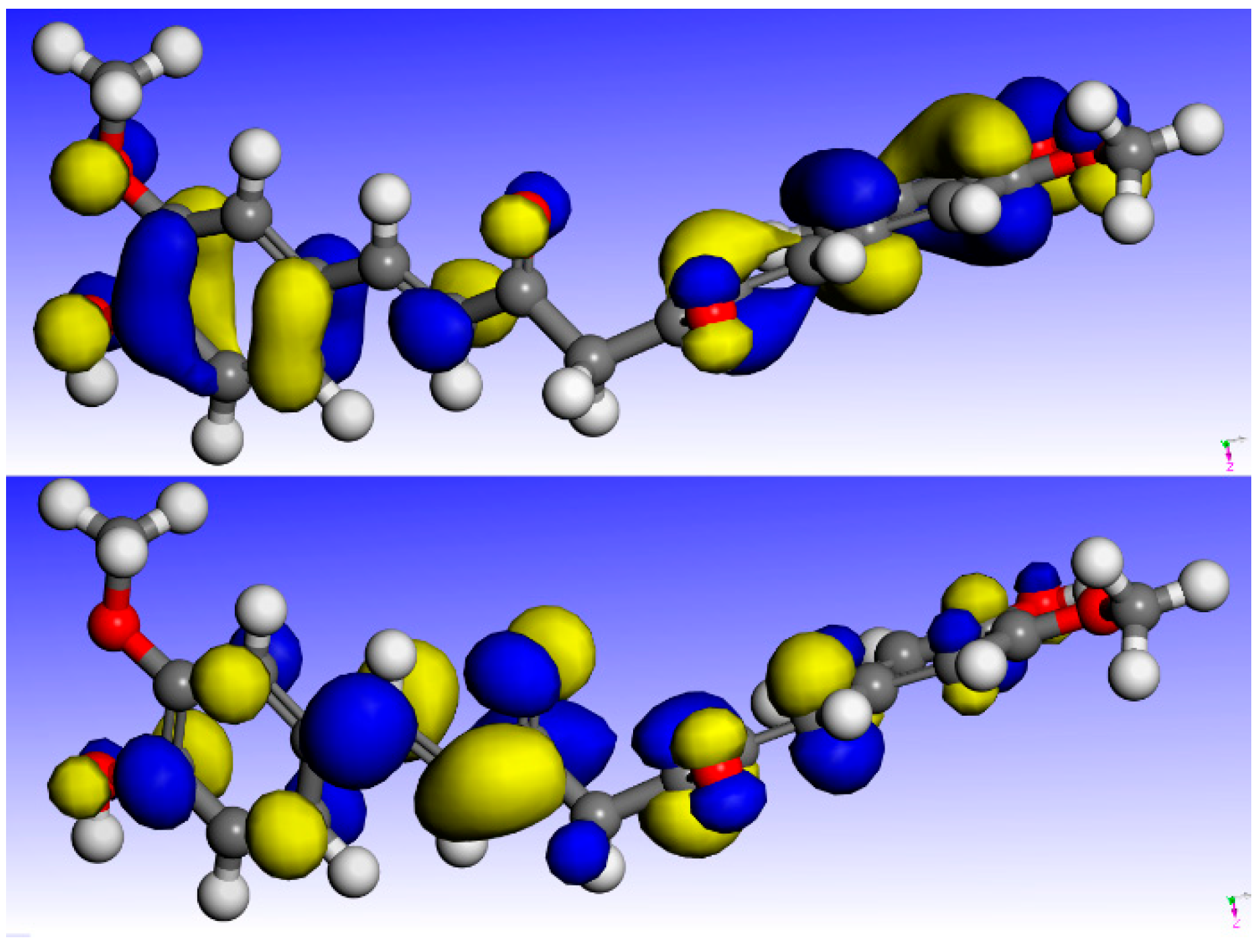 Table 1:
 Descriptor *
Energy eV
E (N − 1)
−239.3770
E (N)
−244.3480
E (N + 1)
−247.2990
EA
2.9510
IP
4.9710
μ
−3.9610
η
1.0100
Χ
3.9610
S
0.9901
ω
7.7671
HOMO
−6.0489
LUMO
−1.8385
ΔE≈
4.2104
This quantum-chemical characterization of curcumin provides a robust electronic framework to explain its established pro-apoptotic activity in A549 lung cancer cells. The calculated reactivity descriptors collectively portray a molecule of high inherent reactivity. This reactivity predisposes it to critical interactions within the cellular environment. Curcumin can easily transfer electrons due to its narrow HOMO-LUMO energy gap of 4.21 eV. The global reactivity descriptors (GRDs) correlate with curcumin’s pro-apoptotic efficacy (see Table 1). In particular, its low chemical hardness, high softness, and elevated electrophilicity index highlight its pronounced reactivity toward nucleophilic biomolecules. These values are consistent with Pearson’s hard and soft acid–base (HSAB) principles, classifying curcumin as a soft molecule [21], characterized by high polarizability and a thermodynamic propensity to form covalent bonds with complementary soft nucleophiles, which are prevalent in biological systems [22]. 4.1. Induction of Oxidative Stress, Apoptosis, and Pyroptosis The electron-donating capacity of curcumin is determined by its ionization potential (IP = 4.97 eV), contributing to its pro-oxidant effects. Its pronounced electrophilic character enables curcumin to deplete the primary cellular antioxidant, glutathione (GSH), potentially via Michael addition reactions [8]. Such pronounced depletion disrupts intracellular redox homeostasis, leading to a substantial accumulation of reactive oxygen species (ROS) [1,6]. This ROS accumulation generates oxidative stress, which acts as a potent trigger of apoptosis, mediated by mitochondrial membrane depolarization and consequent activation of stress response pathways, such as JNK and p38 MAPK [1]. The reported inhibition of histone deacetylases (HDACs) by curcumin correlates with softness (S = 0.99 eV−1) and electrophilicity (ω = 7.7 eV), mediated through covalent modification of nucleophilic residues in the enzyme’s active sites—a mechanism also observed with its derivative, CU17 [7]. In addition to elevating ROS levels, curcumin induces pyroptosis in A549 cells of non-small cell lung cancer (NSCLC) by inhibiting the E3 ubiquitin ligase Smurf2. By inhibiting Smurf2, NLRP3 is stabilized, promoting inflammasome assembly and gasdermin D-mediated pore formation in the cell membrane, which leads to marked inflammation and supports the role of curcumin’s electrophilic index (ω = 7.7 eV) in regulating the ubiquitin-proteasome system and inflammatory cell death [22]. 4.2. Promoting Ferroptosis A significant correlation was observed between the electrophilic character of curcumin and its capacity to induce ferroptosis. The functional stability of the GSH-GPX4 axis, which constitutes the main cellular defense pathway against this type of cell death, depends critically on the availability of glutathione (GSH). Our results indicate that the electrophilic property of curcumin mediates the direct decrease of intracellular GSH stores. This depletion subsequently results in the inhibition of GPX4, a nucleophilic enzyme vulnerable to such chemical modulation. The neutralization of cellular lipid peroxidation is compromised by the action described above, which accelerates the iron-dependent non-apoptotic cell death pathway, as has been experimentally reported [6,8]. In cancer stem cell populations (A549 CD133⁺), this effect is particularly pronounced, as curcumin targets both regulatory pathways of ferroptosis (GSH–GPX4 and CoQ10–NADPH), eliciting a robust pro-death response [8]. 4.3. Regulation of Gene Expression and Its Relationship with the Cell Cycle and the Immune Response The results of the quantum-mechanical characterization indicate that curcumin has a chemical potential (μ = −3.96 eV) associated with its ability to influence intracellular signaling pathways and modulate gene transcription. This reactivity also enables the repression of long non-coding RNAs with pro-oncogenic functions, such as UCA1, which is associated with reduced cell proliferation and the induction of programmed cell death in neoplastic cells [2]. Various synthetic analogs derived from the core structure of curcumin have been shown to induce cell cycle arrest and promote the establishment of a senescent state. This correlates with the behavior of curcumin, as a structurally related compound from the diarylpentanoid family has been shown to promote G0/G1 phase arrest, accompanied by senescence-like phenotypic characteristics in adenocarcinoma cell lines, thus generating prolonged restriction of tumor growth [22,23]. Another relevant characteristic of curcumin is its pleiotropic action, whereby modulation of the immune response in the A549 cell line significantly attenuates interferon-gamma (IFN-γ)-induced PD-L1 overexpression, an effect that depends on reduced STAT1 activation (phosphorylation) [24]. The results suggest that the electrophilic functional groups in curcumin, similar to those in various pharmacological agents, can interact with critical nodes in tumor signaling networks, particularly the JAK/STAT pathway. Such interactions may counteract immune evasion strategies employed by malignant cells, thereby promoting their elimination by cytotoxic T lymphocytes. 4.4. Modulation of Gene Expression and Broad-Spectrum Synergistic Efficacy Our GRDs (see Table 1) correlate with results where curcumin can generate favorable interactions with various therapeutic compounds. This is supported by a study in which curcumin-supplemented dendrosomal formulations markedly enhanced the cytotoxic activity of daunorubicin by modulating the balance between pro-apoptotic and anti-apoptotic proteins (increasing the Bax/Bcl-2 ratio) and by downregulating the expression of genes associated with multidrug resistance, such as MDR-1 and hTERT [9]. There are also reports showing that curcumin increases the sensitivity of the A549 cell line to chemotherapeutic agents such as gemcitabine and paclitaxel [4,5]. This enhanced chemosensitivity appears to depend on a preceding modification of the intracellular environment mediated by ROS, as well as interference with signal transduction pathways that promote cell survival. Studies with structural analogs of curcumin, including the derivative CU17, have demonstrated that their combination with gemcitabine elicits a more pronounced antitumor response [25,26]. To enhance therapeutic synergy, advanced drug delivery systems have been developed, including the co-encapsulation of curcumin and gemcitabine on a single platform, which results in increased cytotoxicity and the concurrent activation of multiple cell death pathways [26]. There are also reports indicating that curcumin and its derivatives exhibit antiviral and anti-inflammatory effects. For instance, in A549 cells infected with influenza A virus, these compounds attenuate the activation of RIG-I–dependent pathways [27], underscoring their capacity to modulate the innate immune response against diverse pathogens. Based on the quantum mechanical analysis, curcumin functions as a versatile electrophile, disrupting cellular redox balance, inhibiting key regulatory enzymes, and modulating multiple programmed cell death pathways, including classical apoptosis, ferroptosis, and pyroptosis. The global reactivity descriptors (GRDs) obtained in this in silico study provide a foundation for the rational design of curcumin derivatives, including compounds such as ZYXO2-Na [3] and the analog CU17 [7,25], as well as for the development of advanced drug delivery platforms [26]. Targeted structural modification of electronic properties (GRDs) in these derivatives emerges as an attractive pathway to increase their anticancer, antiviral, and immunomodulatory potency. The correspondence between curcumin’s global quantum reactivity descriptors and its multifaceted biological effects underscores its potential as a versatile scaffold for multitarget therapeutic strategies, wherein a single compound simultaneously modulates multiple pathological processes or molecular targets [10-15].
Through quantum-mechanical calculations, a theoretical model of curcumin was developed, providing a useful framework for subsequent studies. The data obtained confirm curcumin’s capacity to interact with critical intracellular targets involved in the activation of apoptosis in the A549 cell line. Global reactivity descriptors support its biological profile, highlighting a high electrophilicity index and marked chemical reactivity. These properties position it as a highly reactive molecule with a remarkable capacity to adapt to the biological environment and the ability to trigger various programmed cell death mechanisms, such as apoptosis and ferroptosis. Curcumin’s capacity to modulate multiple molecular pathways, coupled with its synergistic enhancement of chemotherapeutic regimens, underscores its potential as a promising therapeutic agent in the management of non-small cell lung cancer. The integration of quantum mechanical computational analysis with experimental results validates the viability of curcumin and its structural analogs as effective therapeutic agents. These findings underscore the need for further experimental research and the development of innovative strategies to harness these properties in optimized formulations, derivatives, or novel molecules, with the aim of advancing more effective therapies against lung cancer.
COSMO
Conductor-like Screening Model
DFT
Density Functional Theory
DNC
Dendrosomal Curcumin
EA
Electron Affinity
eV
Electron Volt
G0/G1
Phases of the Cell Cycle
GGA
Generalized Gradient Approximation
GPX4
Glutathione Peroxidase 4
GRDs
Global Reactivity Descriptors
GSH
Antioxidant Glutathione
HOMO
Highest Occupied Frontier Molecular Orbital
HSAB
Pearson’s Hard and Soft Acids and Bases
IFN-γ
Interferon-Gamma
IP
Ionization Potential
JNK
c-Jun N-Terminal Kinase
lncRNAs
Long non-coding RNAs
LUMO
Lowest Unoccupied Molecular Orbital
MDR-1
Multidrug Resistance 1
NLRP3
NLR Family Pyrin Domain-Containing 3
NSCLC
Non-small Cell Lung Cancer
p38/MAPK
Signaling for Apoptosis, Inflammation, and Genetic Transcription.
RIG-I
Retinoic Acid-Inducible Gene I
ROS
Reactive Oxygen Species
STAT1
Transcription Factor
TS
Tkatchenko-Scheffler
Writing—original draft: All authors; Conceptualization, methodology, and software: J.C., A.G., K.I.; Validation, formal analysis, and Funding acquisition: J.C., F.C., G.R., F.L.; Investigation, resources, data curation, Writing—review & editing, visualization, supervision, and project management: J.C., A.G., F.C., G.R., F.L. All authors have read and approved the published version of the manuscript.
The data supporting the results of this study are available upon request to the corresponding author.
The authors declare no conflicts of interest.
This work was financially supported by ESFM–Instituto Politécnico Nacional (Project SIP 20250097), Instituto de Gestión e Innovación Agroempresarial S.C. (RENIEC-YT-1801688), DGAPA-UNAM (Project IN112122), and the Sistema Nacional de Investigadores (SNII) (2025 SECIHTI).
Declared none.
The authors confirm the use of DeepSeek (available at https://www.deepseek.com/) for grammar checking and enhancement of English fluency in the preliminary sections of the manuscript. The authors take full responsibility for the content and results presented in this work.
[1] Yao, Q.; Lin, M.; Wang, Y.; Lai, Y.; Hu, J.; Fu, T.; Wang, L.; Lin, S.; Chen, L.; Guo, Y. Curcumin Induces the Apoptosis of A549 Cells via Oxidative Stress and MAPK Signaling Pathways. Int. J. Mol. Med. 2015, 36, 1118–1126. [CrossRef]
[2] Wang, W.H.; Chew, J.; Zhang, B.R.; Lu, S.J.; Wang, F.; Peng, L.; Dai, J.H.; Sun, Y.Z. Curcumin Inhibits Proliferation and Enhances Apoptosis in A549 Cells by Downregulating IncRNA UCA1. Pharmazie 2018, 73, 402–407. [CrossRef]
[3] Zhou, G.; Guo, S.; Liu, D.; Zhang, L.; Sun, G. Antiproliferative Effect and Autophagy Induction of Curcumin Derivative ZYX02-Na on the Human Lung Cancer Cells A549. J. Biochem. Mol. Toxicol. 2020, 34, e22592. [CrossRef]
[4] Feng, X.; Pi, C.; Fu, S.; Yang, H.; Zheng, X.; Hou, Y.; Wang, Y.; Zhang, X.; Zhao, L.; Wei, Y. Combination of Curcumin and Paclitaxel Liposomes Exhibits Enhanced Cytotoxicity Towards A549/A549-T Cells and Unaltered Pharmacokinetics. J. Biomed. Nanotechnol. 2020, 16, 1304–1313. [CrossRef]
[5] Dong, Z.; Feng, Q.; Zhang, H.; Liu, Q.; Gong, J. Curcumin Enhances Drug Sensitivity of Gemcitabine-Resistant Lung Cancer Cells and Inhibits Metastasis. Pharmazie 2021, 76, 538–543. [CrossRef] [PubMed]
[6] Tang, X.; Ding, H.; Liang, M.; Chen, X.; Yan, Y.; Wan, N.; Chen, Q.; Zhang, J.; Cao, J. Curcumin Induces Ferroptosis in Non-Small-Cell Lung Cancer via Activating Autophagy. Thorac. Cancer 2021, 12, 1219–1230. [CrossRef] [PubMed]
[7] Namwan, N.; Senawong, G.; Phaosiri, C.; Kumboonma, P.; Somsakeesit, L.O.; Samankul, A.; Leerat, C.; Senawong, T. HDAC Inhibitory and Anti-Cancer Activities of Curcumin and Curcumin Derivative CU17 against Human Lung Cancer A549 Cells. Molecules 2022, 27, 4014. [CrossRef] [PubMed]
[8] Fraenkel, M.; Kim, M.; Faggiano, A.; De Herder, W.W.; Valk, G.D. Incidence of Gastroenteropancreatic Neuroendocrine Tumours: A Systematic Review of the Literature. Endocr.-Relat. Cancer 2014, 21, R153–R163. [CrossRef]
[9] Eslami, S.S.; Jafari, D.; Ghotaslou, A.; Amoupour, M.; Kojabad, A.A.; Jafari, R.; Mousazadeh, N.; Tarighi, P.; Sadeghizadeh, M. Combined Treatment of Dendrosomal-Curcumin and Daunorubicin Synergistically Inhibit Cell Proliferation, Migration and Induce Apoptosis in A549 Lung Cancer Cells. Adv. Pharm. Bull. 2022, 13, 539–550. [PubMed]
[10] Fadaly, W.A.; Nemr, M.T.; El-Hameed, A.M.A.; Mohamed, F.E.; Zidan, T.H. Design and Synthesis of New Pyrazole Hybrids Linked to Oxime and Nitrate Moieties as COX-2, EGFRL858R/T790M Inhibitors and Nitric Oxide Donors with Dual Anti-Inflammatory/Anti-Proliferative Activities. Bioorg. Chem. 2025, 161, 108563. [CrossRef]
[11] Ewieda, S.Y.; Ahmed, E.M.; Gohar, N.A.; Ibrahim, S.G.; Essa, M.A.; Nemr, M.T. Design, Synthesis, and Antitumor Evaluation of New Pyridazinone Scaffolds as Dual EGFR/VEGFR-2 Kinase Inhibitors and Apoptotic Cells Inducers. Bioorg. Chem. 2025, 166, 109157. [CrossRef]
[12] Mohamed, M.F.; Salem, I.M.; Fouad, A.; Allam, R.M.; Fadaly, W.A.; Nemr, M.T.; Ewieda, S.Y.; Ibrahim, T.S.; Ibrahim, N.A.; Abou-Salim, M.A. Synthesis and Apoptotic Induction of Sulfonamide-Based Chalcone Hybrids as First-in-Class Dual Histone Deacetylase Carbonic Anhydrase Inhibitors with Potential Anti-Tubulin Activity. Bioorg. Chem. 2025, 163, 108694. [CrossRef]
[13] Ewieda, S.Y.; Salem, M.; Elshewy, A.; Abdalla, M.; El-Manawaty, M.; Abdelhady, H.K.; Haredy, H.H.; Fadaly, W.A.; Mohamed, M.F.; Nemr, M.T. Discovery of Novel Thiazolopyrimidine Derivatives Targeting Topoisomerase II: Design, Synthesis, Anti-Proliferative Evaluation, Molecular Docking and Apoptosis Inducing Activity. Bioorg. Chem. 2025, 163, 108672. [CrossRef]
[14] Nemr, M.T.M.; Fadaly, W.A.A.; Abdelaziz, M.A. Pharmaceutical Applications of Di/Tri-Aryl Pyrazole Derivatives: A Review on Recent Updates. ChemistrySelect 2025, 10, e04601. [CrossRef]
[15] Aboelez, M.O.; El-Remaily, M.A.E.A.A.A.; Kamel, M.S.; Al Kamaly, O.; Fadaly, W.A.; Nemr, M.T.; Ezelarab, H.A. Novel 3,4-Diaminothieno. [2,3-b]thiophene-2,5-dicarbohydrazide-Based Scaffolds as EGFRWT, EGFRT790M, and Tubulin Polymerization Inhibitors with Anti-Proliferative Activity. Bioorg. Chem. 2025, 163, 108728. [CrossRef] [PubMed]
[16] Santiago-Jiménez, J.C.; Ramirez-Damaso, G.; Garcia-Quiroz, A.; Garcia-Quiroz, F.C.; Castillo-Alvarado, F.D.L. Long COVID-19: Electronic Characterization of the SARS-CoV-2 Envelope Protein Using DFT as a Basis for Therapeutic Hypothesis. J. Drug Des. Med. Chem. 2025, 11, 63–68. [CrossRef]
[17] Perdew, J.P.; Burke, K.; Ernzerhof, M. Generalized Gradient Approximation Made Simple. Phys. Rev. Lett. 1996, 77, 3865–3868. [CrossRef] [PubMed]
[18] Parr, R.G.; Yang, W. Density-Functional Theory of Atoms and Molecules; Oxford University Press: New York, NY, USA, 1989. [CrossRef]
[19] Koopmans, T. On the Assignment of Wave Functions and Eigenvalues to the Individual Electrons of an Atom. Physica 1934, 1, 104–113. [CrossRef]
[20] Fukui, K. The Role of Frontier Orbitals in Chemical Reactions (Nobel Lecture). Angew. Chem. Int. Ed. Engl. 1982, 21, 801–809. [CrossRef]
[21] Pearson, R.G. Hard and Soft Acids and Bases. J. Am. Chem. Soc. 1963, 85, 3533–3539. [CrossRef]
[22] Xi, Y.; Zeng, S.; Tan, X.; Deng, X. Curcumin Inhibits the Activity of Ubiquitin Ligase Smurf2 to Promote NLRP3 Dependent Pyroptosis in Non Small Cell Lung Cancer Cells. Int. J. Oncol. 2025, 66, 1–18. [CrossRef]
[23] Fonseca, R.; Louzano, Y.D.S.; Ortiz, C.J.C.; Silva, M.D.F.; Felix, M.L.V.; Ferreira-Silva, G.Á.; Caixeta, E.S.; Zavan, B.; Viegas, C.; Ionta, M. Curcumin-like Compound Inhibits Proliferation of Adenocarcinoma Cells by Inducing Cell Cycle Arrest and Senescence. Pharmaceuticals 2025, 18, 914. [CrossRef] [PubMed]
[24] Salih, D.J.; Barsoom, S.H.; Ahmed, G.F.; Hussien, S.Q.; Al Ismaeel, Q.; Alasady, A.A.B.; Alsalim, T.A.; Salih, A.M. Curcumin Inhibits IFN-γ Induced PD-L1 Expression via Reduction of STAT1 Phosphorylation in A549 Non-Small Cell Lung Cancer Cells. Saudi Pharm. J. 2025, 33, 1–10. [CrossRef] [PubMed]
[25] Namwan, N.; Senawong, G.; Phaosiri, C.; Kumboonma, P.; Somsakeesit, L.O.; Samankul, A.; Leerat, C.; Senawong, T. Synergistic Anti-Cancer Activities of Curcumin Derivative CU17 Combined with Gemcitabine Against A549 Non-Small-Cell Lung Cancer Cells. Pharmaceutics 2025, 17, 158. [CrossRef] [PubMed]
[26] Alvarez-Quezada, O.A.; Arellano-Rodríguez, N.C.; Rodríguez-Rodríguez, M.V.; Franco-Molina, M.A.; Zarate-Triviño, D.G.; Zamora-Ávila, D.E.; Vargas-Requena, C.L.; Zapata-Benavides, P.; Rodríguez-Padilla, M.C. Encapsulation of Curcumin and Gemcitabine: Cytotoxic Effect and Mechanisms of Death in Lung Cancer. Adv. Pharmacol. Pharm. Sci. 2025, 8816364. [CrossRef]
[27] Liew, K.Y.; Chee, H.Y.; Abas, F.; Leong, S.W.; Harith, H.H.; Lee, M.T.; Sulaiman, M.R.; Tham, C.L. Curcumin-like Diarylpentanoid Analogues Exhibit Antiviral and Anti-Inflammatory Activities in Influenza A Virus-Infected A549 Lung Epithelial Cells by Inhibiting Multiple Retinoic Acid-Inducible Gene I (RIG-I)-Mediated Pathways. Virol. J. 2025, 22, 1–15. [CrossRef]
Disclaimer/Publisher’s Note: The views expressed in this article are those of the author(s) and do not necessarily reflect the views of the publisher or editors. The publisher and editors assume no responsibility for any injury or damage resulting from the use of information contained herein.
©2026 Copyright by the Authors.
Licensed as an open-access article distributed under the terms and conditions of the CC BY 4.0 license