


 ACCESS
Review Article
ACCESS
Review Article
Volume 2, Article ID: 2026.0010

Lotte Habermann-Horstmeier
Habermann-Horstmeier@viph-public-health.de

Villingen Institute of Public Health (VIPH), Klosterring 5, D-78050 Villingen-Schwenningen, Germany
Received: 25 Dec 2025 Accepted: 23 Jun 2026 Available Online: 24 Jun 2026
Background. Myalgic encephalomyelitis/chronic fatigue syndrome (ME/CFS) is a neuroimmunological disease characterized by a diverse symptom profile associated with dysregulation of the nervous, endocrine, and immune systems, as well as cellular energy metabolism. To date, no causal pharmacological therapy is available for this condition. Methods. This narrative review summarizes current clinical experience reported by physicians, patient-reported outcomes, and findings from existing studies on symptomatic therapy in ME/CFS. The studies were selected according to criteria typical of narrative reviews, specifically their practical relevance and feasibility. Results. Symptomatic therapy tailored to the individual symptom profile of patients with ME/CFS, combined with the consistent implementation of pacing, may positively influence clinical outcomes. The medications used for this purpose are predominantly prescribed off-label. Some of these agents are hypothesized to modulate neuroimmunological mechanisms implicated in ME/CFS, including dopamine agonists and opioid antagonists, cholinesterase inhibitors and parasympathomimetics, as well as H1/H2 receptor blockers and mast cell stabilizers. Other agents, including quetiapine and pregabalin, are used off-label to manage specific symptoms, such as sleep disturbance. Conclusions. Because only a limited number of clinical studies have evaluated the efficacy of drugs currently used for the treatment of ME/CFS, comprehensive clinical trials investigating these symptomatic therapies are warranted. In addition to assessing their therapeutic efficacy, such studies could also help substantiate current pathophysiological hypotheses underlying the development of individual ME/CFS symptoms.
Over recent years, a growing body of evidence suggests that ME/CFS is a multifaceted disease involving disturbances in several regulatory processes, with neuroinflammatory mechanisms proposed as one potential contributor [1-5]. These disturbances in the function of regulatory systems, including the nervous, endocrine, and immune systems, as well as in energy metabolism, particularly within muscle cells and cells of the nervous system, impair the body's ability to maintain dynamic equilibrium (homeostasis), thereby disrupting stable physiological conditions [6-13]. They include, among other factors, dysfunctions of serotonin autoregulatory pathways with impaired adrenocorticotropic hormone (ACTH) and cortisol release [14], as well as altered adrenergic and cholinergic signaling [15,16]. Increasing evidence suggests that immune-mediated mechanisms may contribute to symptom development after infection. For example, autoantibodies isolated from patients with long COVID have been shown to induce neurological symptoms in experimental models, supporting further investigation of autoimmune mechanisms in postinfectious conditions [17]. A hallmark of this condition, which most commonly develops following an infectious trigger [18,19], is postexertional malaise (PEM). PEM is characterized by a prolonged exacerbation of existing symptoms following even minimal physical or cognitive exertion [20]. Earlier studies suggested that the chronic course of ME/CFS was characterized by a broad spectrum of symptoms that fluctuated in both type and severity in an apparently unsystematic manner [21]. More recent research, however, indicates that symptom expression changes systematically over the course of the illness and that sex-related differences also exist. For example, Hornig et al. demonstrated that immune signatures vary with disease duration, with patients in the early stages of the disease exhibiting a more pronounced proinflammatory profile [22]. Prior to the COVID-19 pandemic, the prevalence of ME/CFS in the United States was approximately 0.42% [23]. A recent study estimated that, in 2024, more than 650,000 individuals in Germany had ME/CFS, corresponding to a prevalence of more than 0.78% of the population [24]. Women are affected more than twice as frequently as men [25]. ME/CFS frequently results in substantial disability and a marked reduction in quality of life [26]. More than 60% of affected individuals are unable to maintain employment [27]. A reduced life expectancy has been suggested, although current evidence remains insufficient to draw definitive conclusions [28]. However, multiple studies have indicated an increased risk of suicide among individuals with ME/CFS [28]. To date, no causal pharmacological therapy exists for this disease, which is diagnosed according to international consensus criteria [6, 29-30]. However, early implementation of symptom-oriented management strategies and pacing may improve symptom control, functional status, and quality of life, although no evidence currently demonstrates reversal of the underlying disease process [31]. The aim of this review is to provide a comprehensive overview of the medications currently used in clinical practice for the management of ME/CFS. It examines whether randomized controlled trials on symptomatic therapies for ME/CFS are already available and seeks to collate existing clinical experience from physicians as well as experiential knowledge reported by patients.
The present work is a narrative review that synthesizes clinical experience derived from routine practice, patient reported experiences, and the findings of selected key studies published to date in this field. The literature search was conducted using databases accessible through the FernUniversität Hagen library, including PubMed/MEDLINE, Embase, Web of Science, Scopus, the Cochrane Library, and PsycINFO. These databases were selected because previous methodological studies have shown that combining multiple biomedical databases improves retrieval of relevant literature [32]. 2.1. Search Strategy The literature search focused on studies addressing the pathophysiology of ME/CFS and its symptomatic pharmacological management. Representative search terms and Boolean combinations included “ME/CFS,” “myalgic encephalomyelitis,” “chronic fatigue syndrome,” “pharmacological treatment,” “symptomatic therapy,” “off-label,” “autonomic dysfunction,” and “mast cell activation,” as well as the names of selected drug classes and active substances used off-label in the pharmacological management of ME/CFS, including “dopamine agonist,” “ivabradine,” “pyridostigmine,” and “low-dose naltrexone” (LDN). Search terms were derived from commonly reportedtherapeutic approaches described in the literature [33]. The search was complemented by backward and forward snowballing to identify additional relevant publications. Given the limited evidence base, particular emphasis was placed on clinical feasibility and practical relevance, consistent with the methodological framework of narrative reviews. Eligible publications examined pharmacological or symptom-oriented interventions in participants diagnosed with ME/CFS using clearly stated diagnostic criteria, including clinical studies, observational studies, case series, case reports, mechanistic studies, and expert consensus statements published in English or German between 1994 and 2026. Studies focusing exclusively on chronic fatigue unrelated to ME/CFS or lacking clear clinical relevance were excluded. As is characteristic of narrative reviews, the selection and evaluation of studies were guided primarily by their practical relevance and feasibility for clinical application. Accordingly, studies were selected using pragmatic criteria based on clinical relevance rather than a formal systematic review protocol [34,35].
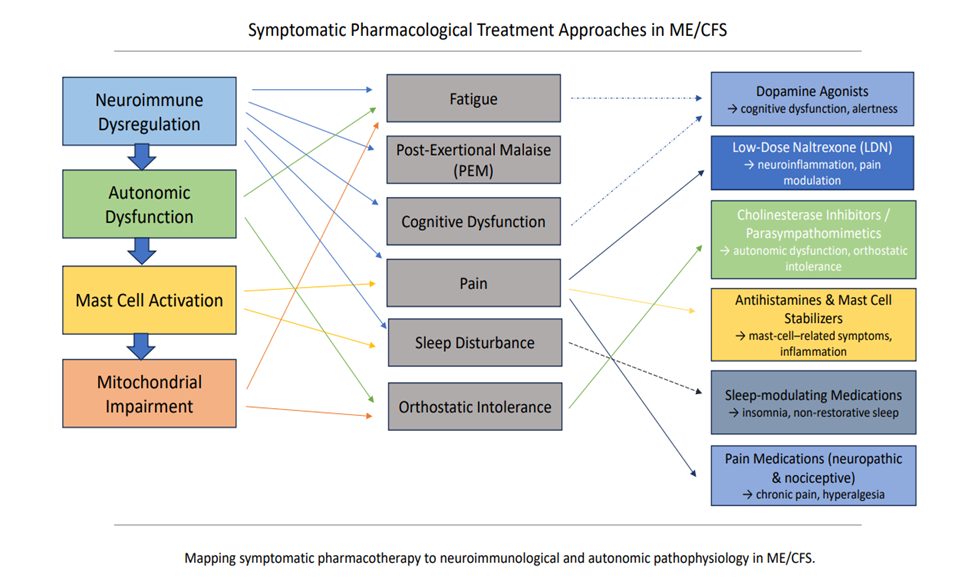
To date, no scientifically validated pharmacological therapy is available that targets the underlying causes of ME/CFS [36]. However, several research approaches and advanced studies appear promising and raise hope that causal treatment options for ME/CFS may become available in the future. In addition, there is evidence that individually tailored symptomatic therapy, adjusted to the patient's current symptom profile and disease status, may, under certain circumstances, contribute to symptom stabilization and improved daily functioning when initiated early and implemented consistently in combination with equally consistent pacing [36]. At present, in clinical practice, pharmacological support is often limited, even though patients’ complex constellation of symptoms severely impairs their daily lives. Instead, patients may be informed that no disease-modifying treatment is currently available, despite the availability of symptom-oriented management options. Figure 1 illustrates the conceptual framework proposed for precision medicine in myalgic encephalomyelitis/chronic fatigue syndrome (ME/CFS). Biomarker-based stratification, potentially supported by AI-assisted clustering approaches, may facilitate the identification of biologically relevant patient subtypes characterized by overlapping patterns of immune dysregulation, autonomic dysfunction, and impaired cellular energy metabolism. These subtype-specific profiles may inform more individualized therapeutic strategies, including symptom-targeted treatment and pacing, anti-inflammatory or immunomodulatory therapy, autonomic modulation, and metabolic or vascular support approaches. The overlapping connections between patient subtypes and therapeutic domains reflect the complex, multifactorial, and non-linear nature of ME/CFS and underscore the need for individualized, multimodal treatment strategies. 3.1. Symptomatic Therapies In current clinical practice, symptomatic treatment approaches play a central role in the management of ME/CFS. Unlike causal therapies, these approaches are primarily aimed at alleviating disease-related symptoms. Given the wide range of symptoms associated with ME/CFS, which may vary considerably between individuals depending on sex and illness duration, numerous therapeutic strategies exist to alleviate the symptoms reported by patients. Many of these interventions are proposed to target distinct components of the neuroimmunological pathophysiology of ME/CFS. Identifying the symptom cluster that is currently most prominent in a patient can support more targeted pharmacological decision-making (see Section 3.4). Recent studies illustrate this: Accumulating evidence supports a central role of skeletal muscle pathology in both ME/CFS and post-COVID syndrome. Recent work by Scheibenbogen and Wirth synthesizes mechanistic and histopathological findings. This model proposes that impaired microcirculation and β-adrenergic dysregulation may contribute to intracellular sodium and calcium overload, ultimately resulting in mitochondrial dysfunction and structural muscle damage. Importantly, this model is supported by biopsy-based evidence demonstrating subsarcolemmal mitochondrial abnormalities, along with signs of muscle fiber damage and regeneration, particularly following exertion, consistent with the phenomenon of postexertional malaise [37]. Complementing this framework, Bizjak et al. provided direct ultrastructural and functional evidence of mitochondrial impairment in skeletal muscle, including altered cristae morphology and reduced oxidative phosphorylation capacity [38]. Notably, these alterations appear to be more pronounced in ME/CFS than in post-COVID syndrome, suggesting progression from predominantly functional disturbances to more established structural pathology in chronic disease states. At the clinical level, Paffrath et al. demonstrate that reduced hand grip strength correlates with both symptom severity and functional disability in post-COVID ME/CFS, supporting the notion that muscle dysfunction may be clinically relevant rather than merely an epiphenomenon of clinical status [39]. The convergence of mechanistic, structural, and functional evidence supports a unifying model in which skeletal muscle may represent an important site of pathology linking impaired bioenergetics to the hallmark clinical features of ME/CFS. This integrated perspective provides a strong rationale for therapeutic strategies targeting neuromuscular transmission, autonomic regulation, and mitochondrial function. In this context, the ongoing Life Improvement Trial (LIFT1), investigating pyridostigmine and low-dose naltrexone, is of particular interest, as both agents may modulate pathways implicated in muscle perfusion, ion homeostasis, and neuroimmune signaling. 3.1.1. Off-Label Use The symptomatic therapeutics discussed below are predominantly prescribed off-label in patients with ME/CFS. Off-label use refers to the prescription of medicinal products outside their approved indications, including deviations in the approved indication, patient age group, dosage, or route of administration. Such use outside the scope of official approval is generally permitted. In Germany, for example, the associated costs are only reimbursed by statutory health insurance in exceptional cases [40]. 3.1.2. Dosing and Timing Individually tailored dosing, taking into account factors such as age, body weight, comorbidities, organ function, concomitant medication, and, where relevant, sex [41], as well as the timing of medication administration, can have a substantial impact on therapeutic efficacy [42-44]. This may be particularly relevant in ME/CFS, where circadian rhythm disruption and autonomic dysregulation are frequently observed [45,46] and may alter pharmacokinetics and pharmacodynamics. Accordingly, the timing of administration may need to be individualized in selected cases. In addition, some patients may tolerate lower starting doses; however, the optimal dose must be determined for each medication and clinical indication. For medications requiring dose titration, treatment may be initiated at a low dose and adjusted according to response and tolerability [47]. Furthermore, emerging evidence in ME/CFS suggests that disease stage and duration may influence underlying pathophysiological mechanisms, raising the possibility that the timing of therapeutic interventions could affect treatment response and clinical outcomes [22, 37-38]. 3.1.3. Why Mechanistically Promising Therapies Often Fail in Clinical Practice A major and frequently underestimated factor contributing to the limited success of mechanistically targeted therapies in ME/CFS is the inadequate definition and stratification of study populations. Many clinical trials include participants who do not meet the Canadian Consensus Criteria (CCC), despite these representing the most specific and pathophysiologically coherent case definition. As a result, heterogeneous cohorts are formed in which different conditions, disease severities, and underlying biological mechanisms are combined, making it unlikely that any single intervention will demonstrate a clear therapeutic effect. In addition, disease duration is rarely considered, even though early-stage and long-standing ME/CFS may differ in symptom patterns, immune signatures [22], and treatment responsiveness. Similarly, sex specific differences affecting autonomic regulation, immune responses, pain processing, and hormonal modulation are typically overlooked, further obscuring potential treatment effects. These fundamental issues in patient selection and characterization precede and amplify other well recognized challenges, including biological heterogeneity, unvalidated mechanistic hypotheses, negative randomized trials despite promising pilot data, circadian dysregulation, altered pharmacokinetics, and underpowered study designs. Taken together, these factors underscore that biomarker-driven patient stratification, strict diagnostic criteria, and consideration of disease duration and sex differences may improve the reliability and interpretability of therapeutic evidence in ME/CFS. Machine learning may represent a promising approach [48]. 3.1.4. Biomarkers Given the marked clinical heterogeneity of ME/CFS, increasing attention has been directed toward the identification of biomarkers that may facilitate patient stratification and support individualized therapeutic decision making. Several candidate biomarkers have emerged from recent research, although none are yet validated for routine clinical application. Autoantibodies against β2-adrenergic and muscarinic acetylcholine receptors have been detected in a subset of patients and may indicate dysregulation of autonomic and vascular signaling pathways [49]. These findings have stimulated interest in therapies targeting autonomic dysfunction, such as ivabradine, pyridostigmine, or low-dose β-blockers. Elevated levels of inflammatory mediators, including IL-8 [22,50], TGF-β, and soluble CD14, have been reported in multiple studies, although findings across patient cohorts remain heterogeneous [51]. These patterns may reflect stage-dependent immune activation or neuroinflammatory processes [22]. However, direct evidence linking cytokine profiles to treatment response remains limited, and targeted interventions such as IL-1 blockade have not consistently demonstrated clinical benefit [51]. Patients with such profiles may be more likely to respond to agents with anti-inflammatory or microglia-modulating properties, such as low-dose naltrexone [52] or gabapentinoids (gabapentin and pregabalin). Similarly, abnormalities in endothelial function and reduced cerebral blood flow have been associated with cognitive dysfunction and orthostatic intolerance, suggesting a potential role for therapies such as vericiguat and other agents targeting vascular regulation. Emerging evidence also points to disturbances in metabolic pathways, particularly in energy production, lipid metabolism, and oxidative stress [53]. Metabolomic studies have identified alterations in amino acid metabolism, lipid profiles, and mitochondrial function, which may help explain differences in fatigue severity, postexertional malaise, and pain phenotypes. Although these findings are not yet actionable in clinical practice, they highlight the potential for future biomarker-driven treatment algorithms. Overall, the integration of immunological, autonomic, metabolic, and vascular biomarkers into clinical research may facilitate the development of a precision medicine approach for the management of ME/CFS. This would allow pharmacological therapies to be more effectively tailored to individual pathophysiological profiles. Current therapeutic approaches in ME/CFS remain largely symptomatic and are frequently guided by dominant clinical phenotypes rather than validated disease-specific treatments. As summarized in Figure 2, neurocognitive, autonomic, immunological, and muscular/metabolic symptom clusters may reflect overlapping and dynamically interacting biological mechanisms, including neuroinflammation, autonomic dysfunction, immune dysregulation, vascular abnormalities, and impaired cellular energy metabolism. Consequently, current management strategies frequently combine mechanism-based pharmacological interventions, symptom-oriented off-label therapies, and non-pharmacological approaches such as pacing. This framework illustrates the biological and clinical heterogeneity of ME/CFS and supports the need for individualized and multidisciplinary treatment approaches. 3.2. Drug Classes Targeting Neuroimmunological and Autonomic Dysregulation in ME/CFS A substantial proportion of ME/CFS symptoms appears to result from disturbances in signal transmission within the central and autonomic nervous systems [9, 12, 15-16, 54] (see Neuroinflammatory/neurocognitive symptom cluster, including sleep disorders, and Autonomic symptom cluster in Section 3.4). For instance, elevated serotonin levels may contribute to impaired muscle contraction, sleep disturbances, cognitive dysfunction, hyperalgesia, and migraine [10]. In addition, serotonin excess may alter dopamine and noradrenaline release [55,56], leading to further pathophysiological consequences. Persistently increased serotonin activity may also result in chronic activation of the hypothalamic–pituitary–adrenal (HPA) axis, thereby contributing to additional symptom burden [3,56]. Beyond neurotransmitter dysregulation, ME/CFS may also be associated with excessive production and synergistic activity of inflammatory and vasoactive mediators, such as histamine, which can trigger a wide range of symptoms [57]. Furthermore, there is evidence of impaired function of muscarinic acetylcholine (ACh) receptors [58]; notably, autoantibodies targeting β-adrenergic and muscarinic ACh receptors have been identified [49,59]. The pharmacological approaches described below aim to modulate these regulatory disturbances [55]. An example of improved grip strength in patients with ME/CFS following targeted modulation of cholinergic systems is provided by Schlömer et al. [58]. Where available, these strategies are supported by published evidence from ME/CFS or related conditions such as postural orthostatic tachycardia syndrome (POTS) [60], mast cell activation syndromes [61], or neuropathic pain [52]. In the absence of formal studies, however, the therapeutic concepts are primarily based on clinical experience and expert opinion and should therefore be regarded as eminence- rather than evidence-based [60]. At the same time, it must be emphasized that the clinical relevance of the pathophysiological mechanisms described here has not yet been conclusively established in all cases. Nevertheless, clinical experience indicates that medications targeting these mechanisms, many of which are used off label, may provide symptomatic relief in at least a subset of patients with ME/CFS (see Table 1). References supporting the statements regarding these medications are provided in the corresponding sections below. 3.2.1. Dopamine Agonists and Opioid Antagonists Aripiprazole is a dopamine D2 receptor partial agonist with receptor- and pathway-dependent effects. At low doses, small observational studies have suggested that it may improve overall ME/CFS symptomatology, particularly cognitive function and patients' subjective perception of illness [62]. Quetiapine is an atypical antipsychotic with antagonistic activity at several dopamine and serotonin receptors, and is primarily used in ME/CFS for the treatment of sleep disturbances. The centrally acting dopamine receptor agonist rotigotine (Neupro®), which activates D3, D2, and D1 receptors, may be administered at low doses as a transdermal patch for the management of moderate to severe restless legs symptoms. Naltrexone is a long-acting opioid antagonist that predominantly blocks the μ-opioid receptor and, to a lesser extent, κ- and δ-opioid receptors. In ME/CFS, it is prescribed off-label primarily for pain management [63,64] (for possible dosing see Table 1 and Table 2). 3.2.2. Cholinesterase Inhibitors and Parasympathomimetics Pyridostigmine bromide (Mestinon®) is a cholinesterase inhibitor that prevents the breakdown of acetylcholine (ACh). In patients with ME/CFS, this mechanism may increase the availability of ACh within the synaptic clefts of the parasympathetic nervous system. A similar effect may be achieved with the direct parasympathomimetic pilocarpine hydrochloride (Salagen®). At the neuromuscular junction, these agents may increase muscle strength [58] and also alleviate restless legs symptoms, bladder emptying disorders, constipation, tachycardia, and vascular dysfunction [65]. In patients with sicca symptoms, mucosal dryness may be alleviated. Improved perfusion and increased secretion of the mucous glands of the nasal cavity and paranasal sinuses may, based on clinical observations, have a beneficial effect on headache symptoms in ME/CFS. However, adverse effects such as hypersalivation, exacerbation of accommodation disorders of the eye, bronchoconstriction, bradycardia, diarrhoea, or abdominal cramps may occur. Treatment should therefore always be initiated at the lowest effective dose. 3.2.3. Antihistamines (H1/H2 Blockers) and Mast Cell Stabilizers In a subset of patients with ME/CFS, increased mast cell activation has been reported [61], resulting in enhanced release of mediators such as histamine and leukotrienes. In these patients, H1 receptor blockers (second generation, e.g., cetirizine; third generation, e.g., levocetirizine) and mast cell stabilizers (e.g., cromoglicic acid and ketotifen) may provide symptomatic benefit. Mast cell stabilizers inhibit chloride channels in the cell membranes of activated mast cells, thereby stabilizing these cells and reducing histamine release. Due to their very short half-life, agents such as cromoglicic acid must be administered at least four times daily (see Table 1 and Table 2 for possible dosing regimens). Histamine H1 receptors are located primarily in blood vessels, bronchi, the gastrointestinal tract, adrenal glands, and the brain. Indications for the use of H1 blockers therefore include not only mast cell activation and allergies, mucosal irritation, and food intolerances commonly observed in ME/CFS, but also postural orthostatic tachycardia syndrome (POTS) and evidence of increased vascular permeability. Owing to their higher central nervous system penetration, first-generation H1 antihistamines may be used to treat sleep disturbances and to improve circadian rhythm. H2 receptor blockers not only inhibit gastric acid secretion but may also influence smooth muscle function and modulate neurotransmitter and adrenergic signaling, as well as intracellular signal transduction through the inhibition of adenylate cyclase. In addition, they exert negative inotropic and chronotropic effects. In the context of increased mast cell activation, they may therefore complement the effects of H1 blockers in certain domains. 3.3. Therapeutics for the Treatment of Specific ME/CFS Symptoms The following section summarizes the symptoms most commonly associated with ME/CFS, along with the principal pharmacological agents used to manage them. As with the therapies discussed above, these agents are prescribed predominantly for off-label use. 3.3.1. Agents for the Treatment of Hypo- and Hypertensive Circulatory Disorders Patients with ME/CFS presenting with tachycardic hypertension or tachycardic cardiac arrhythmias may be treated with the β-blocker propranolol. Propranolol antagonizes the effects of adrenaline and noradrenaline by binding to adrenergic receptors, thereby lowering elevated blood pressure and normalizing heart rate. The onset of action occurs no earlier than several hours after administration. The cholinesterase inhibitor pyridostigmine may also reduce heart rate (Mestinon®; see above). Treatment is particularly challenging in cases of centrally mediated reversal of the circadian rhythm associated with nocturnal hypertension. In therapy-refractory cases, evening administration of clonidine, α-blockers, or calcium channel blockers is recommended [66]. Clonidine should be initiated at a very low dose (<75 µg), particularly in older patients, as its prolonged duration of action may cause marked hypotension not only during the night but also throughout the daytime. For the management of hypotensive circulatory disorders, such as postural orthostatic tachycardia syndrome (POTS), several pharmacological agents are used, including pyridostigmine [67] (see above), midodrine, the If channel blocker ivabradine, the synthetic aldosterone analog fludrocortisone, and the glucocorticoid hydrocortisone [60, 66, 68-69]. Desglymidodrine is the active metabolite of the prodrug midodrine. Similar to the mineralocorticoid fludrocortisone, it is used to treat orthostatic hypotension, often in combination with ivabradine, which selectively modulates heart rate. Vericiguat has been proposed as an investigational approach to vascular dysfunction, but ME/CFS-specific evidence remains limited (Verquvo®). This agent stimulates soluble guanylate cyclase in blood vessels, resulting in vasodilation and facilitating cardiac output. Particularly in the treatment of POTS, lower doses of multiple medications are considered more effective than a high dose of a single agent. As with the treatment of other ME/CFS symptoms, achieving an optimal balance between therapeutic efficacy and adverse effects is often challenging (for possible dosing, see Table 1 and Table 2). 3.3.2. Agents for the Treatment of Pain For symptomatic pain management, paracetamol, a nonopioid analgesic, is frequently used, although its precise mechanism of action has not yet been fully elucidated. This group also includes metamizole (Novalgin®), which has analgesic, antipyretic, and spasmolytic properties. Ibuprofen, which inhibits cyclooxygenase 1 (COX-1) and cyclooxygenase 2 (COX-2), thereby suppressing prostaglandin synthesis, may also be used to manage pain in ME/CFS. Similar to metamizole, it also modulates inflammatory processes. These medications may be used in an alternating or combined regime to minimize adverse effects. Unlike traditional analgesics, low-dose naltrexone (LDN) is not associated with a significant risk of addiction when administered at low doses. In addition to its beneficial effects on inflammatory processes, LDN enhances endorphin production, which may help alleviate the chronic pain symptoms associated with ME/CFS [52]. Additional analgesic options include the gamma-aminobutyric acid (GABA) analogue pregabalin and the structurally related compound gabapentin. Pregabalin reduces neuronal excitability in the central nervous system by inhibiting the release of neurotransmitters, including glutamate, noradrenaline, and the neuropeptide substance P, primarily through binding to the α2δ subunit of voltage-gated calcium channels [70]. Gabapentin modulates neuronal excitability via related α2δ-mediated mechanisms and thereby inhibits neuronal signal transmission, making it useful in the treatment of neuropathic pain [71]. Both agents are established treatments for neuropathic pain and central sensitization syndromes [70,72]. Experimental studies further suggest that these agents possess antineuroinflammatory properties and modulate synaptic plasticity, although direct evidence in ME/CFS remains limited [73] (for possible dosing, see Table 1 and Table 2). Cannabidiol (CBD) oil is occasionally used by patients to manage symptoms, particularly pain and sleep disturbances, although robust clinical evidence supporting its use in ME/CFS is currently lacking [74]. 3.3.3. Agents for the Treatment of Sleep Disorders In addition to H1 antihistamines, the atypical antipsychotic quetiapine, the GABA analogue pregabalin, and CBD oil (see above), other agents that may be used to treat sleep disorders in ME/CFS include melatonin, mirtazapine, and trimipramine. Melatonin is a hormone that regulates the sleep–wake cycle and promotes the expression of antioxidant enzymes through signaling mediated by activated melatonin receptors. Mirtazapine is used at low doses in ME/CFS to treat severe sleep disturbances and as an adjunctive analgesic. It acts centrally as an α2-adrenergic receptor antagonist while enhancing noradrenergic and serotonergic neurotransmission mediated through 5-HT1 receptors and blocking 5-HT2 and 5-HT3 receptors. Trimipramine is also used to treat more severe sleep disturbances. This compound binds to 5-HT1, 5-HT2, D1, D2, α1, and α2 receptors, acts as a potent H1 receptor antagonist, and exhibits a high binding affinity for muscarinic acetylcholine receptors (for possible dosing, see Table 1 and Table 2). Evidence for trimipramine derives primarily from insomnia research rather than ME/CFS-specific studies [75]. Benzodiazepines, such as lorazepam, may be used only for the short-term treatment of sleep disturbances in patients with ME/CFS. These agents bind to GABA receptors in the central nervous system and enhance the inhibitory effects of GABA. Owing to its sedative, anxiolytic, and muscle-relaxant properties, lorazepam may be used as a rescue medication for severe postexertional malaise, sleep disturbances, sensory overload, tachycardia, and muscle tension [6]. However, these agents are associated with a high risk of dependence, and paradoxical effects may also occur. There are repeated reports suggesting that the aromatic amino acid tryptophan (TRP) may have beneficial effects on sleep disturbances in ME/CFS. Through decarboxylation, TRP can be converted into various biogenic amines, the metabolism of which may be disrupted in ME/CFS. These include tryptamine, melatonin, which regulates the sleep wake cycle, and serotonin, which, among its various functions, influences sleep, pain perception, memory, and thermoregulation. Although tryptophan has historically been used to improve sleep, concerns regarding altered kynurenine-pathway metabolism in ME/CFS currently limit its routine pharmacological use [76]. 3.3.4. Supportive Neuro-Cognitive and Psychotherapeutic Interventions The sGC stimulator vericiguat (see above) may improve cerebral blood flow and thereby potentially support cognitive function. Some agents with neuromodulatory and anti-inflammatory properties, such as the antipsychotic aripiprazole and the opioid receptor antagonist low-dose naltrexone (LDN), may also exert beneficial effects on cognition in some patients, although the current evidence is limited to observational studies and mechanistic hypotheses [62-64]. Psychotherapy and psychosomatic rehabilitation play an important supportive role for patients with ME/CFS by helping them cope with limited energy resources, social isolation, and frustration, thereby improving health related and social well-being [77]. Guideline-concordant antidepressant therapy is primarily indicated for patients with comorbid depressive symptoms, where appropriate, in combination with cognitive behavioral therapy. 3.3.5. Agents for Infection Control Limited evidence has examined prolonged antibiotic treatment in selected subgroups; potential benefits must be balanced against adverse effects and antimicrobial-resistance risks [78]. Any reported effect has been hypothesized to involve immunomodulatory properties of these antibiotics. In patients with documented immunoglobulin deficiency and recurrent bacterial infections, subcutaneous immunoglobulin replacement therapy may be indicated. Documented recurrent herpesvirus reactivation may warrant specialist assessment for antiviral treatment, such as aciclovir 200 mg twice daily or valaciclovir 500 or 1000 mg/day, administered for at least eight weeks. 3.4. Clinical Symptom Clusters and Symptom-Cluster–Specific Pharmacotherapy ME/CFS exhibits substantial clinical heterogeneity, and accumulating evidence suggests that distinct symptom clusters2 may reflect partially different underlying pathophysiological mechanisms. Although formal symptom clusters have not yet been standardized, several clinically relevant patterns have emerged from observational studies and expert consensus. Preliminary findings suggest that, in addition to a symptom cluster characterized primarily by muscular-metabolic symptoms, there may be other clusters in which immune-dominant, neuroinflammatory/neurocognitive (including sleep disorders), autonomic-dominant, and gastrointestinal symptoms are predominant [79]. There is evidence that the predominance of these symptom complexes changes over the course of the disease [80] and that the predominant symptoms may also differ between men and women [79]. Recognizing the predominant symptom clusters may facilitate more targeted pharmacological decision making (Table 2) [33]. Provides an overview of symptomatic therapeutics used in ME/CFS, including typical dosing ranges and the corresponding level of evidence according to the Oxford Center for Evidence-Based Medicine (OCEBM) classification. Given the limited number of controlled trials in ME/CFS, many agents fall into Level 4 or 5, reflecting case series or clinical experience. Levels of Evidence (Oxford Centre for Evidence-Based Medicine): Assignment of selected off-label therapeutic agents to common ME/CFS symptoms and domains of dysfunction. Please note: These are not monocausal classifications. Aripiprazole, Vericiguat, Naltrexone Rotigotine, Pilocarpine hydrochloride, Pyridostigmine bromide Naltrexone, Paracetamol, Metamizole, Ibuprofen, Pregabalin, Gabapentin, CBD oil Quetiapine, H1 blockers, Pregabalin, CBD oil, Melatonin, Mirtazapine, Trimipramine, (Benzodiazepines) Aripiprazole, Quetiapine Low-dose, Gabapentin, Pregabalin, LDN Midodrine / Fludrocortisone / Pyridostigmine Clonidine, Guanfacine Gabapentin/Pregabalin, Lamotrigine, Melatonin Pyridostigmine bromide, H1 blockers, Beta blockers, Midodrine, Ivabradine, Hydrocortisone, Vericiguat H2 blockers H1 blockers, H2 blockers H1 blockers, H2 blockers, Cromoglicic acid Azithromycin, Minocycline, Immunoglobulin replacement therapy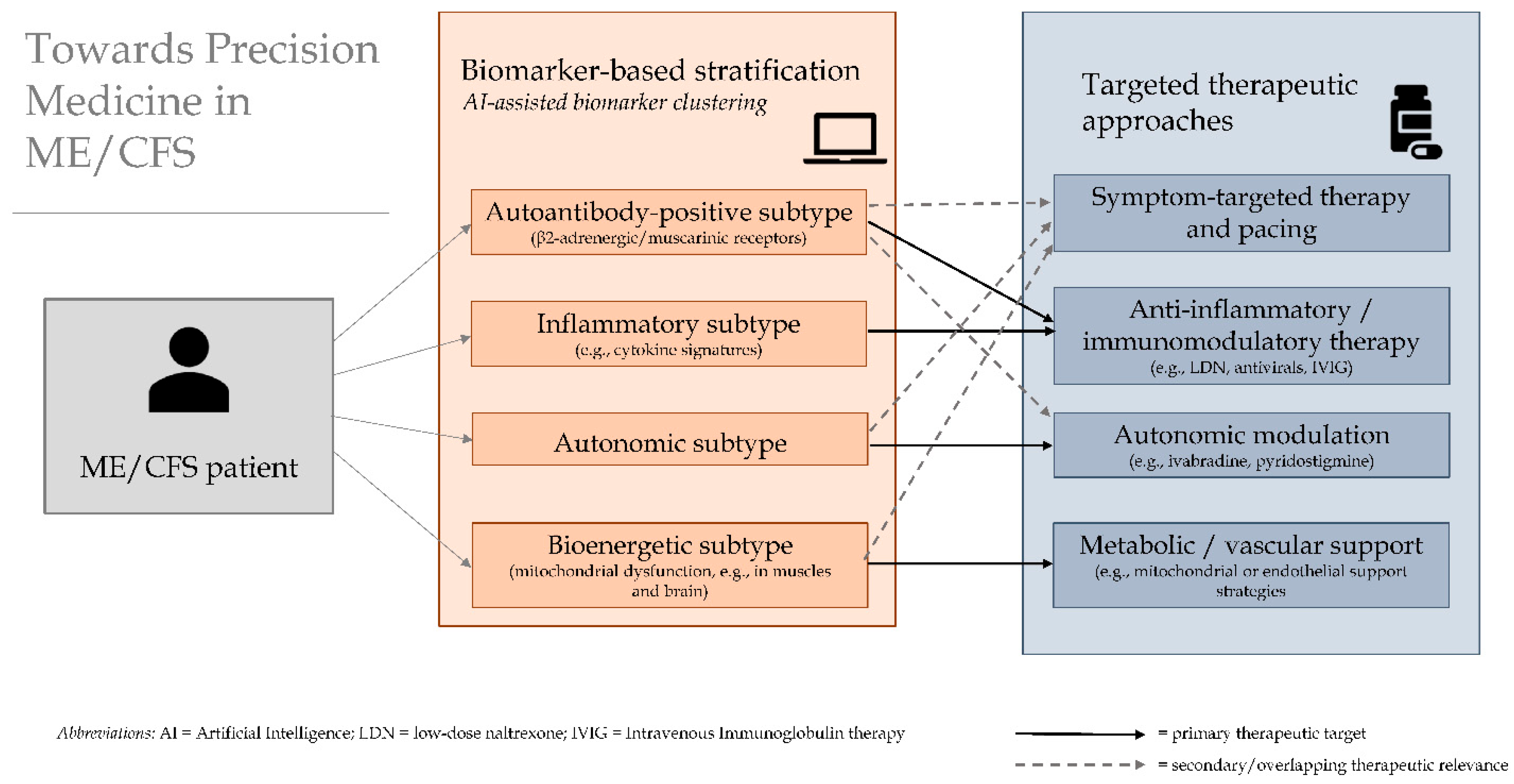
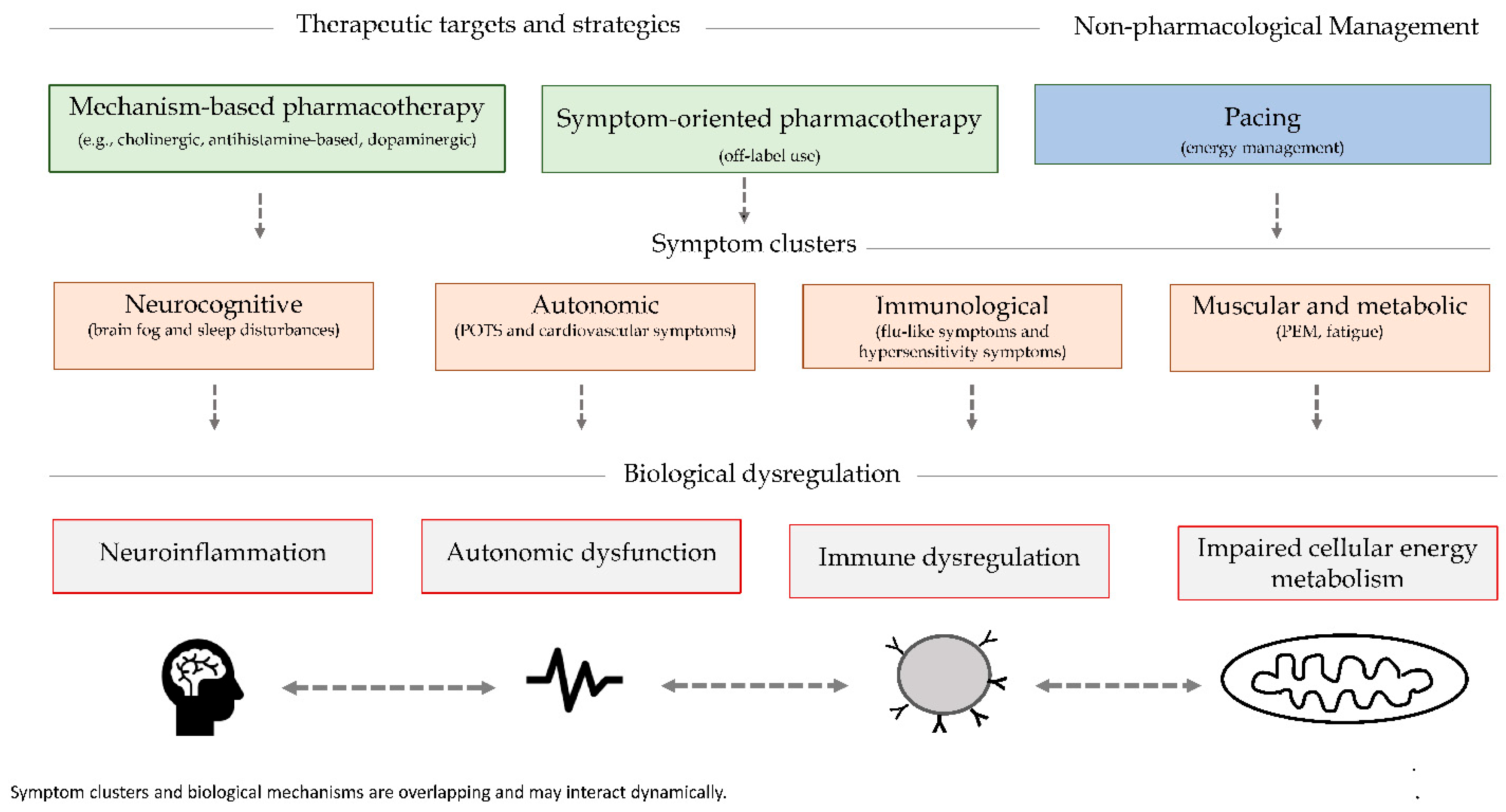 Table 1:
 Drug
Typical Indication in ME/CFS
Dosage
Level of Evidence (LoE)
Evidence/Rationale
Key References
Aripiprazole
Fatigue, cognitive dysfunction
Start 0.25 mg/day, increase by 0.25 mg every 2 weeks; max 2 mg/day
4
Small retrospective case series in ME/CFS
[62]
Cromoglicic acid
Mast cell activation symptoms
100–200 mg orally four times daily; max 800 mg/day
4
Case reports; MCAS literature
[61]
Fludrocortisone
Orthostatic intolerance
0.1 mg once or twice daily; max 0.5 mg/day
3
Evidence from orthostatic hypotension studies
[60]
Gabapentin
Neuropathic pain, sensory hypersensitivity
Start 300 mg/day, titrate up to 3600 mg/day
2–3
Strong evidence for neuropathic pain
[72]
H1/H2 receptor antagonists
Mast cell activation symptoms
Example: cetirizine 10–20 mg/day + famotidine 20–40 mg/day
4
MCAS case series
[61]
Hydrocortisone (low dose)
Anti-inflammatory
2.5–10 mg/day
3
Small clinical studies; clinical experience
[60]
Ibuprofen
Musculoskeletal pain
400 mg every 8 h; max single dose 800 mg
3
Analgesic evidence in general population
Pain therapy literature
Ivabradine
Sinus tachycardia, POTS
Start 2.5 mg/day, titrate; typical 7.5–10 mg/day, max 20 mg/day
3–4
Small studies in POTS; case series in ME/CFS
[68,69]
Melatonin (prolonged release)
Sleep disturbance
2–5 mg 1–2 h before bedtime; max 10 mg/day
3
RCTs for insomnia
Insomnia literature
Metamizole
Moderate to severe pain
500–1000 mg per dose; max 4–5 g/day; WARNING: risk of agranulocytosis
3
Analgesic evidence; no ME/CFS-specific trials
Pain therapy literature
Midodrine
Orthostatic intolerance
Start 2.5 mg, repeat every 3–4 h; max 30 mg/day
3
Evidence from POTS and orthostatic hypotension
[60]
Mirtazapine
Sleep disturbance, appetite loss
3.75–7.5 mg at night; do not use in patients with restless legs symptoms
4–5
Clinical experience
Clinical experience
Naltrexone (low-dose)
Pain, neuroinflammation
Start 0.5–1 mg/day, increase to 4 mg/day
4
Pilot studies and case series
[52, 63-64]
Paracetamol (acetaminophen)
Mild pain
10–15 mg/kg per dose; max 60 mg/kg/day
3
General analgesic evidence
Clinical experience
Pilocarpine
Autonomic dysfunction, sicca symptoms
2.5 mg several times daily, max 30 mg/day
3–4
Evidence from autonomic disorders
[81]
Pregabalin
Neuropathic pain, sensory hypersensitivity
Start 150 mg/day, titrate up to 600 mg/day
2–3
Evidence for neuropathic pain and fibromyalgia
[82]
Pyridostigmine
POTS, autonomic dysfunction
Start 10 mg, titrate up to 3 × 30 mg/day, max 180 mg/day
2–3
Rcts in POTS
[58, 65, 67]
Quetiapine
Severe insomnia
25–150 mg at night (off-label), max 300 mg/day
4–5
Clinical experience
Clinical experience
Rotigotine
Dopaminergic dysfunction, RLS
1 mg/24 h patch, titrate weekly to 3 mg/24 h
3–4
Evidence from RLS/Parkinson’s disease
Standard RLS literature
Trimipramine
Sleep disturbance
10–20 drops at night, max 50 drops/day
4–5
Evidence extrapolated from insomnia literature
[76]
Table 2: Domain of Dysfunction
Symptoms
Prevalence [%]
Examples of Off-Label Therapeutics
Cellular energy metabolism of muscle and nerve cells
Brain fog,
Memory impairment,
Wordfinding difficulties91.4
Muscle problems (e.g., pain, “muscle soreness”, fasciculations, cramps, restless legs)
89.2
Dyspnea (e.g., when climbing stairs, prolonged speaking)
68.1
Pain, headache (e.g., migraine-like)
70.6
Neurological/endocrine regulatory dysfunction
Central nervous system
Sleep disturbances (e.g., difficulty maintaining sleep, altered circadian rhythm)
88.0
Hypersensitivity (e.g., to light, noise, touch)
85.5
Impaired temperature regulation (cold sensation, chills, hot flashes)
81.2
Intolerance to high or low ambient temperatures
73.6
Visual disturbances (e.g., blurred vision, tunnel vision, zigzag lines)
65.3
Autonomic nervous system
Cardiovascular complaints (e.g., palpitations, blood pressure fluctuations, dizziness during prolonged standing or positional changes, POTS)
83.8
Gastrointestinal complaints (e.g., bloating, diarrhoea, intestinal cramps)
71.8
Urinary and sexual organ complaints (e.g., sudden urge to urinate)
42.4
Immunological dysfunction
Flu-like symptoms (chills, pronounced malaise)
78.5
Intolerances and hypersensitivities to foods, medications, and/or chemicals
62.0
Increased susceptibility to infections with prolonged recovery phases
48.1
This study represents a narrative review. Given the still limited scientific evidence base, published clinical experience and patient reported outcomes with symptomatic therapies were compared with the findings of the available efficacy studies. In accordance with the principles of narrative reviews, the selection and evaluation of the studies included were based on pragmatic criteria guided by clinical relevance and feasibility.
As no causal pharmacological therapy for the treatment of ME/CFS is currently available, existing treatment approaches continue to focus on symptomatic therapies that are individually tailored to the patient’s specific symptom profile. A range of pharmacological agents proposed to target neuroimmunological mechanisms in ME/CFS, while others are selected primarily based on their applicability to the most common ME/CFS symptoms (Table 2). Most of these medications are currently prescribed off-label. Available clinical experience and limited studies suggest that, when combined with consistent pacing, symptomatic treatment approaches may reduce symptom burden and improve quality of life in some patients [31,36]. In the absence of a causal therapy, this approach currently represents one of the primary strategies for improving patients' health status. In addition to ongoing clinical trials evaluating the efficacy of potential causal therapies, future studies should therefore also focus on the symptomatic pharmacological agents already in use. Beyond their direct therapeutic benefit, such studies may further substantiate current pathophysiological concepts underlying the development of individual ME/CFS symptoms.
Ach
Acetylcholine
ACTH
Adrenocorticotropic Hormone
CBD
Cannabidiol
CFS
Chronic Fatigue Syndrome
GABA
Gamma-Aminobutyric Acid
HPA
Hypothalamic–Pituitary–Adrenal
LDN
Low-Dose Naltrexone
MCAS
Mast Cell Activation Syndrome
ME
Myalgic Encephalomyelitis
OCEBM
Oxford Centre for Evidence-Based Medicine
PEM
Postexertional Malaise
POTS
Postural Orthostatic Tachycardia Syndrome
RCTs
Randomized Controlled Trials
RLS
Restless Legs Syndrome
The author confirms that he was solely responsible for the conceptualization, methodology, investigation, data curation, writing—original draft preparation, writing—review and editing, visualization, and project administration of the article. The author has read and agreed to the published version of the manuscript.
The study did not receive any external funding and was conducted using only institutional resources.
The author declares no conflicts of interest.
I gratefully acknowledge the contributions of the many researchers who have increasingly investigated symptomatic therapies for ME/CFS in recent years. Their work has laid the groundwork that enabled this article to build upon the emerging evidence base.
The author acknowledges the use of ChatGPT (OpenAI) for language editing and wording optimization in selected sections of the manuscript under human guidance and supervision. The translation from German was supported by https://www.deepl.com/de/translator (accessed on 13 July 2026) (free version). All ideas, data, and interpretations originate from the author.
1 https://clinicaltrials.gov/study/NCT06366724 (accessed on 13 July 2026).
2 We are not referring here to clinical subtypes, but rather to clinical symptom complexes, since different clinical symptom clusters may come to the fore as the disease progresses. The term “clinical subtype” suggests that this type does not change over the course of the disease in an individual.
[1] Glassford, J.A.G. The Neuroinflammatory Etiopathology of Myalgic Encephalomyelitis/Chronic Fatigue Syndrome (ME/CFS). Front. Physiol. 2017, 8, 88. [CrossRef] [PubMed]
[2] Mueller, C.; Lin, J.C.; Sheriff, S.; Maudsley, A.A.; Younger, J.W. Evidence of Widespread Metabolite Abnormalities in Myalgic Encephalomyelitis/Chronic Fatigue Syndrome: Assessment with Whole-Brain Magnetic Resonance Spectroscopy. Brain Imaging Behav. 2020, 14, 562–572. [CrossRef] [PubMed]
[3] Tate, W.; Walker, M.; Sweetman, E.; Helliwell, A.; Peppercorn, K.; Edgar, C.; Blait, A.; Chatterjee, A. Molecular Mechanisms of Neuroinflammation in ME/CFS and Long COVID to Sustain Disease and Promote Relapses. Front. Neurol. 2022, 13, 877772. [CrossRef] [PubMed]
[4] Renz-Polster, H.; Tremblay, M.E.; Bienzle, D.; Fischer, J.E. The Pathobiology of Myalgic Encephalomyelitis/Chronic Fatigue Syndrome: The Case for Neuroglial Failure. Front. Cell. Neurosci. 2022, 16, 888232. [CrossRef] [PubMed]
[5] Nakatomi, Y.; Mizuno, K.; Ishii, A.; Wada, Y.; Tanaka, M.; Tazawa, S.; Onoe, K.; Fukuda, S.; Kawabe, J.; Takahashi, K.; et al. Neuroinflammation in Patients with Chronic Fatigue Syndrome/Myalgic Encephalomyelitis: An 11C-(R)-PK11195 PET Study. J. Nucl. Med. 2014, 55, 945–950. [CrossRef] [PubMed]
[6] Carruthers, B.M.; van de Sande, M.I.; De Meirleir, K.L.; Klimas, N.G.; Broderick, G.; Mitchell, T.; Staines, D.; Powles, A.C.; Speight, N.; Vallings, R.; et al. Myalgic Encephalomyelitis: International Consensus Criteria. J. Intern. Med. 2011, 270, 327–338. [CrossRef] [PubMed]
[7] Fluge, Ø.; Tronstad, K.J.; Mella, O. Pathomechanisms and Possible Interventions in Myalgic Encephalomyelitis/Chronic Fatigue Syndrome (ME/CFS). J. Clin. Investig. 2021, 131, e150377. [CrossRef] [PubMed]
[8] Morris, G.; Anderson, G.; Maes, M. Hypothalamic–Pituitary–Adrenal Hypofunction in Myalgic Encephalomyelitis (ME)/Chronic Fatigue Syndrome (CFS) as a Consequence of Activated Immune-Inflammatory and Oxidative and Nitrosative Pathways. Mol. Neurobiol. 2017, 54, 6806–6819. [CrossRef] [PubMed]
[9] Wirth, K.; Scheibenbogen, C. A Unifying Hypothesis of the Pathophysiology of Myalgic Encephalomyelitis/Chronic Fatigue Syndrome (ME/CFS). Autoimmun. Rev. 2020, 19, 102527. [CrossRef] [PubMed]
[10] Zinn, M.A.; Jason, L.A. Cortical Autonomic Network Connectivity Predicts Symptoms in Myalgic Encephalomyelitis/Chronic Fatigue Syndrome (ME/CFS). Int. J. Psychophysiol. 2021, 170, 89–101. [CrossRef] [PubMed]
[11] Maksoud, R.; Magawa, C.; Eaton-Fitch, N.; Thapaliya, K.; Marshall-Gradisnik, S. Biomarkers for Myalgic Encephalomyelitis/Chronic Fatigue Syndrome (ME/CFS): A Systematic Review. BMC Med. 2023, 21, 189. [CrossRef] [PubMed]
[12] Wirth, K.J.; Scheibenbogen, C.; Paul, F. An Attempt to Explain the Neurological Symptoms of Myalgic Encephalomyelitis/Chronic Fatigue Syndrome. J. Transl. Med. 2021, 19, 471. [CrossRef] [PubMed]
[13] Petter, E.; Scheibenbogen, C.; Linz, P.; Stehning, C.; Wirth, K.; Kuehne, T.; Kelm, M. Muscle Sodium Content in Patients with Myalgic Encephalomyelitis/Chronic Fatigue Syndrome. J. Transl. Med. 2022, 20, 580. [CrossRef] [PubMed]
[14] Pereira, G.; Gillies, H.; Chanda, S.; Corbett, M.; Vernon, S.D.; Milani, T.; Bateman, L. Acute Corticotropin-Releasing Factor Receptor Type 2 Agonism Results in Sustained Symptom Improvement in Myalgic Encephalomyelitis/Chronic Fatigue Syndrome. Front. Syst. Neurosci. 2021, 15, 698240. [CrossRef] [PubMed]
[15] Loebel, M.; Grabowski, P.; Heidecke, H.; Bauer, S.; Hanitsch, L.G.; Wittke, K.; Meisel, C.; Reinke, P.; Volk, H.D.; Fluge, Ø.; et al. Antibodies to β-Adrenergic and Muscarinic Cholinergic Receptors in Patients with Chronic Fatigue Syndrome. Brain Behav. Immun. 2016, 52, 32–39. [CrossRef] [PubMed]
[16] Fujii, H.; Sato, W.; Kimura, Y.; Matsuda, H.; Ota, M.; Maikusa, N.; Suzuki, F.; Amano, K.; Shin, I.; Yamamura, T.; et al. Altered Structural Brain Networks Related to Adrenergic/Muscarinic Receptor Autoantibodies in Chronic Fatigue Syndrome. J. Neuroimaging 2020, 30, 822–827. [CrossRef] [PubMed]
[17] de Sá, K.; Silva, J.; Bayarri-Olmos, R.; Baker, C.A.; Lu, Z.; Gipson, W.; Na, D.; Chen, B.; Wenxue, L.; Khosroabadi, D.; et al. A causal link between autoantibodies and neurological symptoms in long COVID. Cell 2026, 189, 3214–3235.e37. [CrossRef] [PubMed]
[18] Froehlich, L.; Hattesohl, D.B.R.; Jason, L.A.; Scheibenbogen, C.; Behrends, U.; Thoma, M. Medical Care Situation of People with Myalgic Encephalomyelitis/Chronic Fatigue Syndrome in Germany. Medicina 2021, 57, 646. [CrossRef] [PubMed]
[19] Rasa, S.; Nora-Krukle, Z.; Henning, N.; Eliassen, E.; Shikova, E.; Harrer, T.; Scheibenbogen, C.; Murovska, M.; Prusty, B.K. Chronic Viral Infections in Myalgic Encephalomyelitis/Chronic Fatigue Syndrome (ME/CFS). J. Transl. Med. 2018, 16, 268. [CrossRef] [PubMed]
[20] Baraniuk, J.N.; Amar, A.; Pepermitwala, H.; Washington, S.S. Differential Effects of Exercise on fMRI of the Midbrain Ascending Arousal Network Nuclei in Myalgic Encephalomyelitis/Chronic Fatigue Syndrome (ME/CFS) and Gulf War Illness (GWI) in a Model of Postexertional Malaise (PEM). Brain Sci. 2022, 12, 78. [CrossRef] [PubMed]
[21] Collin, S.M.; Nikolaus, S.; Heron, J.; Knoop, H.; White, P.D.; Crawley, E. Chronic Fatigue Syndrome (CFS) Symptom-Based Phenotypes in Two Clinical Cohorts of Adult Patients in the UK and The Netherlands. J. Psychosom. Res. 2016, 81, 14–23. [CrossRef] [PubMed]
[22] Hornig, M.; Montoya, J.G.; Klimas, N.G.; Levine, S.; Felsenstein, D.; Bateman, L.; Peterson, D.L.; Gottschalk, C.G.; Schultz, A.F.; Che, X.; et al. Characteristic immune signatures in ME/CFS. Sci. Adv. 2015, 1, e1400121. [CrossRef] [PubMed]
[23] Jason, L.A.; Mirin, A.A. Updating the National Academy of Medicine ME/CFS Prevalence and Economic Impact Figures to Account for Population Growth and Inflation. Fatigue 2021, 9, 9–13. [CrossRef]
[24] Daniell, J.; Brand, J.; Paessler, D.; Heydecke, J.; Schoening, S.; McLennan, A.K. The Rising Cost of Long COVID and ME/CFS in Germany; ME/CFS Research Foundation and Risklayer: Hamburg and Karlsruhe, Germany, 2025. [CrossRef]
[25] Lim, E.J.; Ahn, Y.C.; Jang, E.S.; Lee, S.W.; Lee, S.H.; Son, C.G. Systematic Review and Meta-Analysis of the Prevalence of Chronic Fatigue Syndrome/Myalgic Encephalomyelitis. J. Transl. Med. 2020, 18, 100. [CrossRef] [PubMed]
[26] Vyas, J.; Muirhead, N.; Singh, R.; Ephgrave, R.; Finlay, A. Impact of Myalgic Encephalomyelitis/Chronic Fatigue Syndrome (ME/CFS) on the Quality of Life of People with ME/CFS and Their Partners and Family Members: An Online Cross-Sectional Survey. BMJ Open 2022, 12, e058128. [CrossRef] [PubMed]
[27] Bateman, L.; Darakjy, S.; Klimas, N.G.; Peterson, D.; Levine, S.M.; Allen, A.; Carlson, S.A.; Balbin, E.G.; Gottschalk, G.; March, D. Chronic Fatigue Syndrome and Comorbid and Consequent Conditions: Evidence from a Multi-Site Clinical Epidemiology Study. Fatigue 2014, 3, 1–15. [CrossRef]
[28] Pears, K. Mortality in ME/CFS; The ME Association: Gawcott, UK, 2023; Research Review. Available online: https://meassociation.org.uk/wp-content/uploads/MEA-RESEARCH-REVIEW-MORTALITY-IN-MECFS-NOVEMBER-2023-1.pdf (accessed on 13 July 2026).
[29] Carruthers, B.M.; Jain, A.K.; de Meirleir, K.L.; Peterson, D.L.; Klimas, N.G.; Lerner, A.M.; Bested, A.C.; Flor-Henry, P.; Joshi, P.; Powles, A.C.P.; et al. Myalgic Encephalomyelitis/Chronic Fatigue Syndrome: Clinical Working Case Definition, Diagnostic and Treatment Protocols. J. Chronic Fatigue Syndr. 2003, 11, 7–115. [CrossRef]
[30] Deumer, U.S.; Varesi, A.; Floris, V.V.; Saviolo, G.; Mantovani, E.; López-Carrasco, P.; Rosati, G.M.; Prasad, S.; Ricevuti, G. Myalgic Encephalomyelitis/Chronic Fatigue Syndrome (ME/CFS): An Overview. J. Clin. Med. 2021, 10, 4786. [CrossRef] [PubMed]
[31] National Institute for Health and Care Excellence (NICE). Myalgic Encephalomyelitis (or Encephalopathy)/Chronic Fatigue Syndrome: Diagnosis and Management; NICE: London, UK, 2021; NICE Guideline NG206. Available online: https://www.nice.org.uk/guidance/ng206 (accessed on 13 July 2026).
[32] Bramer, W.M.; Rethlefsen, M.L.; Kleijnen, J.; Franco, O.H. Optimal Database Combinations for Literature Searches in Systematic Reviews: A Prospective Exploratory Study. Syst. Rev. 2017, 6, 245. [CrossRef] [PubMed]
[33] Habermann-Horstmeier, L. Therapie. [Therapy]. In Das Handbuch ME/CFS. [The ME/CFS Manual]; Hogrefe Verlag: Göttingen, Germany, 2025; pp. 204ff. [CrossRef]
[34] Razum, O.; Brzosks, P.; Egger, M. Statistische Signifikanz und Klinische Relevanz. [Statistical Significance and Clinical Relevance]. In Public Health Kompakt, 5th ed.; Egger, M., Razum, O., Rieder, A., Eds.; De Gruyter: Berlin, Germany, 2025; pp. 94ff. [CrossRef]
[35] Green, B.N.; Johnson, C.D.; Adams, A. Writing narrative literature reviews for peer-reviewed journals: Secrets of the trade. J. Chiropr. Med. 2006, 5, 101–117. [CrossRef] [PubMed]
[36] Steiner, S.; Fehrer, A.; Hoheisel, F.; Schoening, S.; Aschenbrenner, A.; Babel, N.; Bellmann-Strobl, J.; Finke, C.; Fluge, Ø.; Froehlich, L.; et al. Understanding, Diagnosing, and Treating Myalgic Encephalomyelitis/Chronic Fatigue Syndrome—State of the Art: Report of the 2nd International Meeting at the Charité Fatigue Center. Autoimmun. Rev. 2023, 22, 103452. [CrossRef] [PubMed]
[37] Scheibenbogen, C.; Wirth, K.J. Key pathophysiological role of skeletal muscle disturbance in post COVID and ME/CFS. J. Cachexia Sarcopenia Muscle 2025, 16, e13669. [CrossRef] [PubMed]
[38] Bizjak, D.A.; Ohmayer, B.; Buhl, J.L.; Schneider, E.M.; Walther, P.; Calzia, E.; Jerg, A.; Matits, L.; Steinacker, J.M. Functional and morphological differences of muscle mitochondria in chronic fatigue syndrome and post-COVID syndrome. Int. J. Mol. Sci. 2024, 25, 1675. [CrossRef] [PubMed]
[39] Paffrath, A.; Kim, L.; Kedor, C.; Stein, E.; Rust, R.; Freitag, H.; Hoppmann, U.; Hanitsch, L.G.; Bellmann-Strobl, J.; Wittke, K.; et al. Impaired hand grip strength correlates with greater disability in post-COVID ME/CFS. J. Clin. Med. 2024, 13, 2153. [CrossRef] [PubMed]
[40] Gemeinsamer Bundesausschuss. Off-Label-Use—Verordnungsfähigkeit von Arzneimitteln in Nicht Zugelassenen Anwendungsgebieten. [Off-Label Use—The Prescribability of Drugs for Unapproved Indications]; G-BA: Berlin, Germany, n.d.. Available online: https://www.g-ba.de/themen/arzneimittel/arzneimittel-richtlinie-anlagen/off-label-use/ (accessed on 4 December 2023).
[41] Islam, M.M.; Iqbal, U.; Walther, B.A.; Nguyen, P.A.; Li, Y.C.; Dubey, N.K.; Poly, T.N.; Masud, J.H.B.; Atique, S.; Syed-Abdul, S. Gender-Based Personalized Pharmacotherapy: A Systematic Review. Arch. Gynecol. Obstet. 2017, 295, 1305–1317. [CrossRef] [PubMed]
[42] Ruben, M.D.; Smith, D.F.; FitzGerald, G.A.; Hogenesch, J.B. Dosing Time Matters. Science 2019, 365, 547–549. [CrossRef] [PubMed]
[43] Dose, B.; Yalçin, M.; Dries, S.M.; Relógio, A. TimeTeller for Timing Health: The Potential of Circadian Medicine to Improve. Front. Digit. Health 2023, 5, 1157654. [CrossRef] [PubMed]
[44] Colita, C.I.; Hermann, D.M.; Filfan, M.; Colita, D.; Doepnner, T.R.; Tica, O.; Glavan, D.; Popa-Wagner, A. Optimizing Chronotherapy in Psychiatric Care: The Impact of Circadian Rhythms on Medication Timing and Efficacy. Clocks Sleep. 2024, 6, 635–655. [CrossRef] [PubMed]
[45] McCarthy, M.J. Circadian rhythm disruption in Myalgic Encephalomyelitis/Chronic Fatigue Syndrome: Implications for the post-acute sequelae of COVID-19. Brain Behav. Immun. Health 2022, 20, 100412. [CrossRef] [PubMed]
[46] Zerón-Rugerio, M.F.; Zaragozá, M.C.; Domingo, J.C.; Sanmartín-Sentañes, R.; Alegre-Martin, J.; Castro-Marrero, J.; Cambras, T. Sleep and Circadian Rhythm Alterations in Myalgic Encephalomyelitis/Chronic Fatigue Syndrome and Post-COVID Fatigue Syndrome and Its Association with Cardiovascular Risk Factors: A Prospective Cohort Study. Chronobiol. Int. 2024, 41, 1104–1115. [CrossRef] [PubMed]
[47] Scheibenbogen, C.; Bellmann-Strobl, J.; Reißhauer, A.; Maier, A.; Veauthier, C.; Schmidt, D.; Behrends, U. Myalgische Enzephalomyelitis/Chronisches Fatigue-Syndrom: Interdisziplinär Versorgen. Dtsch. Arztebl. 2023, 120, A-908/B-780.
[48] Huang, K.; Lidbury, B.A.; Thomas, N.; Gooley, P.R.; Armstrong, C.W. Machine Learning and Multi-Omics in Precision Medicine for ME/CFS. J. Transl. Med. 2025, 23, 68. [CrossRef] [PubMed]
[49] Bynke, A.; Julin, P.; Gottfries, C.; Heidecke, H.; Scheibenbogen, C.; Bergquist, J. Autoantibodies to Beta-Adrenergic and Muscarinic Cholinergic Receptors in Myalgic Encephalomyelitis (ME) Patients—A Validation Study in Plasma and Cerebrospinal Fluid from Two Swedish Cohorts. Brain Behav. Immun. Health 2020, 7, 100107. [CrossRef] [PubMed]
[50] Montoya, J.G.; Holmes, T.H.; Anderson, J.N.; Maecker, H.T.; Rosenberg-Hasson, Y.; Valencia, I.J.; Chu, L.; Younger, J.W.; Tato, C.M.; Davis, M.M. Cytokine Signature Associated with Disease Severity in Chronic Fatigue Syndrome Patients. Proc. Natl. Acad. Sci. USA 2017, 114, E7150–E7158. [CrossRef] [PubMed]
[51] Roerink, M.E.; Buckland, M.; Lloyd, A.R.; van der Meer, J.W.M. Cytokine Signature in Chronic Fatigue Syndrome. Proc. Natl. Acad. Sci. USA 2017, 114, E9435–E9444. [CrossRef] [PubMed]
[52] Younger, J.; Parkitny, L.; McLain, D. The Use of Low-Dose Naltrexone (LDN) as a Novel Anti-Inflammatory Treatment for Chronic Pain. Clin. Rheumatol. 2014, 33, 451–459. [CrossRef] [PubMed]
[53] Davis, L.; Higgs, M.; Snaith, A.; Lodge, T.A.; Strong, J.; Espejo-Oltra, J.A.; Kujawski, S.; Zalewski, P.; Pretorius, E.; Hoerger, M.; et al. Dysregulation of Lipid Metabolism and Energy Production in ME/CFS. Front. Neurosci. 2025, 19, 1498981. [CrossRef] [PubMed]
[54] Medow, M.S.; Stewart, J.M. Phenylephrine Alters Phase Synchronization Between Cerebral Blood Velocity and Blood Pressure in ME/CFS with Orthostatic Intolerance. Am. J. Physiol. Regul. Integr. Comp. Physiol. 2024, 326, R599–R608. [CrossRef] [PubMed]
[55] Hartman, N.; Ivkic, D.; Dorczok, M.C.; Bozic, I.; Reinfried, L.; Moser, A.C.; Fugger, G.; Ludwig, B.; Buchmayer, F.; Spies, M.; et al. Psychopharmakologisches Repurposing bei Postviralen Erschöpfungssyndromen. [Psychopharmacological Repurposing in Post-Viral Fatigue Syndromes]. Psychopraxis. Neuropraxis 2026, 29, 114–124. [CrossRef]
[56] Dinan, T.G. Serotonin and the Regulation of Hypothalamic–Pituitary–Adrenal Axis Function. Life Sci. 1996, 58, 1683–1694. [CrossRef] [PubMed]
[57] Wirth, K.J.; Löhn, M. Myalgic Encephalomyelitis/Chronic Fatigue Syndrome (ME/CFS) and Comorbidities: Linked by Vascular Pathomechanisms and Vasoactive Mediators? Medicina 2023, 59, 978. [CrossRef] [PubMed]
[58] Schlömer, E.; Stein, E.; Kedor, C.; Rust, R.; Brock, A.; Wittke, K.; Scheibenbogen, C.; Kim, L. Pyridostigmine improves hand grip strength in patients with myalgic encephalomyelitis/ chronic fatigue syndrome. Front. Neurosci. 2025, 19, 1637838. [CrossRef] [PubMed]
[59] Hartwig, J.; Sotzny, F.; Bauer, S.; Heidecke, H.; Riemekasten, G.; Dragun, D.; Meisel, C.; Dames, C.; Grabowski, P.; Scheibenbogen, C. IgG-Stimulated β2-Adrenergic Receptor Activation Is Attenuated in Patients with ME/CFS. Brain Behav. Immun. Health 2020, 3, 100047. [CrossRef] [PubMed]
[60] Schiweck, N.; Langer, K.; Maier, A.; Vilser, D.; Spiegler, J. Systematic literature review: Treatment of postural orthostatic tachycardia syndrome (POTS). Clin. Auton. Res. 2026, 36, 3–16. [CrossRef] [PubMed]
[61] Afrin, L.B.; Self, S.; Menk, J.; Lazarchick, J. Characterization of Mast Cell Activation Syndrome. Am. J. Med. Sci. 2017, 353, 207–215. [CrossRef] [PubMed]
[62] Crosby, L.D.; Kalanidhi, S.; Bonilla, A.; Subramanian, A.; Ballon, J.S.; Bonilla, H. Off-Label Use of Aripiprazole Shows Promise as a Treatment for Myalgic Encephalomyelitis/Chronic Fatigue Syndrome (ME/CFS): A Retrospective Study of 101 Patients Treated with a Low Dose of Aripiprazole. J. Transl. Med. 2021, 19, 50. [CrossRef] [PubMed]
[63] O’Kelly, B.; Vidal, L.; McHugh, T.; Woo, J.; Avramovic, G.; Lambert, J.S. Safety and Efficacy of Low-Dose Naltrexone in a Long COVID Cohort: An Interventional Pre–Post Study. Brain Behav. Immun. Health 2022, 24, 100485. [CrossRef] [PubMed]
[64] Polo, O.; Pesonen, P.; Tuominen, E. Low-Dose Naltrexone in the Treatment of Myalgic Encephalomyelitis/Chronic Fatigue Syndrome (ME/CFS). Fatigue 2019, 7, 207–217. [CrossRef]
[65] Joseph, P.; Pari, R.; Miller, S.; Warren, A.; Stovall, M.C.; Squires, J.; Chang, C.J.; Xiao, W.; Waxman, A.B.; Systrom, D.M. Neurovascular Dysregulation and Acute Exercise Intolerance in Myalgic Encephalomyelitis/Chronic Fatigue Syndrome: A Randomized, Placebo-Controlled Trial of Pyridostigmine. Chest 2022, 162, 1116–1126. [CrossRef] [PubMed]
[66] Middeke, M. Chronopathologie der Hypertonie—Klinische Bedeutung und Einfluss auf die Therapieentscheidung. [Chronopathology of Hypertension—Clinical Significance and Impact on Treatment Decisions]. J. Hyperton. 2007, 11, 6–8. [View Online] (accessed on 13 July 2026).
[67] Kanjwal, K.; Karabin, B.; Sheikh, M.; Elmer, L.; Kanjwal, Y.; Saeed, B.; Grubb, B.P. Pyridostigmine in the treatment of postural orthostatic tachycardia: A single-center experience. Pacing Clin. Electrophysiol. 2011, 34, 750–755. [CrossRef] [PubMed]
[68] Taub, P.R.; Zadourian, A.; Lo, H.C.; Ormiston, C.K.; Golshan, S.; Hsu, J.C. Randomized Trial of Ivabradine in Patients With Hyperadrenergic Postural Orthostatic Tachycardia Syndrome. J. Am. Coll. Cardiol. 2021, 77, 861–871. [CrossRef] [PubMed]
[69] Gee, M.E.; Watkins, A.K.; Brown, J.N.; Young, E.J. Ivabradine for the Treatment of Postural Orthostatic Tachycardia Syndrome: A Systematic Review. Am. J. Cardiovasc. Drugs 2018, 18, 195–204. [CrossRef] [PubMed]
[70] Wu, Y.; Guo, X.; Zhang, J. Calcium Channel α2δ Ligands Mirogabalin, Pregabalin, and Gabapentin: Advancements in Diabetic Peripheral Neuropathic Pain Therapeutics. Pain Ther. 2025, 14, 1647–1686. [CrossRef] [PubMed]
[71] Sobey, C.M.; Byrne, D. Gabapentin and Pregabalin. In Hospitalized Chronic Pain Patient; Edwards, D.A., Gulur, P., Sobey, C.M., Eds.; Springer: Cham, Switzerland, 2022. [CrossRef]
[72] Mayoral, V.; Galvez, R.; Ferrándiz, M.; Miguéns Vázquez, X.; Cordero-García, C.; Alcántara Montero, A.; Pérez, C.; Pérez-Páramo, M. Pregabalin vs. gabapentin in the treatment of neuropathic pain: A comprehensive systematic review and meta-analysis of effectiveness and safety. Front. Pain Res. 2025, 5, 1513597. [CrossRef] [PubMed]
[73] Varadi, G. Mechanism of Analgesia by Gabapentinoid Drugs: Involvement of Modulation of Synaptogenesis and Trafficking of Glutamate-Gated Ion Channels. J. Pharmacol. Exp. Ther. 2024, 388, 121–133. [CrossRef] [PubMed]
[74] Bruhn, C. Cannabinoide als Option bei schwer behandelbarer ME/CFS. [Cannabinoids as a treatment option for difficult-to-treat ME/CFS]. Schmerzmedizin Angew. Schmerzther. Palliativmedizin 2025, 41, 28–29. [CrossRef]
[75] Riemann, D.; Voderholzer, U.; Cohrs, S.; Rodenbeck, A.; Hajak, G.; Rüther, E.; Wiegand, M.H.; Laakmann, G.; Baghai, T.; Fischer, W.; et al. Trimipramine in primary insomnia: Results of a polysomnographic double-blind controlled study. Pharmacopsychiatry 2002, 35, 165–174. [CrossRef] [PubMed]
[76] Kavyani, B.; Ahn, S.B.; Missailidis, D.; Annesley, S.J.; Fisher, P.R.; Schloeffel, R.; Guillemin, G.J.; Lovejoy, D.B.; Heng, B. Dysregulation of the Kynurenine Pathway, Cytokine Expression Pattern, and Proteomics Profile Link to Symptomology in Myalgic Encephalomyelitis/Chronic Fatigue Syndrome (ME/CFS). Mol. Neurobiol. 2024, 61, 3771–3787. [CrossRef] [PubMed]
[77] Grande, T.; Grande, B.; Gerner, P.; Hammer, S.; Stingl, M.; Vink, M.; Hughes, B.M. The Role of Psychotherapy in the Care of Patients with Myalgic Encephalomyelitis/Chronic Fatigue Syndrome. Medicina 2023, 59, 719. [CrossRef] [PubMed]
[78] Vermeulen, R.C.; Scholte, H.R. Azithromycin in Chronic Fatigue Syndrome (CFS): An Analysis of Clinical Data. J. Transl. Med. 2006, 4, 34. [CrossRef] [PubMed]
[79] Habermann-Horstmeier, L.; Horstmeier, L.M. Symptom Clusters in ME/CFS Reflect Distinct Neuroimmune and Autonomic Pathophysiological Mechanisms: A Translational Model. J. Transl. Med. 2026, 24, 606. [CrossRef] [PubMed]
[80] Habermann-Horstmeier, L.; Horstmeier, L.M. Symptome der myalgischen Enzephalomyelitis/des chronischen Fatigue-Syndroms (ME/CFS) im Krankheitsverlauf—Eine Public-Health-Studie auf Basis von Patientenberichten. [Symptoms of Myalgic Encephalomyelitis/Chronic Fatigue Syndrome (ME/CFS) Over the Course of the Disease—A Public Health Study Based on Patient Reports]. Präv Gesundheitsf. 2025. [CrossRef]
[81] Holm, K. Neueres über die Atropin- und Pilocarpin-Therapie. [Recent Developments in Atropine and Pilocarpine Therapy]. Klin Wochenschr 2025, 4, 24–26. [CrossRef]
[82] Derry, S.; Bell, R.F.; Straube, S.; Wiffen, P.J.; Aldington, D.; Moore, R.A. Pregabalin for neuropathic pain in adults. Cochrane Database Syst. Rev. 2019, 1, CD007076. [CrossRef] [PubMed]
Disclaimer/Publisher’s Note: The views expressed in this article are those of the author(s) and do not necessarily reflect the views of the publisher or editors. The publisher and editors assume no responsibility for any injury or damage resulting from the use of information contained herein.
©2026 Copyright by the Authors.
Licensed as an open access article distributed under the terms and conditions of the CC BY 4.0 license