


 ACCESS
Review Article
ACCESS
Review Article
Volume 2, Article ID: 2026.0012

Said Salim Said
saidalriyamy67@gmail.com


Burhani Simai
bsimai@yahoo.com

Sabra Salim Rashid
sunda015@gmail.com

Ahmad Makame Mwadini
ahmadmakame9@gmail.com

Ussi Hamza Ussi
ussihamza92@gmail.com

1 Zanzibar Food and Drug Agency, P.O. BOX 3595 Zanzibar, Tanzania
2 School of Health & Medical Sciences, The State University of Zanzibar, Zanzibar, Tanzania
* Author to whom correspondence should be addressed
Received: 04 Apr 2026 Available Online: 27 Aug 2026
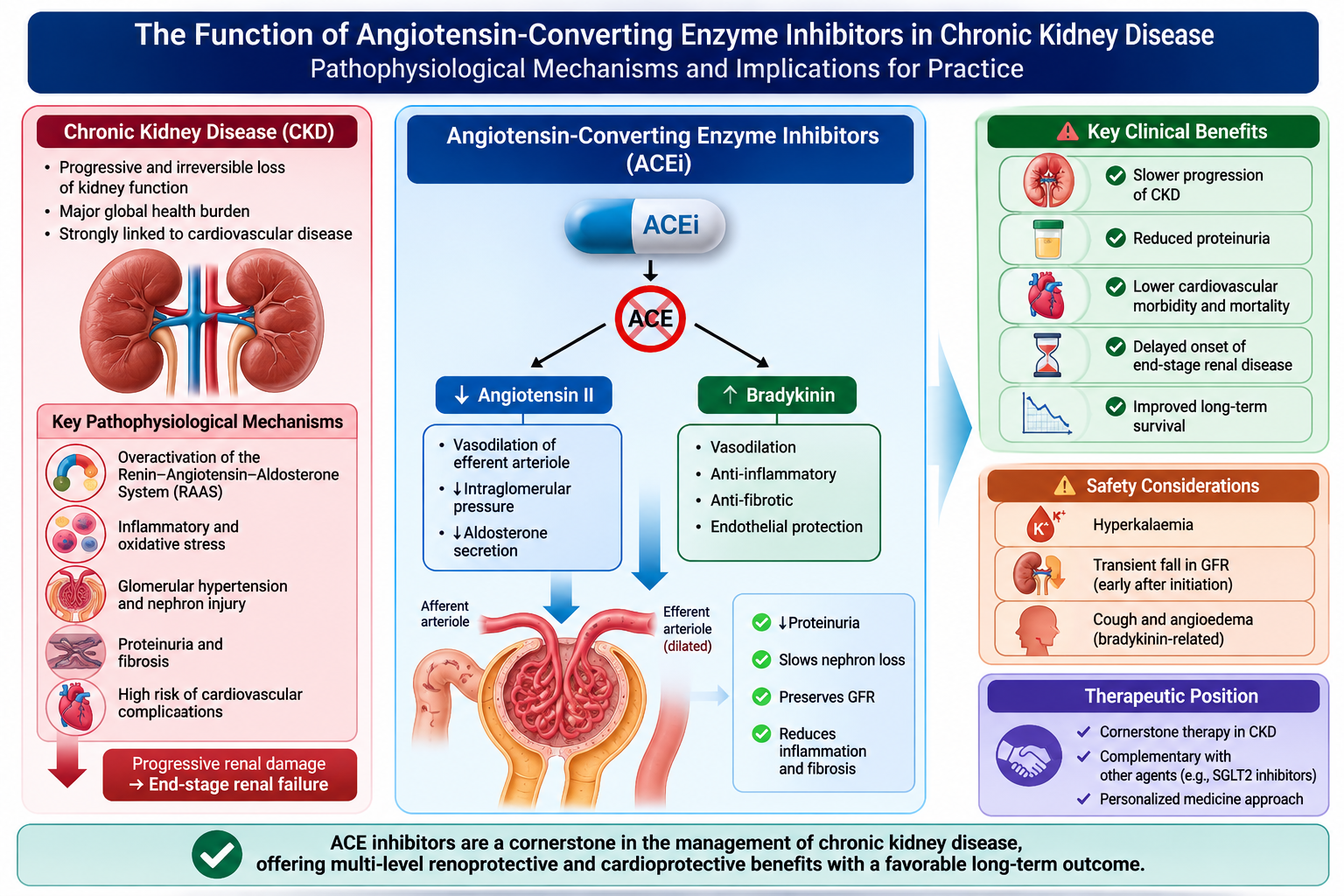
Chronic kidney disease is defined as a progressive deterioration in the functioning of the kidneys, and its progression is affected by many pathophysiological mechanisms. This disease still has a considerable effect on the health care system, especially concerning its relationship to cardiovascular disease. The progressive deterioration in the functioning of the kidneys is affected by complex mechanisms in the renin-angiotensin system and the inflammatory response, leading to permanent damage to the nephron. It has been found that angiotensinconverting enzyme inhibitors play an integral part in the management of chronic kidney disease. This is because, in addition to managing blood pressure, they produce renoprotective effects at the molecular level. In addition to giving a comprehensive overview, there is an indepth discussion concerning the mechanistic basis for the therapeutic effects of ACE inhibitors, especially concerning the effect on the renin-angiotensin-aldosterone system, the effect in reducing intraglomerular pressure, proteinuria, and anti-inflammatory effects. The long-term effects of ACE inhibitors are also discussed, especially concerning the results from clinical studies concerning delayed progression to end-stage renal failure, survival, and cardiovascular complications. Emphasis is placed on the pharmacodynamics of the initiation of therapy, especially concerning the effect on the glomerular filtration rate. The side effect profile concerning the long-term effects of ACE inhibitors is also discussed, especially concerning potassium, acute renal failure, and bradykinin. Other potential therapies concerning other agents, especially SGLT2, are also discussed. This comprehensive review concerning the role of ACE inhibitors in the management of chronic kidney disease places great emphasis on the need for personalized medicine.
Disclaimer: This is not the final version of the article. Changes may occur when the manuscript is published in its final format