


 ACCESS
Review Article
ACCESS
Review Article
Volume 1, Article ID: 2026.0002

Faris M. AL-Oqla
fmaloqla@hu.edu.jo


Sajeda Sami
samisajeda396@gmail.com
Department of Mechanical Engineering, Faculty of Engineering, The Hashemite University, P.O. box 330127, Zarqa 13133, Jordan
* Author to whom correspondence should be addressed
Received: 28 Dec 2025 Accepted: 14 May 2026 Available Online: 15 May 2026 Published: 22 Jun 2026
Life Cycle Assessment (LCA) has become a comprehensive analytical framework for quantifying the environmental performance of medical devices throughout their entire life cycles. This review integrates methodological fundamentals, database selection guidelines, and impact assessment approaches relevant to healthcare applications, with a particular focus on prosthetic and orthotic technologies. By integrating ISO-compliant modeling practices, robust inventory datasets such as ELCD 3.2 and ecoinvent, and modern impact assessment methods such as ReCiPe 2016 Midpoint (H), this review demonstrates how methodological rigor enhances the reliability and reproducibility of environmental evaluations. Case studies of upper-limb prostheses, reprocessed pneumatic sleeves, remanufactured electrophysiology catheters, and repaired surgical equipment collectively identify consistent environmental hotspots associated with material extraction, energy-intensive manufacturing, and sterilization processes. Evidence indicates that circular economy approaches, remanufacturing, and repair can substantially reduce greenhouse gas emissions and resource consumption while maintaining clinical performance. The findings underscore the essential role of LCA as a decision-support tool for promoting sustainable innovation, guiding eco-design strategies, and accelerating the transition toward environmentally responsible healthcare systems.
Sustainability now plays a central role in guiding modern industrial and technological development, driving the widespread adoption of Life Cycle Assessment (LCA) across sectors such as healthcare, manufacturing, construction, energy systems, and consumer products to mitigate environmental impacts [1,2]. As global environmental pressures continue to intensify, industries increasingly rely on Life Cycle Assessment (LCA) as a scientifically robust approach for quantifying the environmental impacts of products throughout their entire life cycles, from raw material extraction to end-of-life management [1,3]. This system-based perspective enables decision-makers to identify the life-cycle stages that contribute most significantly to emissions, resource depletion, and ecological stress, thereby supporting the development of strategies to improve environmental performance across diverse sectors [1,2]. Traditional manufacturing processes across industries involve energy-intensive operations, including polymer molding, metal machining, large-scale material processing, and transportation, all of which contribute substantially to greenhouse gas emissions and waste generation [1,4]. Consequently, systematic and transparent assessment tools such as LCA have become essential for supporting sustainable material selection, improving industrial processes, enhancing product design, and informing long-term policy development [2,5]. LCA provides a robust, ISO-standardized framework comprising several structured stages, including goal and scope definition, life cycle inventory (LCI), life cycle impact assessment (LCIA), and interpretation of results [3]. Within this framework, impact categories such as climate change, human toxicity, ecosystem damage, and resource depletion are commonly evaluated using harmonized impact assessment methods such as ReCiPe 2016 [6]. Comparative studies have also examined methodological differences between ReCiPe and alternative approaches such as ILCD, CML-IA, and IMPACT 2002+, particularly in sectors such as energy production and building materials [7]. Reliable databases play a key role in ensuring methodological transparency and accuracy. Widely used LCI databases, including ecoinvent [8], ELCD 3.2 [8,9], and GaBi [10], provide extensive datasets on materials, energy systems, industrial processes, and waste management, enabling consistent comparisons across sectors [11,12]. The quality of life-cycle inventory (LCI) data and the choice of databases strongly influence LCA outcomes, as variations in energy sources, fiber treatment processes, and end-of-life scenarios can result in substantial differences in environmental impact results [13,14]. Figure 1 illustrates the general life cycle framework associated with prosthetic limb production. Transparent reporting of system boundaries, functional units, and assumptions is particularly important when assessing emerging bio-composites for industrial, energy, and biomedical applications [13, 15-16]. Recent advancements in sustainable materials research demonstrate a growing shift toward natural-fiber-reinforced polymer composites as environmentally preferable alternatives to conventional polymers. A study by Al-Oqla and Sapuan have highlighted the feasibility and environmental benefits of natural fibers, such as date palm fibers, for industrial applications, demonstrating competitive performance with substantially lower environmental impacts [17]. Complementary work by Al-Oqla et al. focuses on the relevance of biopolymers and biomimetic materials for environmentally conscious medical and electronic applications [18]. Natural-fiber-reinforced composites, when appropriately treated and incorporated into polymer matrices, can significantly reduce the environmental impacts of structural materials compared with synthetic or glass-fiber-reinforced composites [19,20]. Fully bio-based composites, including those reinforced with natural fibers such as flax or coir, can reduce global warming potential and other environmental indicators by up to 30% while maintaining acceptable mechanical performance [19,21]. Hybrid composites that combine natural fibers with recycled textile fibers can provide both enhanced mechanical properties and reduced life cycle impacts, making them suitable for demanding applications, including biomedical devices [21]. Natural fiber composites offer inherent sustainability advantages, including renewability, potential biodegradability, lower density, and reduced dependence on fossil-based raw materials. These characteristics contribute to the development of lighter, environmentally friendly products with lower material and processing costs [20,22]. However, challenges include fiber-matrix compatibility, variability in fiber properties, moisture absorption, and flammability, all of which can affect long-term durability and mechanical performance [23,24]. Surface modification techniques such as alkalization, silane treatment, plasma treatment, acetylation, and polydopamine coating have been employed to improve fiber matrix adhesion, dimensional stability, and overall performance [21,24]. Applications in energy, construction, and biomedical sectors demonstrate that careful management of manufacturing, transportation, and end-of-life processes enables natural-fiber composites to reduce resource depletion, greenhouse gas emissions, and human toxicity impacts while maintaining sufficient performance [25-27]. Biodegradable polymer blends reinforced with natural fibers combine environmental sustainability with mechanical durability, offering alternatives for both load-bearing and non-load-bearing components [23-24, 28]. In the healthcare sector, LCA has gained momentum as a tool for assessing the environmental impacts of prosthetic and orthotic devices, medical equipment, pharmaceutical packaging, and digital health solutions [4, 11, 29]. The application of LCA to prosthetic and orthotic devices benefits from findings on natural-fiber composites, as life cycle thinking enables the identification of the stages and processes that contribute most significantly to environmental impacts and informs strategies for material selection, design optimization, and sustainable end-of-life management [25-27]. By integrating high-quality LCI information and leveraging the benefits of bio-based composites, LCA provides a robust framework for assessing the sustainability of prosthetic systems. This review examines how Life Cycle Assessment (LCA) can be effectively applied to prosthetic devices, focusing on methodological choices, impact categories, and databases relevant to this field. By linking LCA principles with real-world examples of upper- and lower-limb prostheses, this study aims to demonstrate how life cycle thinking can enhance the sustainability and inclusivity of future prosthetic systems.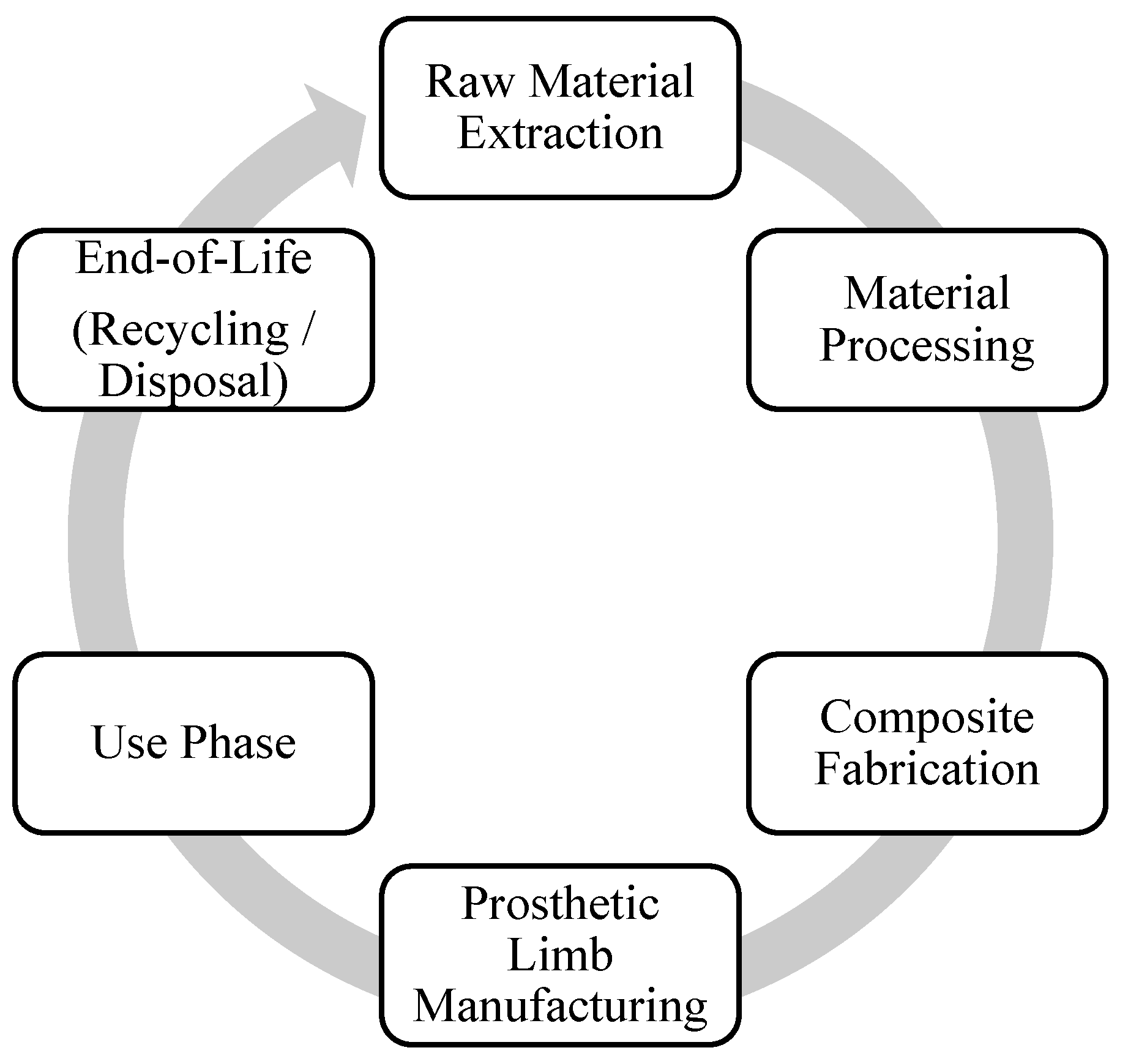
Life Cycle Assessment (LCA) has become a critical methodological tool for assessing environmental sustainability within the healthcare industry, providing a comprehensive, ISO-aligned framework that evaluates environmental impacts across every stage of a product’s life cycle, from raw material extraction to end-of-life treatment [1-3]. Grounded in the principles defined by ISO 14040 and ISO 14044, Life Cycle Assessment (LCA) provides a scientifically rigorous framework for quantifying resource use, emissions, and waste flows, thereby enabling transparent and reproducible evaluation of healthcare-related systems [3]. The increasing integration of LCA within the healthcare system reflects a broader shift toward life cycle thinking, in which environmental considerations are incorporated into material selection, design strategies, and processing routes for medical technologies [1]. This is particularly relevant for prosthetic and orthotic devices, whose production often involves energy-intensive processes, polymeric materials, advanced composites, and complex additive manufacturing pathways [11, 29-30]. Through the identification of environmental hotspots and the assessment of trade-offs among mechanical performance, durability, cost, and environmental impacts, LCA supports more sustainable decision-making and guides eco-design implementation across healthcare supply chains [1, 29-30]. A conventional LCA study is structured into four methodologically interconnected stages. Figure 2 provides a clear representation of the sequential steps involved in conducting an LCA, highlighting the methodological flow from goal definition to final interpretation. The Goal and Scope Definition phase establishes the functional unit, defines the system boundaries, and identifies the intended impact categories, ensuring methodological clarity and comparability across studies [1,2]. Life Cycle Inventory (LCI) involves systematic data collection on energy consumption, material flows, emissions, and auxiliary processes that occur throughout the life cycle of the healthcare product [1,3]. Life Cycle Impact Assessment (LCIA) translates these inventory flows into environmental impact indicators using characterization models such as ReCiPe 2016, which quantifies midpoint impacts including climate change, resource depletion, particulate matter formation, and human toxicity [6-7, 31]. Interpretation synthesizes the results to identify improvement opportunities, evaluate uncertainties, and support strategic design choices for reducing environmental burdens [2,3]. Recent applications of LCA in healthcare demonstrate its value across diverse contexts. Studies on upper limb prostheses reveal that material extraction and manufacturing stages dominate environmental impacts, highlighting opportunities for material substitution and process optimization [29,30]. Broader reviews indicate similar patterns across medical devices, where polymers, composites, and additive manufacturing present recurrent environmental challenges [4,11]. At the system level, LCA has also been used to assess hospital supply chains, showing that product reprocessing, waste minimization, and energy-efficient production can substantially reduce environmental footprints [12]. The methodological robustness of LCA is strengthened by using appropriate background databases and harmonized impact-assessment frameworks. Databases such as ecoinvent and the European Reference Life Cycle Database (ELCD) provide high-quality datasets that improve the reliability of healthcare-related LCAs [8,9], while integrated LCIA methods such as ReCiPe 2016 ensure consistent characterization of environmental impacts across studies [6,7]. Together, these tools enable more comprehensive and policy-relevant assessments that support sustainability transitions within the healthcare sector. With environmental accountability becoming increasingly central to global healthcare innovation, LCA now acts as a critical instrument for aligning technological progress with ecological stewardship [1,2]. Its holistic perspective enables manufacturers, clinicians, and policymakers to advance toward sustainable healthcare systems without compromising safety, functionality, or patient outcomes.![Figure 2: <p>The steps for conducting an Life Cycle Assessment (LCA). Adapted from [<a href="#ref1">1</a>] under license: CC BY 4.0.</p>](/uploads/source/articles/ecological-sustainable-materials-connect/2026/volume1/20260002/image002.png)
Life Cycle Assessment (LCA) research within the healthcare sector relies heavily on advanced software tools and reliable databases to accurately model environmental impacts. Widely adopted LCA platforms such as GaBi®, openLCA®, and SimaPro® provide systematic process modeling, access to comprehensive Life Cycle Inventory (LCI) data, and compatibility with various impact assessment methodologies [1, 3, 32]. GaBi® is commonly applied in large-scale industrial LCA studies due to its powerful and well-structured modeling capabilities [3]. In contrast, openLCA® is an open-source platform that enables flexible system modeling and seamless interoperability with different databases, making it suitable for a wide range of applications [32]. SimaPro®, as one of the earliest developed LCA software tools, is widely recognized for its advanced scenario analysis capabilities and transparent modeling framework, which has led to its extensive use in both academic research and industrial practice [32]. The selection of an appropriate database plays a critical role in determining the credibility of LCA outcomes. Databases such as ecoinvent, which is well known for its transparent documentation and globally representative system models [8], and the European Reference Life Cycle Database (ELCD), which provides harmonized and quality-assured European environmental data [9], are among the most frequently used data sources in healthcare-related LCA studies [32]. To quantify environmental impacts, researchers commonly employ standardized impact assessment methods such as ReCiPe 2016 Midpoint (H), which harmonizes midpoint indicators across environmental categories, including climate change, toxicity, and resource use [6], as well as CML 2001, which provides scientifically validated midpoint indicators for comparative assessments [7]. The combined use of advanced LCA software, reliable and transparent databases, and internationally recognized impact assessment methods ensures methodological rigor and scientific credibility when evaluating the environmental burdens associated with medical devices and prosthetic systems [10, 16, 18]. Table 1 compares commonly used LCA software tools, highlighting differences in database integration, usability, flexibility, and computational performance. Comparative evaluation of Life Cycle Assessment (LCA) software tools used in environmental assessment studies.Table 1: Criterion
GaBi®
openLCA®
SimaPro®
Reference
Integration with Databases
Supports major databases like ecoinvent, ELCD
Supports ecoinvent, ELCD, highly flexible for custom datasets
Supports ecoinvent, ELCD, and proprietary SimaPro databases
[8-9, 32]
Ease of Use/Interface
User-friendly GUI, drag-and-drop modeling, ready-made reporting templates
Requires advanced LCA knowledge, more complex GUI, and manual process editing
Intuitive GUI, structured workflow, good visualization tools
[3,32]
Flexibility/Customization
Limited editing of predefined flows; good for standard LCA applications
Full control over process modeling, flows, and custom datasets
Moderate flexibility; allows user-defined flows but with less open customization than OpenLCA
[3,32]
Computational Performance
Fast calculations and report generation
May require longer computation time for large or complex systems
Efficient for medium-complexity models but can be slow for very large datasets
[3,32]
Suitability for Beginners
Excellent for newcomers due to the intuitive interface and automated reporting
Best for experienced users or researchers needing customized LCA models
Good for intermediate users; easier than OpenLCA but more structured than GaBi
[3,32]
Main Advantages
Rapid results, professional reports, easy implementation
High flexibility, customizable processes, open-source accessibility
Strong visualization and scenario analysis tools, reliable commercial support
[3,32]
Main Limitations
Less flexibility for non-standard processes, proprietary license costs
Steeper learning curve, requires more time to set up and validate models
Proprietary license costs; customization is less open than OpenLCA
[3,32]
Life Cycle Inventory (LCI) databases are structured data repositories representing a diverse and complex data landscape, ranging from regional and national inventories to global, multi-sector, and industry-focused datasets. This diversity reflects differences in geographical coverage, system boundaries, underlying methodological options, and levels of data details [8-10]. Within the European context, databases such as the European Reference Life Cycle Database (ELCD) and other EU-aligned inventories provide high-quality, standardized datasets covering key sectors, including energy production, transportation, industrial materials, and waste management. These databases play an important role in ensuring methodological coherence and consistency in LCA studies conducted at the European level [10]. North American inventories, including USLCI (U.S. Life Cycle Inventory), emphasize region-specific electricity mixes, manufacturing technologies, and transportation structures, offering geographically relevant data for studies conductedin the U.S. or Canada [10]. Global, process-based databases such as ecoinvent extend coverage to plastics, metals, chemicals, fuels, and composite materials and are widely used due to their transparency, rigorous documentation, and multiple system modeling options (cut-off, attributional, and consequential) [8,10]. The review by Martínez-Rocamora, Solís-Guzmán, and Marrero (2016) further identifies more than 40 LCI databases spanning global, regional, and sector-specific repositories [10]. Among the most prominent are ecoinvent, ELCD, USLCI, the GaBi database, BEDEC, PlasticsEurope, Eurofer, and other national or specialized databases covering wood, metals, polymers, and construction materials [10]. Additional specialized inventories focus on natural resources (e.g., wood-based datasets), European construction products, and material-specific datasets for PVC, aluminum, ceramics, and other industrial materials [10]. These databases vary in completeness of material categories, methodological transparency, traceability, system modeling approaches (e.g., allocation, cut-off), and licensing models (open vs commercial) [10]. For example, ecoinvent provides a highly comprehensive and transparent multi-sector database covering polymers, metals, energy, and transport [10], while ELCD offers harmonized European data aligned with industrial and policy-relevant flows, such as steel recycling via Eurofer [10]. USLCI is particularly useful for U.S.-based processes involving wood, plastics, and metals [10], while specialized databases such as PlasticsEurope and BEDEC provide refined data on polymers, enabling detailed LCA of plastic components [10]. Within prosthetic device LCA, database selection must prioritize those that accurately represent thermoplastics (PP, PE, ABS), fiber-reinforced composites, metallic alloys (aluminum, stainless steel), and manufacturing operations such as machining, molding, lamination, and finishing [3, 6, 30]. Accordingly, the combination of ecoinvent, ELCD, USLCI, and material-specific databases such as BEDEC or Plastics Europe provides both the breadth and depth necessary to model the diverse materials and complex production, maintenance, and end-of-life processes of prosthetic limbs [10, 29, 33]. The use of these databases ensures methodological robustness, high material specificity, and reliable geographic representation, which are essential for generating credible and reproducible environmental assessments in prosthetic LCAs [3, 10, 29]. As presented in Table 2, major LCI databases vary significantly in scope, geographic coverage, material resolution, and methodological transparency. Comparative overview of Life Cycle Inventory (LCI) databases.Table 2: Database
Type/Scope
Geographic Coverage
Materials & Processes Included
Advantages
Limitations
Reference
ecoinvent
Global, multi-sector, process-based
Worldwide
Polymers, metals, chemicals, fuels, composites; energy & transport flows
Highly comprehensive; transparent; multiple system modeling options (cut-off, attributional, consequential); widely cited
Subscription required; complex for beginners
[8,10]
ELCD (European Reference Life Cycle Database)
Regional, policy aligned
Europe
Energy systems, transport, industrial materials, waste flows, steel (Eurofer)
Harmonized EU data; high quality and policy relevant; detailed energy profiles
Limited global coverage; fewer sector-specific datasets
[9,10]
USLCI (U.S. Life Cycle Inventory)
Regional, national
United States & Canada
Electricity mixes, plastics, metals, wood, transport
Geographically relevant for North America; reliable process data
Limited international applicability: smaller material coverage compared to ecoinvent
[10]
GaBi Database®
Commercial, multi-sector
Global with regional datasets
Industrial processes, materials, energy, transport, and composites
Extensive industry-focused datasets; strong modeling and software integration
Commercial license required; some datasets not publicly accessible
[10]
BEDEC
Sector specific
Europe
Detailed polymer datasets, plastic manufacturing
High-resolution polymer data; supports detailed LCA of plastic components
Limited to polymer-related datasets. European focus
[10]
PlasticsEurope
Sector specific, polymer-focused
Europe
Polymers, plastics, and recycling processes
Refined polymer inventories. specialized in plastics LCA
Limited coverage outside plastics. European focus
[10]
Eurofer
Industry-specific, metals
Europe
Steel production, recycling, and alloys
High-quality data for steel; supports harmonized European industrial assessments
Focused only on steel; limited applicability for non-metal components
[10]
In Life Cycle Assessment (LCA), impact assessment methods can be modeled at two levels: midpoint and endpoint. Midpoint indicators represent environmental impacts at an intermediate stage of the cause–effect chain, including categories such as climate change, eutrophication, and human toxicity. These problem-oriented indicators reduce uncertainty and improve methodological transparency [6,31]. Conversely, endpoint indicators aggregate these midpoint impacts into damage categories such as human health, ecosystem quality, and resource depletion, thus providing results that are easier to interpret but inherently more uncertain due to additional modeling steps [6,31]. Selecting an appropriate Life Cycle Impact Assessment (LCIA) method is essential for the reliable evaluation of prosthetic systems. Among the most widely applied methodologies are ReCiPe 2016 (midpoint/endpoint), ILCD 2011, CML-IA, and IMPACT 2002+, each varying in characterization models, spatial and temporal resolution, and interpretability [1,6]. ReCiPe 2016 offers harmonized midpoint and endpoint pathways with global normalization factors, making it widely adopted in healthcare and prosthetic-device LCAs due to its comprehensive coverage of 18 impact categories [6,11]. The ILCD method, developed by the European Commission, is structured to prioritize methodological transparency and quality assurance, making it suitable for studies requiring strict comparability across datasets [7,9]. CML-IA provides problem-oriented midpoint indicators without weighting, favored in prosthetic and medical-device assessments for its scientific robustness and reduced modeling uncertainty [6,33]. IMPACT 2002+ integrates midpoint and endpoint modeling within a single framework, facilitating interpretation while maintaining compatibility with various industrial and healthcare applications [7,11]. Overall, the choice between midpoint and endpoint approaches, and among ReCiPe, ILCD, CML-IA, and IMPACT 2002+, depends on the required balance between scientific precision, interpretability, and relevance to prosthetic device decision-making. Figure 3, adapted from a comparative study of ReCiPe 2016, ILCD 2011, CML-IA baseline, and IMPACT 2002+, illustrates the number of scientific articles published between 2020 and 2023 that applied each LCIA method. This distribution highlights the frequency of use of each method in recent research and helps justify the selection of these LCIA approaches in the study. The ReCiPe 2016 framework, developed by Huijbregts et al. (2017), provides a harmonized approach that translates life cycle inventory results into 18 midpoint and 3 endpoint indicators [6]. Midpoint indicators (e.g., climate change, ozone depletion, and particulate matter formation) represent environmental mechanisms at an intermediate stage, allowing higher analytical resolution and lower uncertainty. Conversely, endpoint indicators aggregate results into damage categories such as human health, ecosystem quality, and resource scarcity, providing more intuitive outcomes but involving increased modeling assumptions [2,6]. By contrast, CML-IA focuses solely on midpoint categories without normalization or weighting, making it suitable for comparative assessments of prosthetic materials where data transparency and simplicity are prioritized [1,3]. However, it lacks integration of regionalized or global normalization factors, which limits its representativeness in global medical device studies [3]. Table 3 summarizes the main characteristics of these three methods as applied in recent LCA studies on medical and prosthetic devices. Comparison of common Life Cycle Impact Assessment (LCIA) methods applied in prosthetic Life Cycle Assessment (LCA).![Figure 3: <p>Number of scientific articles published between 2020 and 2023 that employed each of these four Life Cycle Impact Assessment (LCIA) methods: ReCiPe 2016, ILCD 2011, CML-IA Baseline, and IMPACT 2002+. Reproduced from [<a href="#ref7">7</a>] under license: CC BY 4.0.</p>](/uploads/source/articles/ecological-sustainable-materials-connect/2026/volume1/20260002/image003.png) Table 3:
Table 3: Method
Type
Number of Indicators
Key Strengths
Limitations
Reference
ReCiPe 2016 Midpoint (H)
Midpoint
18
Detailed, globally normalized, lower uncertainty, suitable for process-level analysis
Requires extensive data; less intuitive for policy use
[1,6]
ReCiPe 2016 Endpoint (H)
Endpoint
3 (Human Health, Ecosystems, Resources)
Aggregated, easier interpretation, supports sustainability communication
Higher uncertainty due to aggregation; potential information loss
[2,6]
CML-IA (2001)
Midpoint
11
Transparent, simple, widely used in material-level LCAs
Lacks normalization and weighting; limited spatial sensitivity
[1,3]
Considering data accessibility, reproducibility, and methodological transparency, this research employs the ELCD 3.2 database as the life cycle inventory (LCI) source and adopts the ReCiPe 2016 Midpoint (H) method for impact assessment. ELCD 3.2, maintained by the European Commission’s Joint Research Center, provides open-access European datasets consistent with ISO 14040/44 standards, making it suitable for academic studies and prosthetic-related LCAs [8]. Among the available midpoint indicators, five were selected for this study due to their relevance to prosthetic production and human exposure pathways: Human Toxicity (impacts from hazardous substances in manufacturing): Characterization factors for human toxicity and ecotoxicity incorporate three principal aspects: the environmental persistence of a chemical (fate), its bioaccumulation through the human food chain (exposure), and its intrinsic toxicity (effect) [34]. The cause–effect pathway begins with the emission of a chemical into the environment, proceeds through fate and exposure mechanisms affecting species and disease incidence, and ultimately results in quantifiable damage to ecosystems and human health [34]. Ozone Depletion (influences from polymer and composite processes): Emissions of ozone-depleting substances (ODSs) lead to higher exposure to UVB radiation, which can negatively affect human health by increasing the risk of skin cancer and cataracts [34]. ODSs are relatively persistent chemicals containing chlorine or bromine functional groups, which interact primarily with ozone in the stratosphere [34]. Following their release, ozone-depleting substance (ODS) concentrations initially increase in the troposphere and subsequently in the stratosphere, leading to a reduction in atmospheric ozone levels [34]. The diminished ozone layer allows a greater fraction of UVB radiation to reach the Earth’s surface, thereby increasing the potential for human health impacts [34]. Global Warming Potential (GHG emissions during material and energy use): For the climate change impact category, damage modeling follows several sequential steps [34]. The emission of a greenhouse gas (kg) increases its atmospheric concentration (ppb), which subsequently raises radiative forcing (W/m2) and leads to a rise in global mean temperature (°C) [34]. This temperature increase ultimately damages human health, terrestrial ecosystems, and freshwater ecosystems. In this study, these damages were quantitatively estimated [34]. Fine Particulate Matter Formation (emissions from processing and transport): The cause-and-effect chain for fine dust (particulate matter) emissions describes the pathway from emission sources to the resulting damage to human health [34]. Fine particulate matter released into the atmosphere can be transported and deposited across various environmental compartments, leading to human inhalation exposure, which may cause respiratory and cardiovascular diseases and ultimately contribute to quantifiable impacts on human health [34]. ionizing radiation (Impact from an anthropogenic emission of a radionuclide in the environment): The environmental cause and effect pathway of radionuclide emissions can be described in four sequential steps, beginning with anthropogenic releases [34]. These emissions primarily arise from the nuclear fuel cycle, including mining, processing, and waste disposal, as well as other human activities such as coal combustion and phosphate rock extraction [34]. The first step involves the dispersion of radionuclides in the environment, followed by an exposure assessment to determine the effective collective dose received by the population. Exposure to ionizing radiation from these radionuclides can cause DNA damage [34]. During the effect assessment, incidences of non-fatal cancers, fatal cancers, and severe hereditary effects are evaluated individually [34]. Finally, these effects are aggregated to estimate overall human health damage in disability-adjusted life years (DALYs) [34]. It is important to note that no standardized impact assessment methods currently exist to quantify the effects of ionizing radiation on ecosystems [34]. This combination enables a balanced assessment of both environmental and human health dimensions, aligning with current sustainability assessment practices for medical and prosthetic devices. Figure 4 summarizes the workflow adopted for selecting the LCA software, database, impact assessment method, as well as the main midpoint impact categories considered in LCA studies.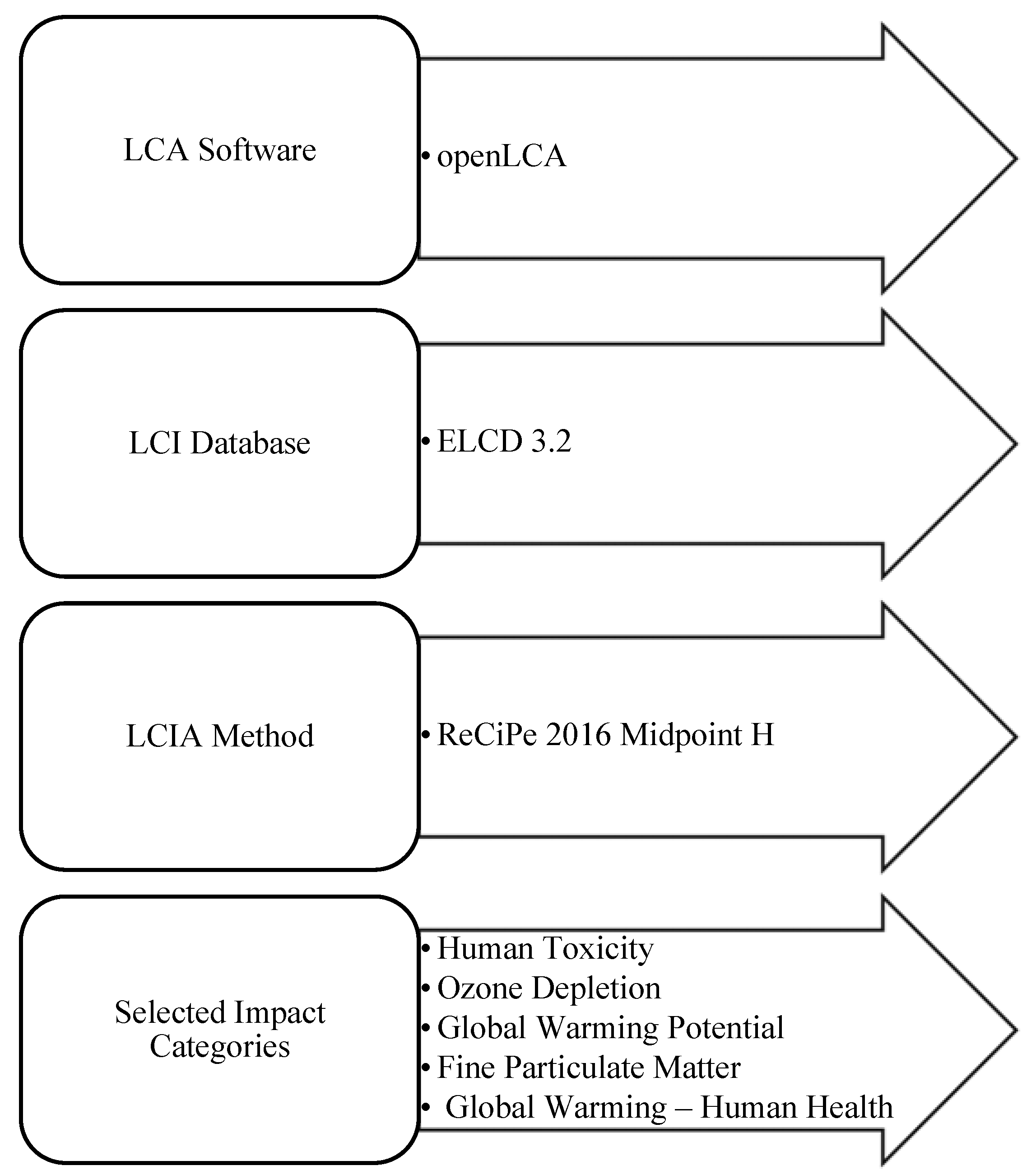
The selection of the ELCD 3.2 database and the ReCiPe 2016 Midpoint (H) method is justified by their methodological robustness, accessibility, and compatibility with product-level environmental analysis. According to Wolf et al. [9], the European Reference Life Cycle Database (ELCD 3.2) provides transparent, peer-reviewed datasets consistent with ISO 14040 and ISO 14044 standards, making it particularly appropriate for academic research and public applications. In contrast to commercial databases such as GaBi Professional [10] or Ecoinvent [8], ELCD offers free access while maintaining European data quality standards, an important advantage for reproducibility in prosthetic LCA studies. The ReCiPe 2016 Midpoint (H) method, as described by Huijbregts et al. [6], provides a balanced framework between scientific detail and interpretability. It quantifies 18 midpoint indicators, such as human toxicity, climate change, ozone depletion, fine particulate matter formation, and human health impacts from global warming. Compared with the endpoint version, which aggregates impacts into broader damage categories (human health, ecosystem quality, and resources), the midpoint approach provides more stable and traceable results with lower uncertainty, an essential feature when comparing different prosthetic materials [1, 3, 6]. Furthermore, the review conducted by Kaynak et al. [1] and the bibliometric analysis presented by Moutik et al. [2] demonstrate that the ReCiPe 2016 Midpoint framework has become one of the most consistently applied LCIA approaches in assessments of medical and healthcare-related products. Their analyses showed that the midpoint-level structure offers enhanced compatibility with widely used European datasets such as the ELCD while providing sufficient resolution to examine category-specific impacts across the full life cycle. This alignment between methodological structure and database architecture has historically supported greater consistency, reproducibility, and methodological transparency in LCA studies of prosthetic devices and comparable healthcare systems. Figure 5 provides an integrated overview of the ReCiPe 2016 impact categories, clarifying how midpoint indicators align with broader areas of protection.![Figure 5: <p>An overview of the impact categories included in the ReCiPe 2016 methodology and their corresponding relevance to the areas of protection. Reproduced from [<a href="#ref6">6</a>] under license: CC BY 4.0.</p>](/uploads/source/articles/ecological-sustainable-materials-connect/2026/volume1/20260002/image005.png)
8.1. Environmental Impacts of Upper-Limb Prostheses In a study on the environmental impacts of upper-limb prostheses [29], a design-for-all approach was used to assess the life-cycle environmental burdens of prosthetic arms across different age groups, with particular focus on socket and structural materials used in fabrication. The analysis followed cradle-to-grave boundaries covering raw material extraction, manufacturing, use, and disposal [29]. The functional unit was defined as a complete prosthetic arm over its service life. Inventory data included primary measurements such as component masses and energy consumption during manufacturing, supplemented with secondary datasets for background processes such as polymer and metal production. Midpoint LCIA was also used to quantify impacts across relevant environmental categories. The results showed that energy-intensive materials such as advanced composites and processes such as curing and machining were the dominant contributors to the overall environmental footprint. Although lighter materials enhance user comfort and performance, they carry a higher environmental burden during production, creating a clear trade-off design. The study recommended the use of lower-impact materials, the design of modular and repairable prostheses, and the improvement of recycling strategies and techniques to reduce overall life-cycle burdens without compromising device functionality. Table 4 highlights the main impact categories related to climate change, human health, resource use, and water consumption in the assessment of environmental impacts associated with the production of prosthetic limbs for children. Selected midpoint environmental impacts associated with the production of a child prosthesis [29].Table 4: Impact Category
Unit
Environmental Impact Values for Child Prosthesis
Global warming potential (GWP)
kg CO2-eq
3.54
Human carcinogenic toxicity (HCT)
kg 1,4-DCB
0.176
Land use
m2·yr crop eq
10.23
Water consumption
m3
4.12 × 10⁻²
A study of life cycle assessment and environmental applications in medical devices provided a methodological framework for applying LCA to healthcare products, including prosthetic components [4]. It highlighted the importance of clearly defining the goal and scope, especially for customized, low-volume medical devices whose service life varies among users. It emphasized challenges in inventory quality, including insufficient process-level data, geographic inconsistencies in background databases, and limited information on the real-world use phase of specialized medical devices [4]. The authors emphasized the need for sensitivity and uncertainty analyses to account for variations in transport distances, recycling rates, and service lifetimes. Recommended impact categories for comparison included global warming potential, cumulative energy demand, resource depletion, and toxicity-related categories, primarily using midpoint-level LCIA indicators. The study concluded that transparent documentation of assumptions and primary operational data is essential for generating reliable and comparable LCA results in medical-device research. As illustrated in Table 5, the meta-analysis highlights the most frequently used LCI databases and LCIA methods in medical-device LCA studies. Most frequently used Life Cycle Inventory (LCI) databases and Life Cycle Impact Assessment (LCIA) methods reported in previous Life Cycle Assessment (LCA) studies [4].Table 5: Category
Method/Database
Number of Papers
LCI
DatabaseEcoinvent
9
LCI
DatabaseGaBi
3
LCIA
MethodReCiPe
6
LCIA
MethodEcoindicator 99
3
Another study focused on the environmental and economic impacts of reprocessing intermittent pneumatic compression sleeves and evaluated the sustainability benefits of reprocessed versus single-use compression sleeves in hospitals [35]. The functional unit represented five clinical treatments using IPC sleeves, modeled under a cradle-to-end-of-life system boundary that included manufacturing, clinical use, reprocessing cycles, transportation, and disposal. Primary data collected with the device manufacturer were combined with secondary datasets from the ecoinvent database to complete the inventory. The Environmental Footprint 3.0 (EF 3.0) method was used to assess impacts across multiple categories. Reprocessed sleeves achieved a 43% reduction in overall normalized environmental impacts and a 40% reduction in carbon footprint compared to single-use alternatives (7 kg CO2-eq reduced to 4.2 kg CO2-eq per five treatments) [35]. Electricity used for reprocessing, transportation distances, and packaging materials were identified as major contributors to the remaining impacts. Economically, hospitals reduced waste disposal costs by 90% through reprocessing. The study demonstrated the effectiveness of circular-economy practices and recommended broader adoption of reprocessing systems for other medical devices. Figure 6 clearly demonstrates the substantial reduction in environmental burdens achieved through reprocessing compared to single-use IPC sleeves.![Figure 6: <p>Contribution to environmental effects, (<strong>a</strong>) Expressed as a percentage of the maximum impact in each category, for reprocessed compared to single-use IPC sleeves. (<strong>b</strong>) Product contribution to an individual’s ecological footprint as determined by the Environmental Footprint 3.0 method across all impact categories. (<strong>c</strong>) Breakdown of accumulated impacts for the climate change category, comparing single-use and reprocessed IPC sleeves. Reproduced from [<a href="#ref35">35</a>] under license: CC BY-NC 3.0.</p>](/uploads/source/articles/ecological-sustainable-materials-connect/2026/volume1/20260002/image006a.png)
![Figure 6: <p>Contribution to environmental effects, (<strong>a</strong>) Expressed as a percentage of the maximum impact in each category, for reprocessed compared to single-use IPC sleeves. (<strong>b</strong>) Product contribution to an individual’s ecological footprint as determined by the Environmental Footprint 3.0 method across all impact categories. (<strong>c</strong>) Breakdown of accumulated impacts for the climate change category, comparing single-use and reprocessed IPC sleeves. Reproduced from [<a href="#ref35">35</a>] under license: CC BY-NC 3.0.</p>](/uploads/source/articles/ecological-sustainable-materials-connect/2026/volume1/20260002/image006b.png)
Life-cycle greenhouse gas emissions of remanufactured electrophysiology catheters were considered in [36]. The study analyzed the environmental benefits of remanufacturing single-use electrophysiology catheters over multiple remanufacturing cycles. Using cradle-to-cradle boundaries, the study modeled virgin manufacturing, clinical use, collection, remanufacturing, transportation, and end-of-life disposal. The functional unit was defined as one catheter undergoing multiple remanufacturing cycles. Inventory data incorporated detailed primary information from remanufacturing partners and supplemented missing processes with ISO-aligned secondary datasets. Carbon-based LCIA results showed that remanufacturing reduced CO₂-equivalent emissions by up to 60% per cycle in burden-free scenarios and by approximately 57% when upstream burdens were included [36]. Sensitivity analyses and modeling of buy-back programs projected long-term reductions of up to 48% over the full-service life of the catheter [36]. The study concluded that remanufacturing is a highly promising circular-economy strategy and recommended designing catheters from the start to support dismantling, refurbishment, and repeated reuse. As shown in Figure 7, the study results summarize reduced emissions for remanufactured catheters compared to virgin devices, as well as the variation in total remanufacturing emissions depending on the emission metric used.![Figure 7: <p>The study results are summarized, highlighting reduced emissions for remanufactured catheters compared to virgin devices and illustrating the variation in total remanufacturing emissions depending on the emission metric applied. (<strong>a</strong>) Compares virgin versus remanufactured catheter emissions with those reported in the case study. (<strong>b</strong>) Illustrates how total remanufacturing emissions vary depending on the selected emission metric. Reproduced from [<a href="#ref36">36</a>] under license: CC BY 4.0.</p>](/uploads/source/articles/ecological-sustainable-materials-connect/2026/volume1/20260002/image007.png)
A study reported in [33] assessed the environmental and economic benefits of repairing surgical scissors, using a cradle-to-grave system boundary that included raw material extraction, manufacturing, decontamination, repair (onsite or offsite), and disposal. Inventory data were based on primary information from manufacturers and repair centers, with background processes modeled using ecoinvent 3.6 and ELCD, especially for steam sterilization cycles. ReCiPe 2016 midpoint and endpoint indicators were used to quantify environmental burdens across 18 impact categories. The per-use carbon footprint decreased from approximately 70 g CO₂-eq for unrepaired scissors to 57 g CO₂-eq for offsite repair and 56 g CO₂-eq for onsite repair. Sterilization dominated environmental burdens, accounting for 95–97% of total emissions when repair was included. From a financial perspective, repairs minimize life-cycle cost per use by roughly 32% [33]. The study emphasized the sustainability advantages of repair strategies and highlighted the need to optimize decontamination procedures and to design surgical instruments that support repairability and extended use. As shown in Figure 8, repairing surgical scissors significantly reduces both environmental impacts and life-cycle costs compared with complete device replacement.![Figure 8: <p>Results: environmental and cost impacts of repairing reusable surgical scissors. Reproduced from [<a href="#ref33">33</a>] under license: CC BY 4.0.</p>](/uploads/source/articles/ecological-sustainable-materials-connect/2026/volume1/20260002/image008.png)
This research reviews and emphasizes the importance of life cycle assessment as a critical scientific methodology for advancing environmental sustainability across medical-device systems. The collective evidence from published case studies shows that environmental burdens are primarily driven by upstream material production, energy-intensive fabrication, and repeated sterilization, underscoring the emerging need for efficient resource management and improved process design. The integration of robust LCI databases such as ELCD and ecoinvent with ReCiPe 2016 Midpoint (H) enables transparent, high-resolution quantification of environmental impacts, ensuring comparability across medical devices and healthcare technologies. Essential circular economy practices, particularly reprocessing, remanufacturing, and repair, demonstrate substantial reductions in carbon footprint, waste generation, and life-cycle cost, confirming their strategic relevance for sustainable healthcare. Advancing eco-design principles, improving device modularity, and enhancing end-of-life pathways will be essential for enabling low-impact clinical technologies. As global healthcare systems face escalating environmental pressures, LCA-guided decision-making will continue to serve as a central pillar for designing resilient, sustainable, and high-efficiency medical devices.
ABS
Acrylonitrile Butadiene Styrene
CML-IA
Center of Environmental Science Impact Assessment Method
CO2-eq
Carbon Dioxide Equivalent
DALY
Disability Adjusted Life Years
ELCD
European Reference Life Cycle Database
EP
Electrophysiology
EU
European Union
GaBi
Ganzheitliche Bilanzierung (LCA-Software)
GHG
Greenhouse Gas
GUI
Graphical User Interface
ILCD
International Reference Life Cycle Data System
IPC
Intermittent Pneumatic Compression
ISO
International Organization for Standardization
LCA
Life Cycle Assessment
LCI
Life Cycle Inventory
LCIA
Life Cycle Impact Assessment
ODS
Ozone Depleting Substances
openLCA
Open Life Cycle Assessment software
SimaPro
Simulation Program for Life Cycle Assessment
USD
United States Dollar
USLCI
United States Life Cycle Inventory Database
UVB
Ultraviolet B Radiation
Conceptualization, supervision, project administration, writing—review & editing: F.M.A.-O.; Methodology, investigation, data curation, formal analysis, visualization, writing—original draft: S.S. All authors have read and agreed to the published version of the manuscript.
The authors declare no conflicts of interest. The corresponding author is the Editor-in-Chief of the journal; therefore, the manuscript was handled independently by another editor with no conflicts of interest.
The study did not receive any external funding and was conducted using only institutional resources.
The authors express their gratitude to The Hashemite University for supporting this research.
During the preparation of this manuscript, the authors used ChatGPT (OpenAI) to assist in improving the clarity and language of certain sentences. The AI tool was used solely for language editing, and the authors take full responsibility for the manuscript’s content.
[1] Kaynak, E.; Piri, I.S.; Das, O. Revisiting the Basics of Life Cycle Assessment and Lifecycle Thinking. Sustainability 2025, 17, 7444. [CrossRef]
[2] Moutik, B.; Summerscales, J.; Graham-Jones, J.; Pemberton, R. Life Cycle Assessment Research Trends and Implications: A Bibliometric Analysis. Sustainability 2023, 15, 13408. [CrossRef]
[3] Mudersbach, M.; Jürgens, M.; Pohler, M.; Spierling, S.; Venkatachalam, V.; Endres, H.-J.; Barner, L. Life Cycle Assessment in a Nutshell Best Practices and Status Quo for the Plastic Sector. Macromol. Rapid Commun. 2025, 46, 2300466. [CrossRef] [PubMed]
[4] Tinoco, M.P.; de Mendonça, É.M.; Fernandez, L.I.C.; Caldas, L.R.; Reales, O.A.M.; Filho, R.D.T. Life Cycle Assessment (LCA) and Environmental Sustainability of Cementitious Materials for 3D Concrete Printing: A Systematic Literature Review. J. Build. Eng. 2022, 52, 104456. [CrossRef]
[5] Bueno, C.; Hauschild, M.Z.; Rossignolo, J.A.; Ometto, A.R.; Mendes, N.C. Sensitivity Analysis of the Use of Life Cycle Impact Assessment Methods: A Case Study on Building Materials. J. Clean. Prod. 2016, 112, 2208–2220. [CrossRef]
[6] Huijbregts, M.A.J.; Steinmann, Z.J.N.; Elshout, P.M.F.; Stam, G.; Verones, F.; Vieira, M.; Zijp, M.; Hollander, A.; Van Zelm, R. ReCiPe 2016: A Harmonized Life Cycle Impact Assessment Method at Midpoint and Endpoint Level Report I: Characterization. Int. J. Life Cycle Assess. 2017, 22, 138–147. [CrossRef]
[7] Rybaczewska-Błażejowska, M.; Jezierski, D. Comparison of ReCiPe 2016, ILCD 2011, CML-IA Baseline and IMPACT 2002+ LCIA Methods: A Case Study Based on the Electricity Consumption Mix in Europe. Int. J. Life Cycle Assess. 2024, 29, 1799–1817. [CrossRef]
[8] Wernet, G.; Bauer, C.; Steubing, B.; Reinhard, J.; Moreno-Ruiz, E.; Weidema, B. The Ecoinvent Database Version 3 (part I): Overview and Methodology. Int. J. Life Cycle Assess. 2016, 21, 1218–1230. [CrossRef]
[9] Fazio, S.; Garraín, D.; Mathieux, F.; De la Rúa, C.; Recchioni, M.; Lechón, Y. Method Applied to the Background Analysis of Energy Data to be Considered for the European Reference Life Cycle Database (ELCD). Springerplus 2015, 4, 150. [CrossRef] [PubMed]
[10] Martínez-Rocamora, A.; Solís-Guzmán, J.; Marrero, M. LCA Databases Focused on Construction Materials: A Review. Renew. Sustain. Energy Rev. 2016, 58, 565–573. [CrossRef]
[11] Sousa, A.C.; Veiga, A.; Maurício, A.C.; Lopes, M.A.; Santos, J.D.; Neto, B. Assessment of the Environmental Impacts of Medical Devices: A review, Environment. Dev. Sustain. 2021, 23, 9641–9666. [CrossRef]
[12] Unger, S.; Landis, A. Assessing the Environmental, Human Health, and Economic Impacts of Reprocessed Medical Devices in a Phoenix Hospital’s Supply Chain. J. Clean. Prod. 2016, 112, 1995–2003. [CrossRef]
[13] Kalverkamp, M.; Helmers, E.; Pehlken, A. Impacts of Life Cycle Inventory Databases on Life Cycle Assessments: A Review by Means of a Drivetrain Case Study. J. Clean. Prod. 2020, 269, 121329. [CrossRef]
[14] Moutik, B.; Summerscales, J.; Graham-Jones, J.; Pemberton, R. Quality Assessment Of Life Cycle Inventory Data for Fibre-Reinforced Polymer Composite Materials. Sustain. Prod. Consum. 2024, 49, 474–491. [CrossRef]
[15] Liu, Y.; Lask, J.; Kupfer, R.; Gude, M.; Feldner, A. A Comparative Life Cycle Assessment of a New Cellulose-Based Composite and Glass Fibre Reinforced Composites. J. Polym. Environ. 2024, 32, 2207–2220. [CrossRef]
[16] Muazu, R.I.; Yaseneva, P.; Shah, N.; Titirici, M.-M. Life Cycle Sustainability Assessment of Bioderived Advanced Materials: A State-of-the-Art Review. J. Environ. Chem. Eng. 2024, 12, 114387. [CrossRef]
[17] AL-Oqla, F.M.; Sapuan, S.M. Natural Fiber Reinforced Polymer Composites in Industrial Applications: Feasibility of Date Palm Fibers for Sustainable Automotive Industry. J. Clean. Prod. 2014, 66, 347–354. [CrossRef]
[18] AL-Oqla, F.M.; Alaaeddin, M.H.; Hoque, M.E.; Thakur, V.K. Biopolymers and Biomimetic Materials in Medical and Electronic-Related Applications for Environment-Health-Development Nexus: Systematic Review. J. Bionic Eng. 2022, 19, 1562–1577. [CrossRef]
[19] Bianchi, I.; Forcellese, A.; Taha, I. Comparative LCA of Fully Biobased and Synthetic Polymer Composites Accounting for Fiber Treatment. J. Clean. Prod. 2025, 530, 146846. [CrossRef]
[20] Hasan, M.Z.; Salit, M.S.; Hamdan, N.S.; Aziz, F.A.; Khan, A. Environmental Life Cycle Analysis of Natural Fiber Composites in Energy Sector. Phys. Sci. Rev. 2025, 10, 229–243. [CrossRef]
[21] Arya, M.; Skrifvars, M.; Khalili, P. Performance and Life Cycle Assessment of Composites Reinforced with Natural Fibers and End-of-Life Textiles. J. Compos. Sci. 2024, 8, 196. [CrossRef]
[22] Ahmad, H.; Chhipi-Shrestha, G.; Hewage, K.; Sadiq, R. A Comprehensive Review on Construction Applications and Life Cycle Sustainability of Natural Fiber Biocomposites. Sustainability 2022, 14, 15905. [CrossRef]
[23] Olonisakin, K.; Mohanty, A.K.; Thimmanagari, M.; Misra, M. Recent Advances in Biodegradable Polymer Blends and Their Biocomposites: A Comprehensive Review. Green Chem. 2025, 27, 11656–11704. [CrossRef]
[24] Ramful, R. Mechanical Performance and Durability Attributes of Biodegradable Natural Fibre-Reinforced Compositesa Review. J. Mater. Sci. Mater. Eng. 2024, 19, 50. [CrossRef]
[25] Kuram, E. Natural Fiber-Based Polymer Composites for Biomedical Applications. J. Biomater. Sci. Polym. Ed. 2025, 36, 1027–1084. [CrossRef] [PubMed]
[26] Wasti, S.; Kamath, D.; Armstrong, K.; Clarkson, C.; Tekinalp, H.; Ozcan, S.; Vaidya, U. Life Cycle Assessment of Coir Fiber-Reinforced Composites for Automotive Applications. J. Clean. Prod. 2024, 485, 144368. [CrossRef]
[27] Gonzalez, V.; Lou, X.; Chi, T. Evaluating Environmental Impact of Natural and Synthetic Fibers: A Life Cycle Assessment Approach. Sustainability 2023, 15, 7670. [CrossRef]
[28] Kirschnick, U.; Ravindran, B.; Sieberer, M.; Fauster, E.; Feuchter, M. The Fossil, the Green and the in-Between: Life Cycle Assessment of Manufacturing Composites with Varying Bio-Based Content. Preprints 2025, 1, 1145. [CrossRef]
[29] Cáceres, C.; Espinoza-Pérez, L.; Espinoza-Pérez, A.T.; Velastín, N.; Dávila, S.; Santander, P. Analysis of the Environmental Impacts Generated by an Upper Limb Prosthesis: Design for Children, Adolescents and Adults. Sustain. Prod. Consum. 2025, 58, 151–164. [CrossRef]
[30] Soares, B.; Ribeiro, I.; Cardeal, G.; Leite, M.; Carvalho, H.; Peças, P. Social Life Cycle Performance of Additive Manufacturing in the Healthcare Industry: The Orthosis and Prosthesis Cases. Int. J. Comput. Integr. Manuf. 2021, 34, 327–340. [CrossRef]
[31] Dong, Y.H.; Ng, S.T. Comparing the Midpoint and Endpoint Approaches Based on ReCiPe a Study of Commercial Buildings in Hong Kong. Int. J. Life Cycle Assess. 2014, 19, 1409–1423. [CrossRef]
[32] Vaghela, J.R.; Valaki, J.B.; Joshi, H.I.; Thanki, S.J.; Pandey, A.B. Comparative Analysis on Sustainability Parameters of Traditional Tool Manufacturing Processes Using Life Cycle Analysis Tools. J. Eng. Sci. Technol. Rev. 2024, 17, 23–34. [CrossRef]
[33] Rizan, C.; Brophy, T.; Lillywhite, R.; Reed, M.; Bhutta, M.F. Life Cycle Assessment and Life Cycle Cost of Repairing Surgical Scissors. Int. J. Life Cycle Assess. 2022, 27, 780–795. [CrossRef]
[34] Huijbregts, M.A.J.; Steinmann, Z.J.N.; Elshout, P.M.F.; Stam, G.; Verones, F.; Vieira, M.D.M.; Hollander, A.; Zijp, M.; van Zelm, R. ReCiPe 2016: A Harmonized Life Cycle Impact Assessment Method at Midpoint and Endpoint Level—Report I: Characterization. RIVM Report 2016-0104. 2016. Available online: https://www.rivm.nl/bibliotheek/rapporten/2016-0104.pdf (accessed on 20 May 2026).
[35] Lichtnegger, S.; Meissner, M.; Paolini, F.; Veloz, A.; Saunders, R. Comparative Life Cycle Assessment Between Single-Use and Reprocessed IPC Sleeves. Risk Manag. Healthc. Policy 2023, 16, 123–138. [CrossRef]
[36] Meister, J.A.; Sharp, J.; Wang, Y.; Nguyen, K.A. Assessing Long-Term Medical Remanufacturing Emissions with Life Cycle Analysis. Processes 2023, 11, 2715–2726. [CrossRef]
Disclaimer/Publisher’s Note: The views expressed in this article are those of the author(s) and do not necessarily reflect the views of the publisher or editors. The publisher and editors assume no responsibility for any injury or damage resulting from the use of information contained herein.
©2026 Copyright by the Authors.
Licensed as an open access article distributed under the terms and conditions of the CC BY 4.0 license