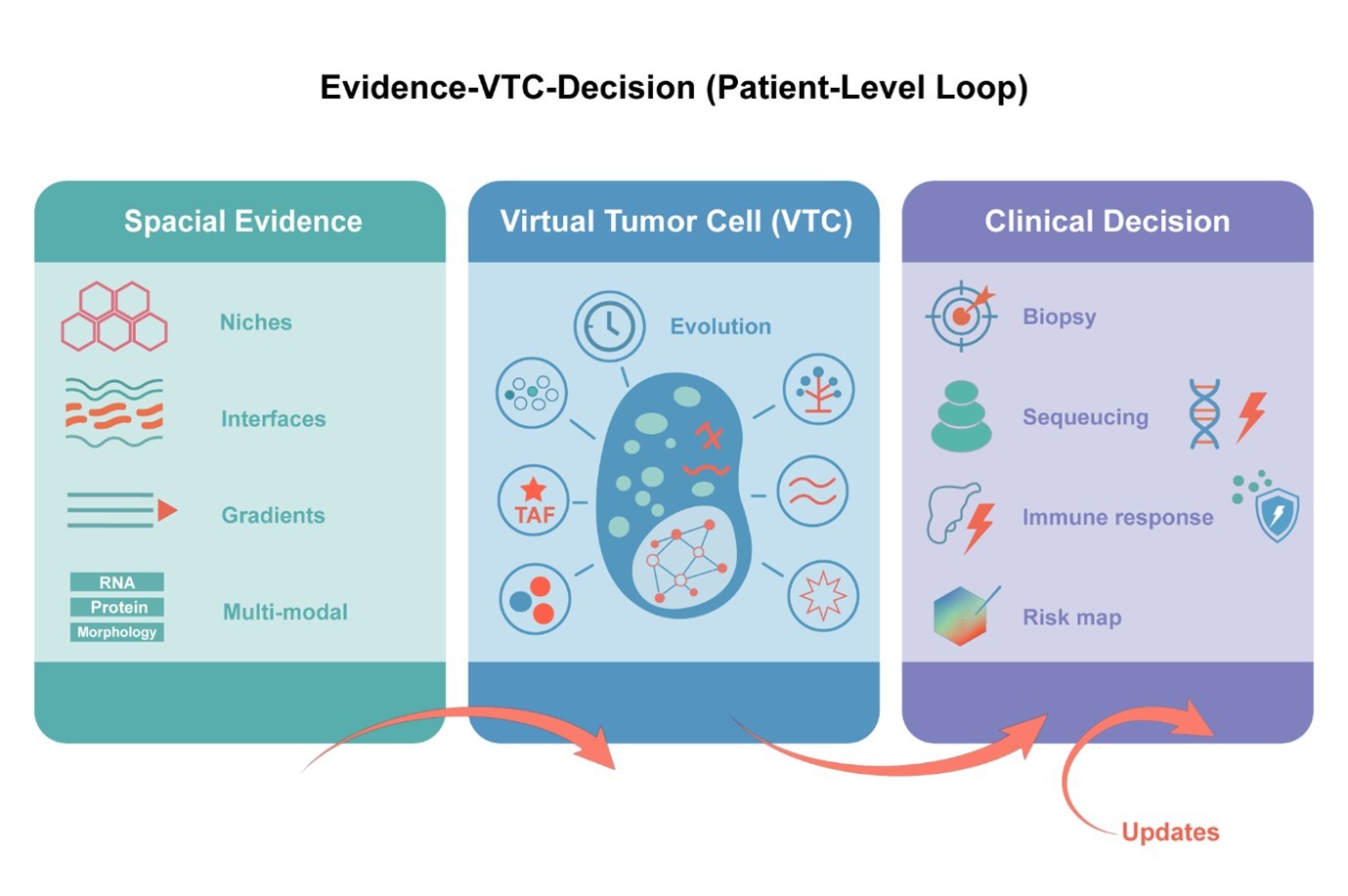
Spatial omics technologies are transforming biomedical research by profiling molecular signatures within their native tissue context. This approach overcomes the limitations of traditional methods by simultaneously resolving cell types, functional states, and their spatial interactions. By illuminating tumor-stroma crosstalk and resistance niches, spatial omics provides unprecedented insights into the tumor microenvironment. This paradigm shift from what is expressed to where and how molecular interactions occur is advancing oncology into an era of spatially-informed precision medicine.
Objectives
- Showcase innovative applications of spatial omics in decoding tumor heterogeneity and the tumor microenvironment.
- Elucidate the spatial drivers of intercellular communication, niche formation, and therapy resistance.
- Foster collaboration between computational biology, bioengineering, and clinical oncology.
- Explore spatially-guided strategies for personalized treatment and targeted therapies.
Scope
This issue will feature the latest innovations and translational applications of spatial omics in oncology. We invite original research articles, reviews, perspectives, and clinical trial reports. Key topics include, but are not limited to:
- Technology Development: Advanced spatially resolved technologies and novel computational tools.
- Biological Discoveries: Insights into tumor clonal evolution, pre-metastatic niche remodeling, and spatial immune architecture.
- Clinical Translation: Research on spatial biomarkers, pathology subtyping, and spatial endpoints in clinical trials.
We also encourage submissions from other fields, such as neuroscience and developmental biology, that offer cross-disciplinary insights into microenvironmental regulation.
Topics of interest
- Integrating Spatial Transcriptomics and Proteomics to Decode the Immunosuppressive Niche in Pancreatic Cancer
- Novel Computational Pipeline for Deconvoluting Cellular Neighborhoods from Multiplexed Imaging Data
- Spatial Evolution of Therapy-Resistant Clones Revealed by Single-Cell Multi-omics in Breast Cancer Liver Metastases
- Three-Dimensional Mapping of Immune-Tumor Interactions in Colorectal Cancer Using Spatial ATAC-seq
- A Spatial Biomarker Signature Predicting PD-1 Blockade Response in Melanoma: A Multicenter Validation Study
- Artificial Intelligence-Assisted Spatial Pathology for Guiding Precision Biopsy in Prostate Cancer
- Spatial Metabolomics Reveals Nutrient Competition Zones as Novel Therapeutic Targets in Triple-Negative Breast Cancer
- Machine Learning-Based Integration of Spatial Transcriptomics and Histopathology for Predicting Lymphoma Progression
- Dynamic Remodeling of Tumor-Stroma Spatial Networks During Neoadjuvant Chemotherapy in Gastric Cancer
- Spatial Epigenetic Mapping of the Premetastatic Niche in Colorectal Cancer Liver Metastasis
Benefits of submitting by the deadline
- No article processing charges
- Complimentary language editing
For further details, please contact the editorial office at: info@scifiniti.com






 Review Article