Available Online: 09 Jun 2026
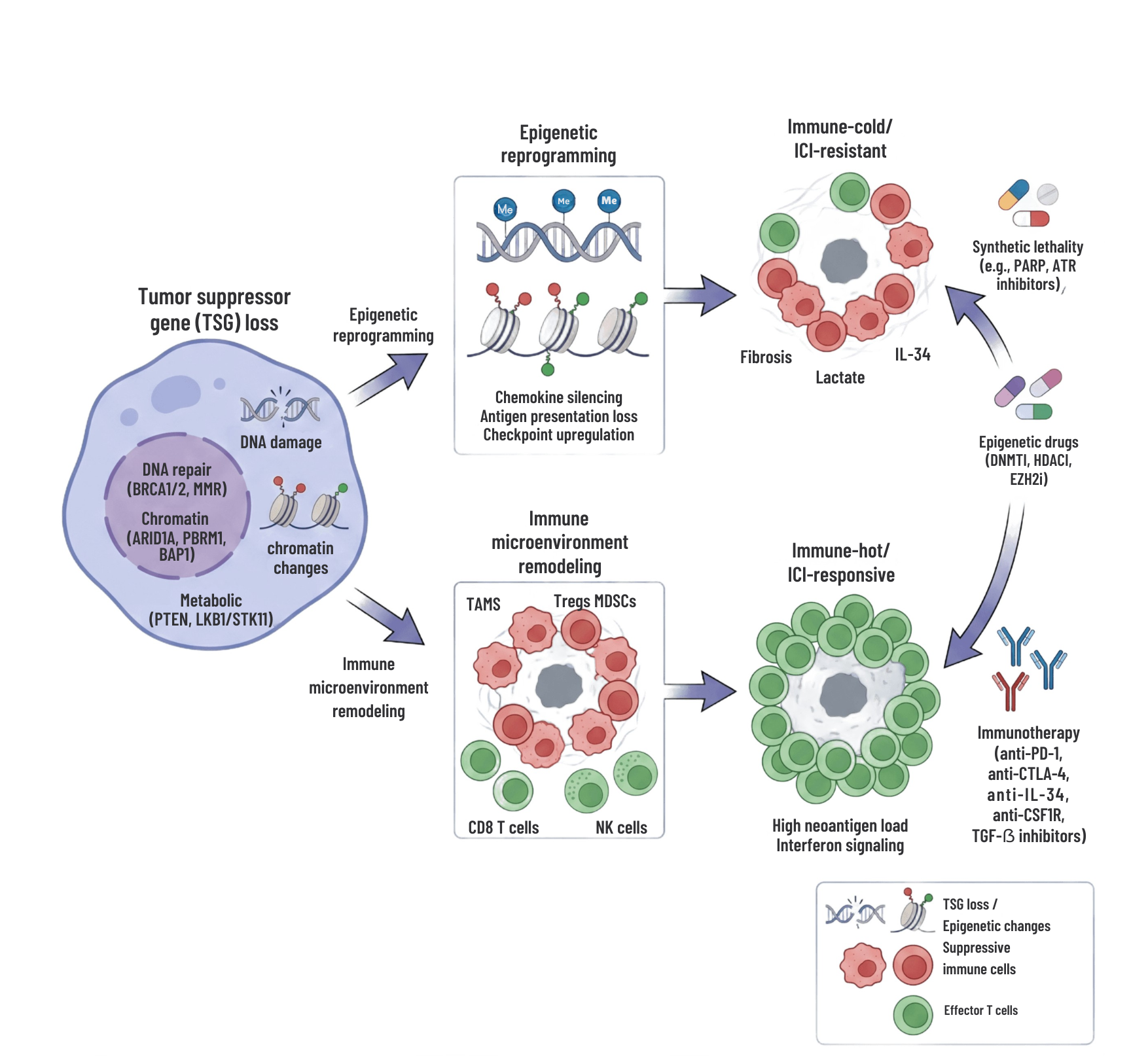
Tumor Suppressor Gene Loss and Immune-Epigenetic Reprogramming
Volume 2
Available Online: 09 Jun 2026
Volume 2
Published: 22 May 2026
Volume 2
Drug resistance in anticancer therapy has long been a major challenge in oncology, biomedical, and pharmacological research. Despite numerous efforts targeting molecular and pathway-level mechanisms and evaluating combination therapies, current pharmacological approaches remain largely stagnant and show limited consideration of circadian variations in tumor biology and drug resistance. Growing preclinical and clinical evidence suggests that circadian rhythms fundamentally regulate drug metabolism, cellular stress, DNA repair, and adaptive resistance mechanisms. This..
Published: 26 Mar 2026
Volume 2
Published: 31 Mar 2026
Volume 2
Alpha-fetoprotein (AFP) delivers nutrients to immature cells in a shuttle-like manner via alpha-fetoprotein receptor (AFPR)-mediated endocytosis. A small subset of immature myeloid-derived suppressor cells (MDSCs) acts as a key regulator of immune tolerance during pregnancy, cancer, and other conditions. MDSCs, low doses of AFP, and AFP-binding ligands can modulate both the innate and adaptive immune responses. MDSCs decrease excessive immune activation, while their depletion can reverse immune suppression. Reduction of..
Published: 31 Dec 2025
Volume 1
The BCL2 family of proteins serves as a central regulator of mitochondrial outer membrane permeabilization (MOMP) and intrinsic apoptosis, with anti-apoptotic members such as BCL2, BCL-XL, and MCL1 frequently overexpressed in many cancers to evade programmed cell death. Traditional BH3 mimetics, such as venetoclax and navitoclax, have revolutionized the treatment of hematologic malignancies by competitively inhibiting these pro-survival proteins. Yet, they face challenges, including acquired resistance, on-target toxicities, and limited..
Published: 17 Jun 2025
Volume 1
Published: 23 May 2025
Volume 1
Published: 15 Apr 2025
Volume 1
Published: 21 Mar 2025
Volume 1
Introduction. Tumor infiltrating lymphocytes are a major component of sinonasal neoplasms, actively populating tumor tissue, yet their role remains poorly understood. The aim is to characterize subsets and functional profiles of tumor infiltrating lymphocytes in patients with benign and malignant sinonasal tumors. Materials and methods. Tumor infiltrating lymphocytes were isolated from the biopsy material of 58 patients: 18 with sinonasal malignancies, 23 with inverted papilloma and 17 with polypous rhinosinusitis..
Published: 19 Mar 2025
Volume 1
Lung cancer is the major cause of mortality worldwide with non-small cell lung cancer (NSCLC) contributing to 85% of the cases. FDA-approved immune checkpoint inhibitors (ICI), anti-PD-1, and anti-PD-L1 are widely used as a standard treatment. However, the response rate is limited and is observed in only 20–40% of the patients. Therefore, predictive and prognostic biomarkers are needed to help differentiate responders from non-responders, enabling a better understanding of disease..

Published: 11 Feb 2025
Volume 1
This review explores the progression of CRISPR-Cas9 genome editing technology in gene therapy for acute myeloid leukemia. Acute Myeloid Leukemia, a serious blood cancer, presents formidable treatment obstacles and a dismal prognosis. Effective treatments for acute myeloid leukemia rely on a clear understanding of its intricate genetic mechanisms, and CRISPR-Cas9 technology offers precision and adaptability for targeting the disease’s oncogenic drivers. The dual intron-targeting method of CRISPR-Cas9 is showcased in..
Published: 08 Jan 2025
Volume 1
Relapse of Chronic Myelomonocytic Leukemia after allogeneic hematopoietic stem cell transplantation remains a significant challenge, with relapse rates reaching up to 50%, contributing to poor survival outcomes. This paper explores the factors influencing relapse, including disease biology and persistence of residual disease. Current, post- transplant strategies, such as maintenance therapies and immunomodulatory treatments, are discussed for their potential to reduce the likelihood of relapse. It also highlights emerging therapies, such..

Published: 21 Oct 2024
Volume 1
Published: 30 Dec 2025
Volume 1
It is my honor as Editor-in-Chief to present the first volume of Cancer Immunology Connect, a new peer-reviewed journal focused on the rapidly advancing fields of cancer immunology and immunotherapy. The aim of this first volume and of subsequent publications is to deepen our understanding of the molecular and cellular drivers of cancer and to highlight strategies that selectively target these molecules or pathways to improve therapeutic efficacy and patient..